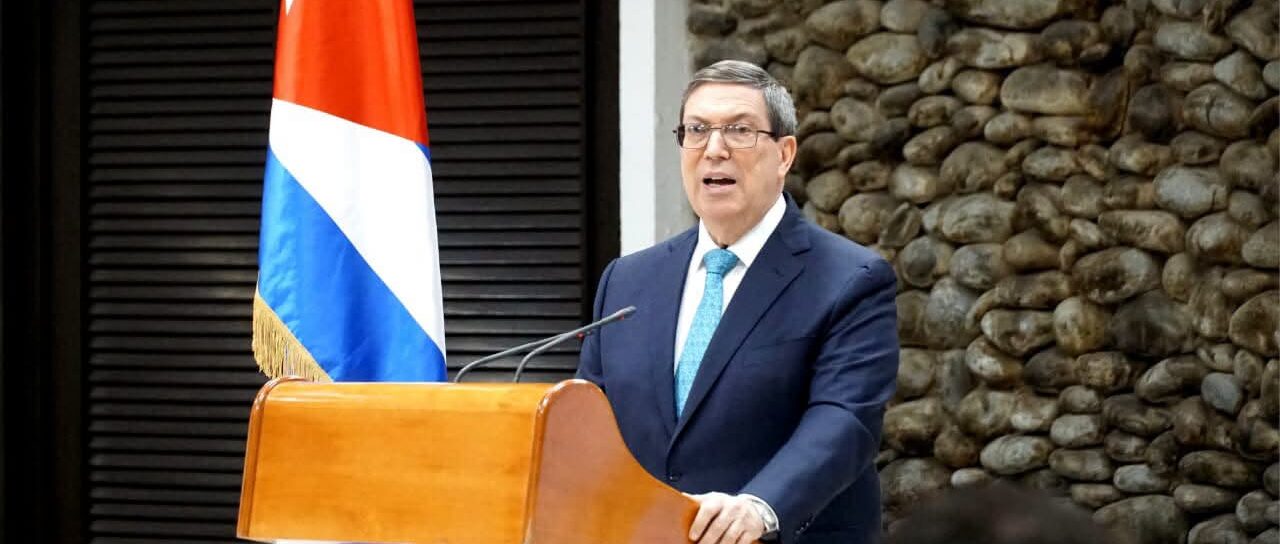
Decades of diplomatic and economic estrangement between Cuba and the United States are set to return to the center of the global stage next week, after Cuban Foreign Minister Bruno Rodríguez confirmed that Havana has officially submitted a request for a special United Nations General Assembly session on July 7 to confront the long-standing U.S. embargo against the Caribbean island.
Speaking at a formal press conference, Rodríguez laid out Havana’s core objective for the upcoming session: to force the international community to confront the crippling humanitarian toll that the 60-plus-year U.S. restrictive policy has inflicted on the Cuban people, the Cuban Embassy noted in an official press statement released after the event.
Beyond laying out the harms of the embargo, Rodríguez issued a sharp rebuke of the United States, accusing the Biden administration of launching a coordinated, global diplomatic pressure campaign to derail the upcoming debate entirely. The Cuban foreign minister argued that U.S. officials have leveraged threats, blackmail, and diplomatic coercion to pressure other UN member states to oppose the special session and boycott its proceedings.
According to Rodríguez, the cumulative damage of the U.S. sanctions regime has steadily worsened for Cuban civilians, with impacts felt in every sector of daily life across the island. He rejected long-standing U.S. justifications for the embargo, labeling the United States’ multi-faceted campaign of hostility against Cuba not as a defensive measure, but “a crime against humanity in full swing.”
He went further in his condemnation, calling the targeted U.S. energy embargo and associated restrictive measures an act of genocide that amounts to collective punishment. These policies, he insisted, systematically violate the fundamental human rights of all Cubans and directly contravene established international humanitarian law.
Rodríguez also pushed back against the core narrative the U.S. has relied on to maintain the embargo for decades, noting that Cuba, a small island nation, poses no credible security threat to the United States – the world’s largest military and nuclear power. “The blockade and the policy of aggression and hostility of the United States government against Cuba is a threat to the existence and well-being of the Cuban people, and to the exercise of their human rights,” he emphasized.
Looking ahead to the July 7 vote and debate, Rodríguez pointed to three decades of precedent to justify his expectation of broad international support. The UN General Assembly has passed resolutions condemning the U.S. embargo 31 consecutive times, with each resolution winning overwhelming backing from the body’s 193 member states. That track record, he argued, demonstrates that the global community widely rejects the U.S. policy as a violation of international norms.
Even so, Rodríguez detailed the extent of the U.S. campaign to stop the session. He alleged that the U.S. Permanent Mission to the UN in New York has threatened to pursue legal action to block the General Assembly from convening and deliberating on the embargo issue. He added that the U.S. State Department has mobilized its entire global diplomatic network to suppress discussion of the embargo, an attempt to censor Cuba’s right to raise a matter that directly impacts international peace and security and the survival of an entire nation.
Despite these aggressive tactics, Rodríguez said he remains confident that the overwhelming majority of UN member states will once again stand in solidarity with Cuba when the session convenes. He framed the upcoming debate as a critical opportunity to reaffirm the authority of international law and the core principles enshrined in the UN Charter.
Rodríguez defended the UN General Assembly as the global body best suited to adjudicate the issue, calling it “the most democratic, universal, and representative body of the United Nations” that is capable of addressing the dispute objectively in line with the UN’s founding purposes and values.
Closing his press conference, Rodríguez issued a urgent warning about the rapidly deteriorating situation on the ground in Cuba, driven by intensifying U.S. pressure. “This is an urgent situation because the multidimensional aggression of the United States government against Cuba is already underway and intensifying. Its humanitarian damage is growing, and the suffering and deprivation it inflicts on our people increase every day,” he concluded.