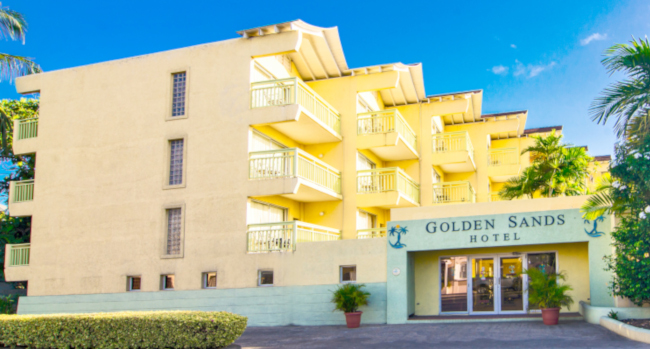
After more than 40 years shaping Barbados’ local small hotel sector, iconic indigenous hotel owner Dennis Tull is preparing to step away from the industry, with exclusive reports from Barbados TODAY confirming plans to sell his flagship property, the Golden Sands Hotel.
Turning 90 this August, Tull has entered early-stage negotiations with a prospective buyer for the well-established Christ Church venue, located along Maxwell Coast Road. An anonymous close source confirmed that while no deal has been finalized, the long-term plan remains clear: Tull intends to sell the property and formally retire from hospitality.
Tull’s upcoming exit closes out a trailblazing career that began in an unlikely fashion back in 1985. At the time, Tull was operating a successful minibus business when he acquired the Golden Sands property, growing the venue over decades into one of the south coast of Barbados’ most recognizable independent hospitality fixtures.
Beyond his own hotel operation, Tull leaves an enduring legacy as a fierce advocate for locally owned small hospitality businesses. Most notably, he was the founding chairman of Intimate Hotels of Barbados (IHB), a non-profit umbrella organization launched in 2000 to support the island’s small, independently owned boutique hotels, guesthouses, apartments, and villas. The organization was created to deliver critical marketing and operational support that smaller properties could not access on their own.
Renee Coppin, a fellow hotelier and former IHB chairman who collaborated with Tull in the group’s early years, has praised Tull’s work to level the playing field between small indigenous properties and large luxury resort developments.
Coppin described Tull as deeply passionate about both the tourism sector and small local businesses, noting that building up the IHB was a point of immense personal pride for him. “He really had a belief in what he was doing and stood by his convictions in terms of the secretariat. Some pioneering things he did like setting up the marketing fund and working with the government to set up that fund,” Coppin told Barbados TODAY.
Long before collective action for small hoteliers became common, Tull recognized that smaller local properties were not receiving the same marketing exposure and institutional support as the large high-end developments that dominated Barbados’ luxury tourism brand. Coppin confirmed Tull was unafraid to speak up loudly to demand equal treatment for small operators.
His advocacy delivered tangible, systemic change for Barbados’ hospitality sector during the Owen Arthur administration. At the time, government tax and development incentives were almost exclusively reserved for large, international resort operators. Tull successfully lobbied for dedicated concessions for small hotels and villa properties, pushing the government to introduce targeted grants for marketing, bulk purchasing, and operational coordination, including funding for a permanent IHB secretariat to serve small properties.
These efforts ultimately paved the way for the creation of the Small Hotels Investment Fund, which offered concessionary, low-interest financing for small properties to complete renovations and competitive upgrades. Tull served on the fund’s management committee from its launch, through its administration by Enterprise Growth Fund Limited.
Tull’s push for systemic support grew from his own on-the-ground experience as a small hotel owner. He understood firsthand the steep financial barriers that small independent properties faced, when it came to funding upgrades and remaining competitive against larger, better-capitalized resorts. Without targeted support, he warned, many small local venues would be forced out of the market, eroding the diversity of accommodation options that Barbados could offer to international visitors. Today, his work continues to benefit generations of small hoteliers across the island.