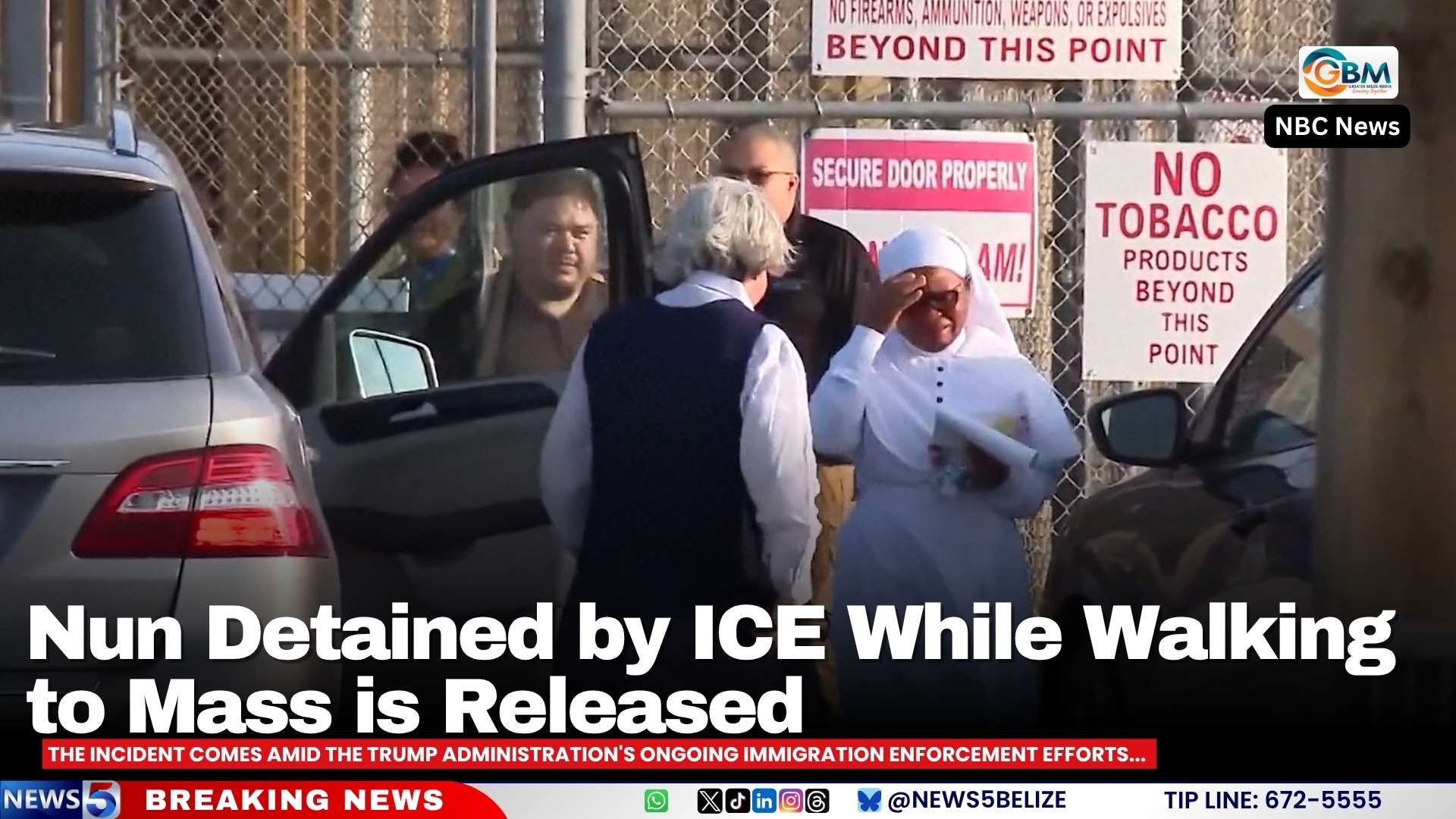
In a high-profile incident that has reignited debate over U.S. immigration enforcement policies, a Catholic nurse nun detained by U.S. Immigration and Customs Enforcement (ICE) while en route to Sunday Mass in South Texas has been freed from custody, according to reporting from NBC News.
Sister Leticia Ugboaja was taken into custody on Sunday in McAllen, Texas, a community located just a few miles from the U.S.-Mexico border. At the time of her arrest, she was wearing her formal religious habit and walking to Our Lady of Sorrows Parish to attend the weekly communion service.
Beyond her religious role, Sister Ugboaja has deep roots in the local South Texas community. She is a professed member of the Daughters of Mary Mother of Mercy congregation, serves as an Extraordinary Minister of Holy Communion at her parish, and works full-time as a registered nurse for the South Texas Health System. Prior to her current role, she spent 10 years working as a certified nursing assistant at DHR Health in nearby Edinburg, caring for thousands of local patients over the course of her decade-long tenure.
News of the arrest spread rapidly after leaders of the McAllen parish shared details of the incident across social media platforms, drawing widespread condemnation and public attention. The outcry prompted multiple members of the U.S. Congress to intervene, including Representative Monica de la Cruz, who reached out directly to federal ICE and Department of Homeland Security officials to advocate for Sister Ugboaja’s release.
“We are grateful for the quick response of local representatives who reached out to the Department of Homeland Security to get her released from custody,” said Brenda Riojas, a spokesperson for the Diocese of Brownsville, which oversees the McAllen parish.
The detention of Sister Ugboaja comes amid a broader expansion of immigration enforcement operations under the second Trump administration, which has increasingly targeted enforcement activities in locations that have long been considered sensitive sites, including houses of worship, schools, and medical facilities. The incident has raised new questions among religious and civil liberties groups about the scope of current enforcement policies and their impact on long-term residents and community leaders across border regions.