# A Critical Review of the Ramsewak Shankar Biography: Uncovering the Integrity of Suriname’s Former Leader
Published: June 28, 2026, 08:56
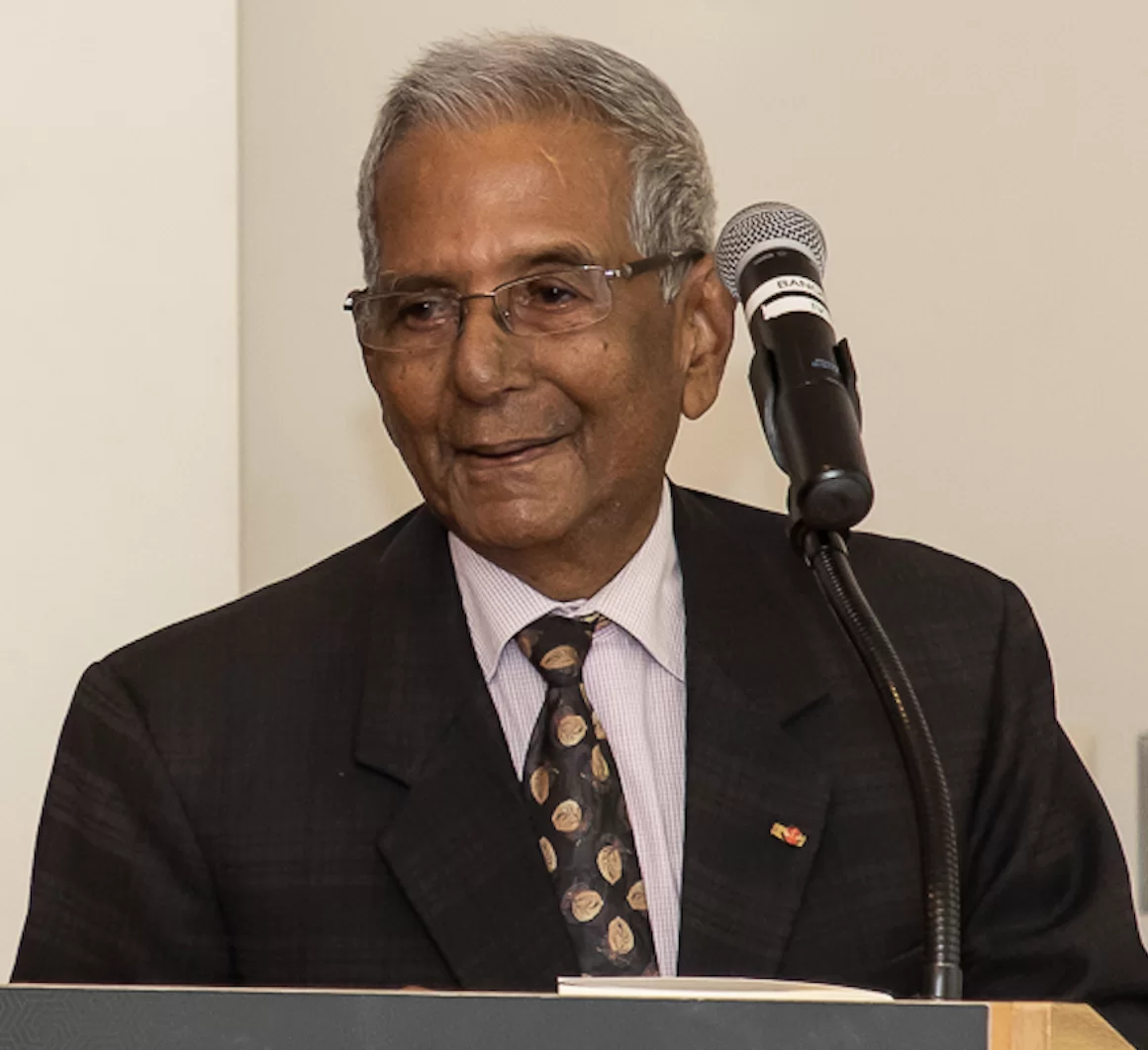
In a June 7, 2026 commentary on Starnieuws, Asha Remesar offered high praise for historian Eric Jagdew and Suriname’s former president Ramsewak Shankar, released in conjunction with the launch of Jagdew’s new book *Ramsewak Shankar: een technocraat als minister, manager en president in Suriname*. But Remesar’s piece lacked substantive evidence to back up her acclaim. This in-depth review fills that gap, offering a detailed assessment of the work and the portrait it paints of one of Suriname’s most misunderstood modern leaders.
First, a key clarification: contrary to its billing, the book is not a traditional biography, but a structured autobiography. As veteran Surinamese politician Jagernath Lachmon often prefaced his answers with the phrase “in my humble opinion”, reviewer Roy Khemradj makes the same distinction here. A conventional biography, such as the earlier work *Man van het moment* on former Surinamese leader Henck Arron, incorporates perspectives from third parties who shared experiences with the subject. By contrast, this work draws from more than 25 in-depth interviews where Shankar shared his life experiences directly with Jagdew, who wove these accounts into the broader context of Suriname’s modern political history.
Specifically, the book covers the period from Suriname’s movement to restore democracy, through the November 1987 general elections and Shankar’s inauguration as president, up to his forced resignation in December 1990. Regardless of the labeling debate, the text carries substantial informational and historical value. Drawing on prior knowledge from biographies of both Henck Arron and Frank Essed (including Khemradj’s own work *De Mobilisatie van het Eigene* on Essed), the reviewer gains a far more nuanced understanding of the 1987 presidential candidate selection process by the NPS and VHP parties. Some NPS members had pushed to nominate Frank Essed for the presidency, and the book reveals that Shankar was initially Lachmon’s pick for vice president.
One particularly revelatory new detail is the true origins of the widely discussed Leonsberg Accord. According to Shankar, the catalyst was an offhand comment by politician Willy Soemita at a Front coalition meeting held at the venue De Olifant: Soemita joked that no stars could be seen in the night sky because military leaders had picked all of them to adorn their epaulettes. The joke enraged the military top brass, setting the stage for the eventual agreement.
The book’s structure is also unusual: most biographies open with the subject’s family background, childhood and school years, but this text leads with a concise history of British Indian indentured labor in Suriname, focusing on successful descendants of indentured workers. It highlights Hindustani “pioneers and intellectuals” who built careers in small-scale agriculture, healthcare, education and the judiciary, before presenting a list of Hindustani graduates of the AMS medical school between 1952 and 1960. Shankar’s name does not even appear until page 49, and his personal life story does not begin until page 73. This opening framing inadvertently casts Shankar primarily as a “Hindustani president”, even as Jagdew’s core goal is to present him as a Surinamer who always prioritized the national interest over ethnic or factional concerns.
Long before he took the presidency, Shankar served as director of the Stichting Machinale Landbouw (SML), Suriname’s mechanized agriculture foundation, from 1971 to 1981. As a trained agricultural economist, he turned a loss-making rice operation into a highly profitable enterprise, even managing to secure two harvests per year. In 1981, however, Shankar and his entire board resigned abruptly. Jagdew only notes briefly that the resignation stemmed from “the role and power of the People’s Militia in a personnel issue at SML”, leaving out critical details. Curious to learn more, Khemradj reached out to Shankar directly for clarification.
Shankar shared that the issue centered on the SML head of human resources. A female job applicant had filed a complaint of sexual misconduct during her interview, leading the board to fire the official. But the man was also an active member of the People’s Militia in Wageningen, and eventually Shankar received a call from Paramaribo – ultimately from then-military leader Dési Bouterse – ordering the SML to reinstate him. Shankar refused, choosing to resign with his entire leadership team rather than back down. After his departure, the rice operation went into steady decline, he confirmed.
This previously unreported anecdote perfectly encapsulates Shankar’s unyielding integrity, a throughline that defined his time in office as well. Few Surinamese today appreciate that no post-Shankar president has inherited such a staggering array of challenges to tackle in barely two years in office. Jagdew, a skilled narrative historian, makes this case convincingly. The book reads like a vivid historical reenactment, and decisively dismantles the long-held myth that Shankar was a weak leader – a jab based on a crude pun on his first name, “Ram-is-zwak” (Ram-is-weak).
Shankar was ultimately forced out of office in his fight to fully restore democracy and the rule of law, and to curtail military influence over civilian governance. Tensions boiled over after Shankar revoked the special investigative powers of the Military Police. Military leaders were also vehemently opposed to Shankar’s plan to amend the Surinamese constitution in 1991, for which he had already convened a special constitutional commission.
These two flashpoints were the direct trigger for the military intervention that became known as the 1990 Christmas Coup on December 24. The book also reveals that Jagernath Lachmon, the veteran VHP leader nicknamed “the man of bending reed”, played a behind-the-scenes coordinating political role in the coup. Aware that tensions with the military were reaching a breaking point, Shankar defied his own party leader and called for early snap elections before the coup could be carried out. A recorded speech announcing the election order was already prepared for broadcast, but military forces seized the recording at the last minute.
Once again, Shankar had refused to compromise his principles. His resignation was not announced by Shankar himself, but by leaders of the Front for Democracy and Development. Today, as the former president prepares to turn 89 on November 6, 2026, this long-overdue reevaluation of his legacy makes clear that his commitment to democratic governance and personal integrity has earned him a far more prominent place in Suriname’s modern history than he has been afforded in popular memory.