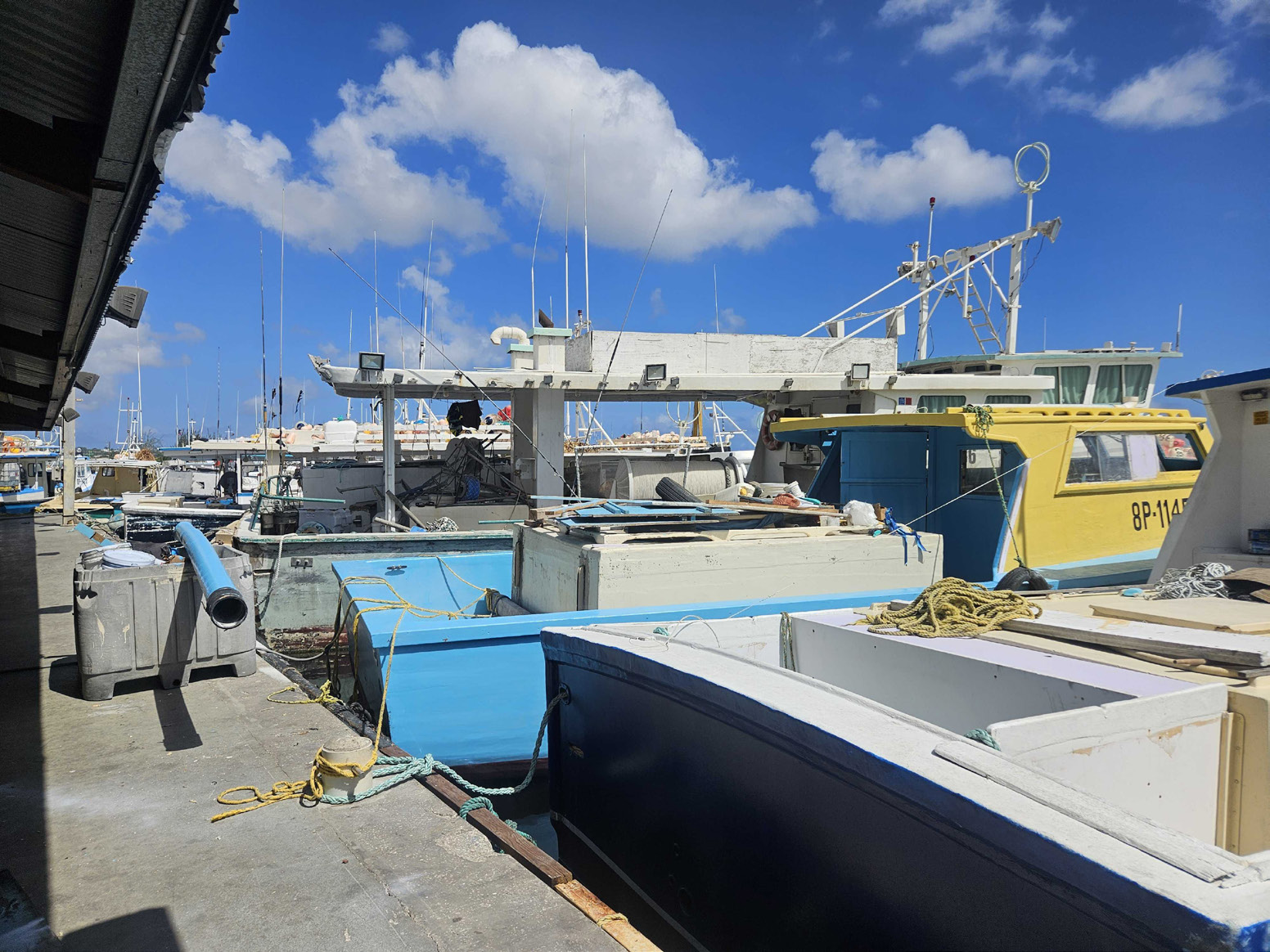
As Caribbean communities brace for another active Atlantic hurricane season, a historic shift in disaster risk management is delivering new protection to one of the region’s most vulnerable economic sectors: small-scale fishing. In a first-of-its-kind launch, Barbados has rolled out an anticipatory action (AA) insurance mechanism that will disburse emergency funds to fishing communities up to three days before a hurricane makes landfall, a change that moves disaster support from post-damage response to pre-event preparedness and is set to benefit roughly 6,000 people across Barbados’ fishing industry.
The new program was developed through a partnership between the government of Barbados, the United Nations Office for Disaster Risk Reduction (UNDRR), and CCRIF SPC, the Caribbean region’s dedicated catastrophic risk insurance facility. It builds on the framework of COAST (the Caribbean Oceans and Aquaculture Sustainability Facility), the world’s first parametric insurance product built specifically for the fisheries sector that launched in 2019 and is currently used by seven Caribbean nations.
Unlike traditional disaster insurance, which only processes payouts after a storm has hit and caused damage, this AA mechanism leverages cutting-edge probabilistic hurricane forecasting and pre-set, transparent risk thresholds to trigger automatic early payouts when a credible hurricane threat is identified. This advance access to funding gives fishers the resources they need to take life-saving protective action: pulling vessels out of the water, securing expensive equipment like boat engines, moving gear to safe storage, and evacuating to shelter before conditions deteriorate. By proactively reducing risk, the initiative aims to cut down on avoidable loss of life, cut economic losses, shorten post-storm recovery times, and make disaster management far more cost-effective for the region.
The launch comes directly in the aftermath of 2024’s Hurricane Beryl, which devastated Barbados’ fishing fleet and left countless workers still struggling to rebuild their livelihoods months later. Moonesh Dharampaul, president of the Blackfin Fleet Cooperative Society (BFCS) which participated in pre-launch consultations on the program, confirmed the initiative will cover all workers connected to Barbados’ fishing sector, not just active fishermen. This includes net menders, fish vendors, processors, and workers across all fishing sub-sectors from pot fishing to spear fishing.
Dharampaul emphasized that the new mechanism fills a long-unmet need for rapid financial protection for the industry amid growing climate-driven extreme weather. Payouts are routed through the Barbadian Ministry of Finance and Division of Fisheries, which will direct funds to the most vulnerable coastal fishing communities. The scheme also extends coverage to impacts from heavy rainfall and coastal erosion, two additional climate-linked threats that harm fishing livelihoods in the region.
While industry leaders have broadly welcomed the new safety net, Dharampaul highlighted ongoing gaps that still threaten fishing communities ahead of hurricane season. Currently, Barbados lacks sufficient slipways and haul-out facilities to quickly and safely remove all 280 active fishing boats from the water before a storm. Even with early funding, it takes a minimum of 72 hours to move all vessels to safe storage, and workers still face challenges finding secure, storm-resistant locations to park boats out of the water. Dharampaul said the cooperative is working with government to address these infrastructure gaps to maximize the benefits of the new insurance program.
Financially, the AA mechanism builds on the proven probabilistic hurricane risk models that already underpin CCRIF’s existing insurance products, with a key innovative twist: the timing of payouts. To maintain long-term financial sustainability despite more frequent trigger activations (a natural outcome of forecast-based early action), the program uses carefully calibrated risk thresholds, geographic adjustments, and adjusted premium pricing to balance operational effectiveness with financial stability. Payout calculations are structured to account for the number of affected workers, the value of at-risk vessels, and impacts across the entire supply chain, not just directly harm to fishermen.
The initiative solves a deadly dilemma that has faced Atlantic fisherfolk for generations: when a hurricane is approaching, workers must choose between staying ashore and losing critical income that supports their families, or venturing out into dangerous seas to catch one last haul before the storm. With early access to emergency funding, that no longer has to be a choice, as workers have the resources to secure their livelihoods without risking their lives.
Developers note the AA model has significant potential for expansion across the entire Caribbean, and can be adapted for other hurricane-prone regions around the world. It could also be modified to cover other forecastable climate hazards including drought, extreme lightning, and heavy rainfall that disproportionately harm vulnerable coastal communities. At present, it remains unclear whether the scheme will cover losses linked to invasive Sargassum seaweed blooms, another growing threat to Caribbean fishing.
Structured as a macro-scale insurance solution, the program pays out to an intermediary institution rather than individual fishers, which then distributes funds to affected communities quickly. The World Food Programme has already expressed strong interest in serving as the policyholder, and has confirmed it has the capacity to disburse funds to thousands of fisherfolk rapidly at scale, though other organizations including the United Nations Office for the Coordination of Humanitarian Affairs and national governments can also fill this intermediary role.
The technical groundwork for the initiative was laid through a UNDRR-commissioned study as part of the global Early Warnings for All initiative, which tested feasibility across three pilot countries: Barbados, Jamaica, and Dominica. The study confirmed that an anticipatory action insurance product for hurricane wind impacts is technically viable, and integrates smoothly with the region’s existing forecasting and risk management infrastructure.