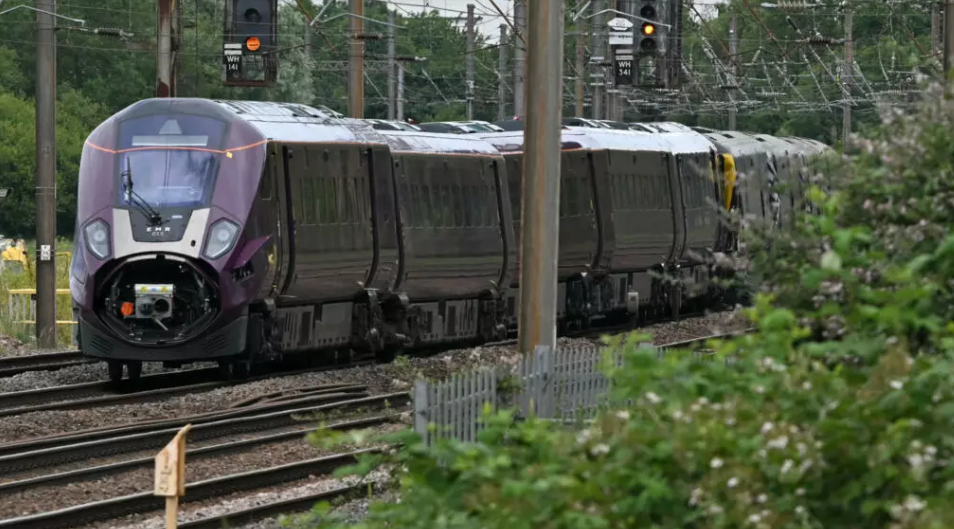
BEDFORD, United Kingdom (AFP) – A day after a devastating collision between two passenger trains outside Bedford, a town 55 miles north of Central London, UK transport and law enforcement investigators launched a full probe on Saturday to pinpoint what caused the incident that has already claimed one life and left dozens of passengers hospitalised. The crash, which unfolded on Friday afternoon, involved two London-bound services operated by East Midlands Railway (EMR) that were travelling along the same track, the company confirmed.
In immediate response to the incident, UK Transport Secretary Heidi Alexander stressed that it remained too early to draw unsubstantiated conclusions about the root cause of the collision, while committing to a full, transparent inquiry that would identify gaps and ensure critical safety lessons are implemented across the national rail network. British Transport Police Chief Constable Lucy D’Orsi, updating reporters Saturday from the crash site, confirmed that the driver of one of the two trains was pronounced dead at the scene. To date, more than 80 injured passengers have received medical care at local hospitals, with 28 still admitted for treatment and nine remaining in critical condition, D’Orsi added.
Joint investigation efforts are being led by specialist detectives from British Transport Police working alongside inspectors from the Rail Accident Investigation Branch (RAIB), the national body tasked with probing rail safety incidents, to piece together a full timeline of the crash and identify contributing factors. Buckingham Palace issued a public statement shortly after the incident confirming that King Charles III was greatly saddened by the tragedy, extending his deepest sympathies to the family of the deceased driver and all passengers who have been harmed.
Firsthand accounts from survivors paint a chaotic picture of the moments immediately after the collision. Paul Cavin, a passenger on the leading train, told the BBC that the train had come to a stop before being struck hard from behind by the second service. “There were people injured on my carriage,” Cavin said, noting he saw multiple wounded people evacuating the wreckage, many with visible traumatic injuries including broken facial bones. Another survivor, Brett Byatt, told BBC Radio he felt a sense of surrealism in the hours after the crash, but that feeling had quickly shifted to unmoored anger over the incident.
“I don’t know at whom [the anger is] directed,” Byatt said, “But it’s more about the fact we’ve got one of the oldest railway networks and signal failures happen a lot… Why wasn’t that signalled to my train?” To date, officials have not confirmed whether signalling faults contributed to the collision, and have declined to comment on ongoing speculation ahead of the full probe.
Emergency services deployed a massive rapid response to the crash site immediately after the incident. The East of England Ambulance Service confirmed Saturday that a total of 11 passengers sustained very serious injuries, 32 suffered serious wounds, and 56 others were treated for minor injuries. In total, the service dispatched more than 20 ground ambulances, six air ambulances, and specialist hazardous area rescue teams to extract trapped passengers and provide urgent on-site care. Local fire and rescue services also mobilised more than 20 specialist vehicles, with over 70 firefighters and officers working at the peak of the rescue operation.
Will Rogers, managing director of train operator EMR, described the incident as “a profoundly sad day for the railway community.” “We are deeply saddened that our driver has tragically died, and a number of other people have suffered injuries,” Rogers said, speaking from the crash site alongside senior emergency and government officials. He confirmed that the company is offering full cooperation and support to the ongoing RAIB investigation, and is supporting affected staff and passengers.
Major train collisions remain a relatively rare occurrence on the UK’s national rail network, though this incident joins a small number of high-profile fatal crashes in recent years. In September 2023, a collision at the Aviemore station on Scotland’s Strathspey Railway – a privately run heritage railway separate from the national public transit network – left several people injured after a moving train collided with a stationary carriage. In August 2020, an Aberdeen-to-Glasgow passenger service derailed near Stonehaven in northeast Scotland after a rain-triggered landslide swept across the tracks, killing three people and injuring six more. In 2023, Network Rail, the government-owned body that manages the UK’s national rail infrastructure, pleaded guilty to safety failings connected to the Stonehaven incident and was fined £6.7 million ($8.4 million).