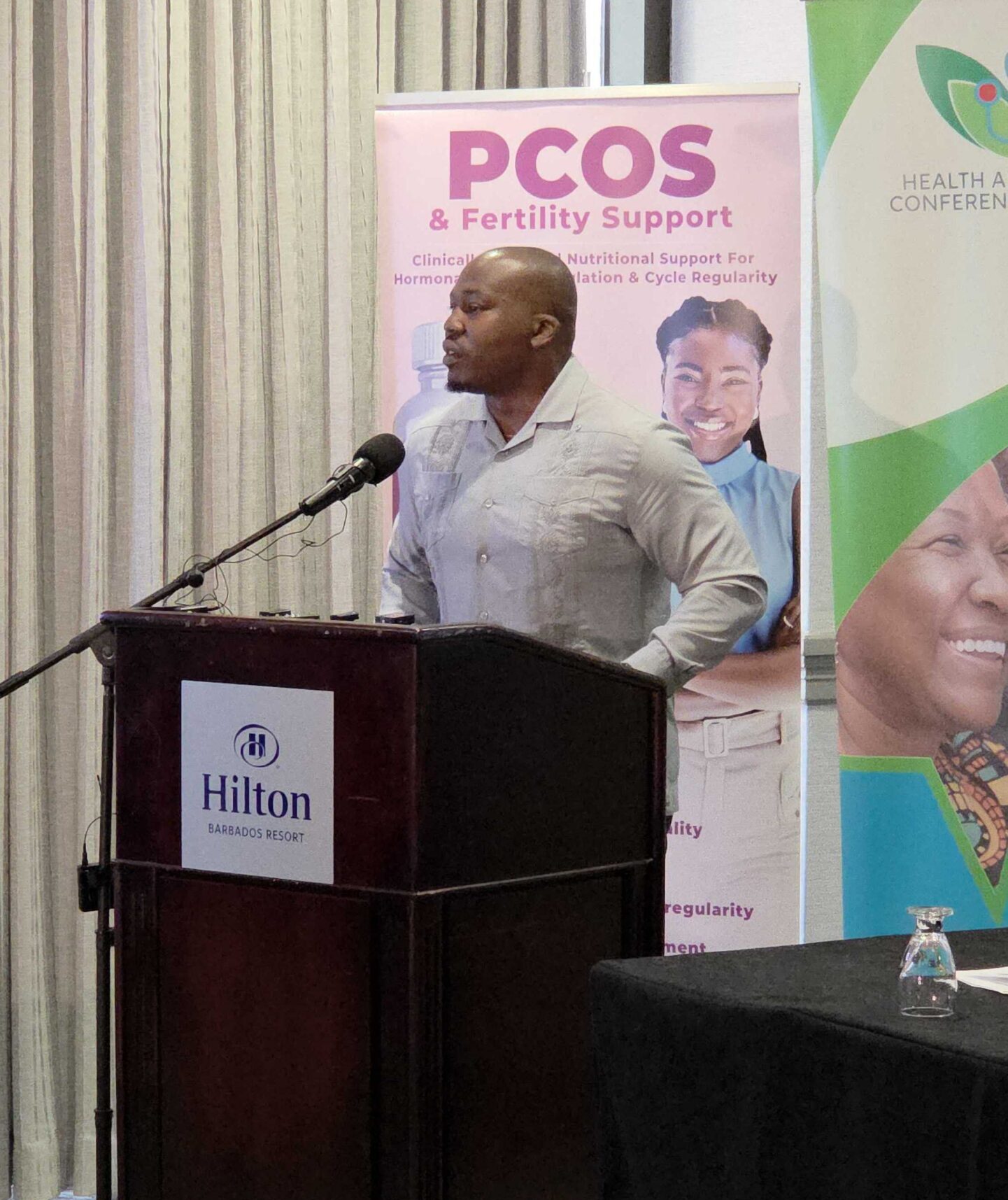
Barbados is confronting an unprecedented public health emergency driven by non-communicable diseases (NCDs), which are now responsible for 83% of all adult deaths in the Caribbean nation and draining hundreds of millions of dollars from public coffers annually, according to Junior Health Minister Davidson Ishmael. Speaking Wednesday at the opening keynote of the Technical and Vocational Education and Training (TVET) Council Health and Wellness Conference held at Bridgetown’s Hilton Hotel, Ishmael delivered a sobering wake-up call, backed by the latest national health data, that the combined human and economic toll of chronic conditions has pushed the small island developing state to a breaking point.
“Eighty-three per cent of the adults who die in our country die as a result of a non-communicable disease,” Ishmael told the packed audience of education leaders, business representatives and public health delegates. “And that should startle you. It should also bring sober reflection even as you look at your own self individually, but it should also cause us to reflect on what is happening across the board in our country. These deaths are largely preventable. These are premature deaths that we’re talking about.”
Ishmael highlighted the growing, visible impact of NCDs across Barbadian society, pointing to the frequent streams of bereavement announcements on local social media platforms that have become a grim reminder of the crisis. He expressed particular grief over the early loss of productive members of the community: entrepreneurs, skilled workers, and community leaders who are dying years before reaching their projected life expectancy, leaving gaps in families and the national economy.
Beyond the devastating human cost, the minister outlined the crippling financial burden NCDs place on Barbados’ taxpayer-funded healthcare system. Annual direct medical costs for treating diabetes, hypertension, cancer, cardiovascular disease and other chronic conditions range from $375 million to $825 million, with $325 million allocated specifically to core NCD treatments alone. “That is money that is coming out of our pockets every single month to help us to fund the affairs of our country,” Ishmael explained. “If we have a healthier population, we can therefore, one would argue, see a reduction in the amount of money that we spend to treat NCD-related illness.”
Compounding direct medical expenses is an additional major hit to the national economy from lost workplace productivity. The latest national health survey data shows Barbados loses more than $147 million each year because workers living with untreated or poorly managed NCDs are unable to perform at full capacity. This strain is only projected to worsen as the country undergoes a major demographic shift: more than 25% of Barbadians are currently over the age of 60, and projections indicate that by 2050, one in three residents will be aged 65 or older.
As older Barbadians increasingly opt for active encore careers and semi-retirement rather than full exit from the workforce, Ishmael emphasized that a foundation of good health is non-negotiable to sustain this new model of active ageing. Preserving population wellness, he argued, is essential to maintaining quality of life, reducing healthcare costs, and ensuring older residents can continue contributing meaningfully to national development.
Ishmael stressed that the government cannot bear the full cost and responsibility of addressing the NCD crisis alone, issuing a direct challenge to the TVET Council, private businesses and community organizations to step in as partners in prevention. While the government will continue to allocate substantial funding to treat people already living with NCDs, he noted that the current reactive treatment-focused model is holding back national progress. “I posit to you that this is not sustainable for us as a small island developing state,” he said. “We need to be able to re-allocate the funds that we spend towards treating illness, towards helping our country to be far more productive, building new industries, building new sectors. We need to be able to invest more in ensuring that we create a firm framework and a foundation that allows our country to be able to produce more and thrive. And that cannot happen if we have our people battling with disease.”
To kickstart cross-sector action, Ishmael called on all conference attendees to act as champions of change, encouraging every organization to implement low-cost or no-cost workplace health and wellness initiatives immediately. He noted that effective programs do not require expensive equipment or specialized staff, pointing to simple ideas such as streaming free fitness classes on office conference room screens for employees at the end of the work week. He also reminded business and education leaders that the Ministry of Health offers free on-site mobile screening services, which can be coordinated through the Chief Nursing Officer to bring care directly to workplaces and schools.
At the national level, the Ministry of Health and Wellness is currently collaborating with the Pan American Health Organization (PAHO) to develop a unified National Wellness Policy. The new framework will consolidate fragmented existing strategies for NCD prevention and cancer reduction into a coordinated approach that addresses wellness across individual, community and organizational levels.
Closing his address, Ishmael expressed cautious optimism that collective small actions will add up to large-scale national change. “If all of us do our part, if each of you play our small part in our small area of Barbados, I believe that we will see a cumulative change in our circumstances as a country,” he said. “Let us turn these conversations into actionable habits that transform our daily efforts into sustained social interventions and lasting positive change.”