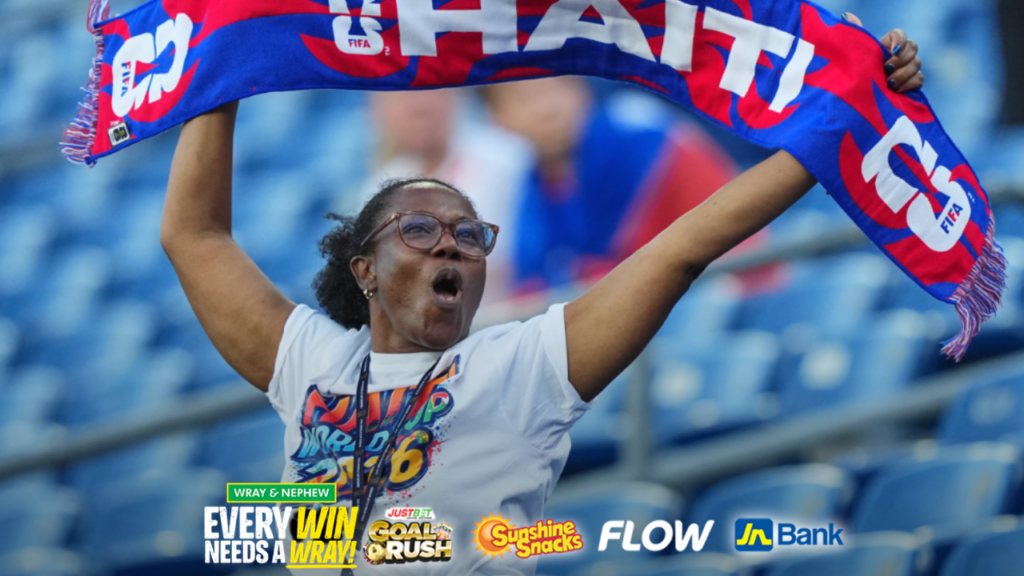
For the Haitian diaspora clustered in New York City, a rare moment of collective celebration has cut through months of uncertainty and targeting from the Trump administration’s hardline immigration policies: their men’s national soccer team is set to make only its second World Cup appearance in history, and first since 1974, when it faces global powerhouse Brazil on Friday.
Walking through the city’s iconic Little Haiti neighborhood, the blue and orange of the New York Knicks — fresh off the team’s NBA championship win just days earlier — still drapes nearly every local storefront. But long-term residents and community members say that display is already set to make way for Haiti’s iconic blue and red national flag, as attention shifts to the historic World Cup match.
“Now the Knicks excitement is over, you’ll definitely see all the Haitian colors everywhere,” said 42-year-old actor Vladimir Calixte, who wore his national flag wrapped around his neck during a walk through the neighborhood.
The outbreak of national pride serves as a much-needed reprieve for a community that has felt directly in the crosshairs of the Trump administration’s aggressive mass deportation campaign targeting undocumented people living in the United States. Haiti, which has long struggled with widespread political instability and brutal gang violence, has faced disproportionate scrutiny from the current White House: Trump suspended all tourist and immigration visas for Haitian citizens last year, and his administration is moving to revoke Temporary Protected Status (TPS), a program that prevents deportations to countries facing crisis or unsafe conditions. Around 520,000 Haitians currently hold TPS protections across the U.S.
New York is home to roughly 200,000 residents who were either born in Haiti or are of Haitian descent, and for this tight-knit community, the national soccer team’s historic World Cup berth has become a unifying source of pride. Local small business owner Maelie Misidor, who runs a corner convenience store in Little Haiti, says conversations about the match have dominated every interaction in her shop since the team qualified.
“Tickets are completely out of most people’s price range. If they were cheaper, I’d be there in a heartbeat,” Misidor explained. “Instead, my husband, our friends, and I are going to set up a viewing in the local courtyard to watch the game together.”
Brooklyn-based Haitian artist Lyne Lucien notes that the team’s roster itself reflects the experience of the global Haitian diaspora, with a large share of players hailing from communities outside Haiti’s borders. “Haiti extends far beyond our actual land borders,” Lucien explained. “Our community looks just like the team: people spread out all across the world, but we still come together as one people.” That shared identity has drawn the community even closer to the team during its historic run.
Yet even as the community prepares to cheer on their national side, a new threat from the Trump administration has cast a shadow over the celebration: reports that the administration would deploy Immigration and Customs Enforcement (ICE) agents to World Cup match stadiums to target undocumented migrants has spread widespread fear across Haitian and other migrant communities.
“I feel like that’s creating completely unnecessary fear,” said Lucien, who created custom illustrations for the FOX Sports Global Artist Series, an official collaboration with FIFA. “There’s so much anxiety right now: even people who hold valid U.S. residency cards are afraid to go to the matches. People who just got their citizenship are still scared to be there around law enforcement.”
Haiti dropped its opening World Cup match to Scotland, putting added pressure on the team against its upcoming match against Brazil — a side that many Haitians have supported enthusiastically in past tournaments, Calixte explained. “You feel more attached to people that look like you. Before we qualified, since we couldn’t play at this level, we admired the teams that could,” he said. Not everyone holds out hope for an upset against the five-time World Cup champions: 43-year-old Sonny Etienne, who was waiting for a haircut at a local Little Haiti barbershop, called the matchup a tough break for the underdog Haitian side.
“Brazilians are the undisputed leaders of world football. What can we do against them? It’s too bad we had to draw them in our group,” Etienne said.