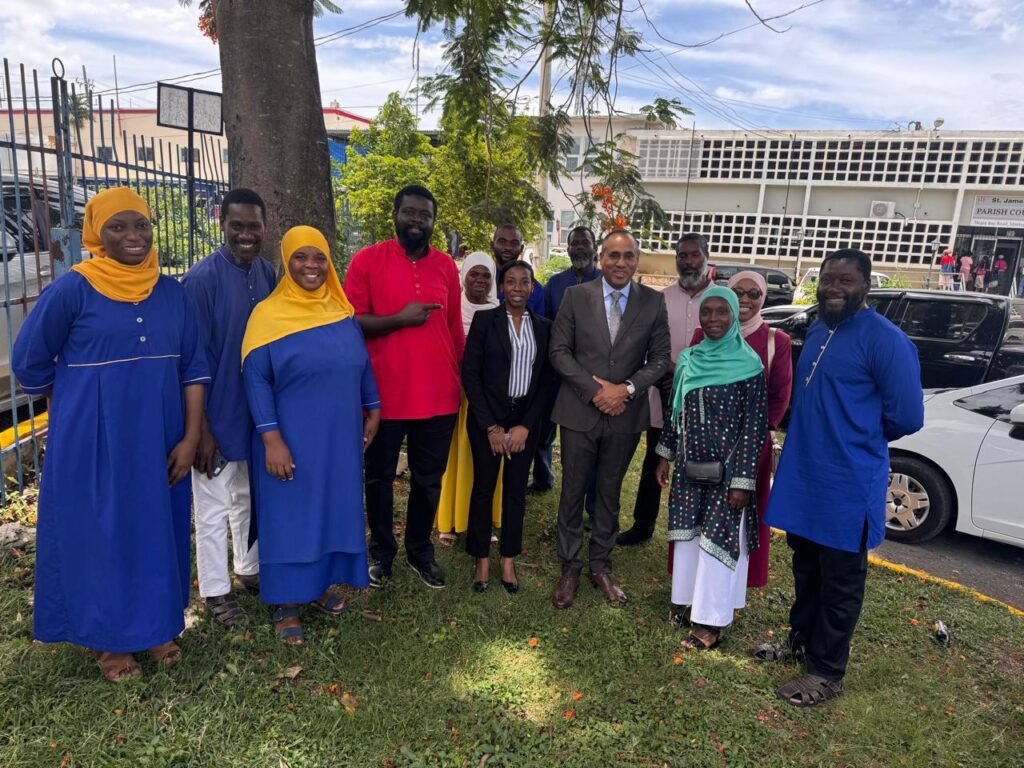
In a closely watched legal outcome delivered this Wednesday, all 16 members of Montego Bay-based religious organization Qahal Yahweh have been cleared of every criminal charge brought against them stemming from a 2023 police raid on the group’s compound. The defendants, who faced accusations including Education Act violations, child cruelty and indecent assault, saw their acquittals formalized by Senior Parish Judge Kaysha Grant-Pryce, who formally sustained a no-case submission first put forward by the defense team back in May.
The legal proceedings against the group began on April 8, 2024, with the entire case tracing back to a law enforcement operation carried out at Qahal Yahweh’s Norwood, St James premises on June 7, 2023. In the immediate aftermath of the raid, Jamaican authorities outlined three core sets of allegations. First, police claimed that unsanitary living conditions on the compound created a measurable health hazard for the minor residents living there. Second, investigators alleged that an unapproved educational facility was operating on the property without the mandatory authorization from Jamaica’s Ministry of Education. Third, officials claimed that a young female member of the congregation had been coerced into removing all of her body hair — including pubic hair — as part of a religious ritual, forming the basis for the indecent assault charges.
When the prosecution wrapped up its presentation of evidence, defense attorneys Peter Champagnie KC and Samoi Campbell mounted a thorough challenge to the state’s case, arguing that the evidence presented fell far short of the legal threshold required to convict any of the 16 accused. On the unauthorized school allegation, the defense noted that the facility had at one point been granted provisional approval to operate, and the prosecution had failed to prove that this approval had been revoked by the time of the 2023 raid. The defense also emphasized that the state had not successfully linked any specific individual to the operation of the educational space.
Turning to the child cruelty charges, which were rooted in claims of poor sanitary conditions, the legal team pointed out that the prosecution’s evidence failed to meet the strict requirements laid out in Jamaica’s Child Care and Protection Act. Beyond vague references to unsanitary conditions, there was no concrete proof that the conditions had actually harmed the children’s health, nor were the identities of the allegedly harmed children ever formally confirmed in court evidence.
Most critically, on the indecent assault allegations, the defense reminded the court that the complainant herself had testified under evidence that the assault she experienced was committed by a relative, not by any of the 16 defendants standing trial. After carefully reviewing all submissions and evidence presented, Judge Grant-Pryce ruled that none of the accused had a case that required them to answer to the charges, resulting in full acquittal for all 16 people.
Following the ruling, members of Qahal Yahweh publicly expressed their deep gratitude to Champagnie and Campbell for their consistent representation throughout the months-long legal process. In comments on the verdict, lead defense attorney Champagnie raised serious questions about the origins of the case, suggesting that law enforcement authorities had acted prematurely in bringing charges against the group. He further posited that the decision to pursue charges may have been shaped by underlying intolerance or prejudice against the group, which holds unconventional religious beliefs that differ from mainstream Jamaican religious traditions.