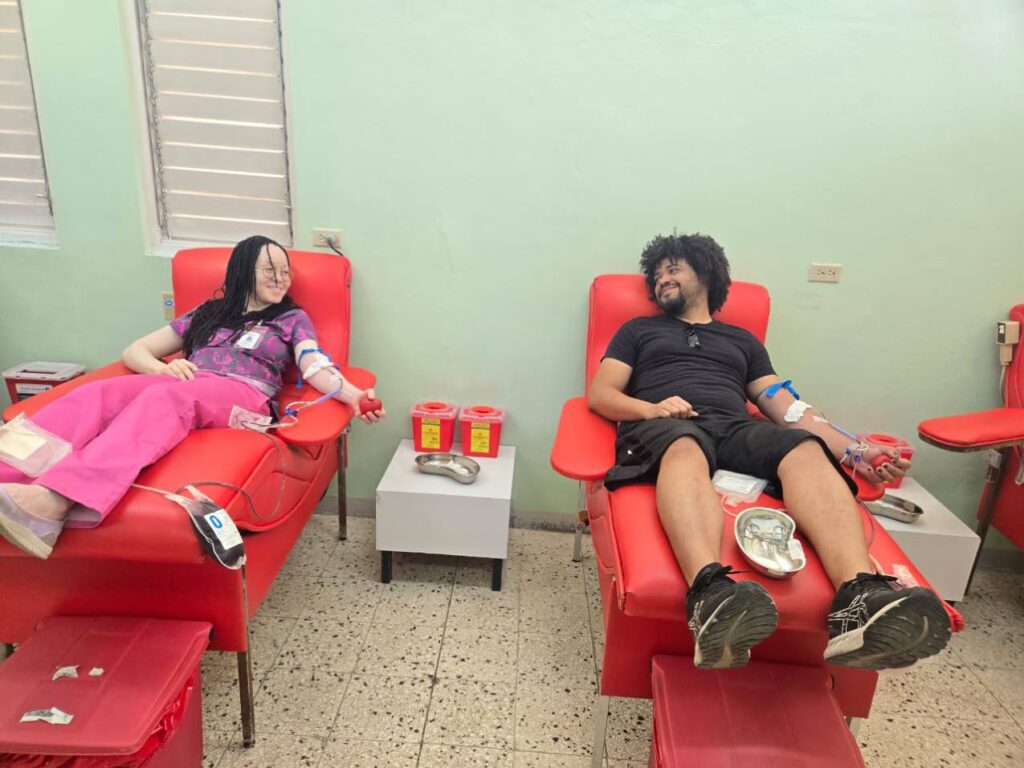
Jamaica’s national blood supply system is grappling with a persistent, severe shortage that disproportionately affects access to rare negative blood types — particularly O-negative, the universal blood type critical for emergency care. Dr. Kamille West-Mitchell, director of the National Blood Transfusion Service, has issued an urgent public appeal for Jamaicans, especially those with O-negative blood, to donate regularly to rebuild strained stockpiles.
Currently, the nation collects roughly 30,000 units of blood annually, a volume that meets only half of the estimated 60,000 units required to meet patient needs across the country. Compounding this gap is the natural rarity of negative blood types among the Jamaican population: just 1% to 3% of residents carry any negative blood type, including A-negative, B-negative, AB-negative, and O-negative. This leaves the national donor pool for these life-saving products extremely small.
The strain is most acute for O-negative blood, a product with two overlapping, high-stakes demands. First, patients with O-negative blood can only receive transfusions from O-negative donors. Second, it is the default option for emergency scenarios where a patient’s blood type is unknown — a common occurrence in traumatic accidents, emergency surgeries, and unplanned violent incidents, where any delay in transfusion can be fatal.
“If we don’t know your blood type — say you’ve been in a car crash or need emergency surgery — O-negative is the safe universal option we turn to to minimize risk,” West-Mitchell explained in an interview with the Jamaica Observer. “We have accidents, violence, all kinds of emergencies where people are bleeding and we don’t have time to test their type. We definitely need far more O-negative than we currently have.”
On any given weekend, West-Mitchell’s team receives around 30 requests for O-negative blood that they cannot fulfill. Every night, roughly 200 patient requests for prepared blood units flow into the national blood bank, and demand consistently outpaces available supply. This shortage forces clinicians to carefully ration O-negative stock to cover the most urgent cases, from pediatric patients to trauma victims to O-negative patients in immediate need.
West-Mitchell shared that many O-negative Jamaicans who do not donate often treat the need for their blood lightly, joking with her about the high demand. But for the blood service, the gap is no laughing matter. “It’s not the blood bank or the staff that wants your blood,” she explained. “It’s that at 4 a.m., I will get a call asking for O-negative for a patient in Mandeville, or a baby at Victoria Jubilee Hospital, and I have to say no. We can’t force people to donate — we can only ask.”
Acknowledging common barriers to donation — fear of needles, busy schedules — West-Mitchell stressed that donors are only asked to give once a year at most, a small time commitment that produces outsized impact. For O-negative Jamaicans specifically, regular annual donation is critical to supporting both fellow O-negative community members and emergency patients of all blood types.
“Only around 3% of our population has O-negative blood,” West-Mitchell noted. “We have to look out for one another. If you don’t donate, your O-negative brothers and sisters won’t have blood when they need it.”
To ease public concerns, West-Mitchell emphasized that all donation processes follow strict safety protocols, with every precaution taken to protect donor comfort and health. She recalled a powerful encounter that drives her advocacy: a mother of a critically ill 5-year-old who watched her son receive a life-saving transfusion from an anonymous donor.
“She looked up at the blood bag and said, ‘This person doesn’t even know my son, and they did this so he could get through the night,’” West-Mitchell shared. That moment, she said, underscores the direct, life-changing impact of every single donation.
West-Mitchell extended her gratitude to the regular donors whose contributions keep the blood service running, noting that every unit of blood given to a patient comes from a stranger who gave up a small amount of time to help someone they would never meet.
Expressing confidence in the Jamaican public’s longstanding culture of community care, West-Mitchell ended her appeal with a call to action: “When it comes down to it, Jamaicans care about Jamaica. One of the greatest ways to show that is to take a few minutes, brave the needle, and help a stranger. You never know who you might save.”