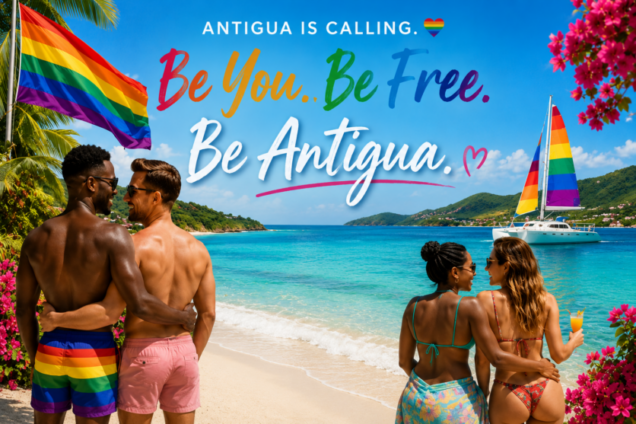
In the wake of two major Antiguan resorts — Pineapple Beach Club Antigua and The Verandah Resort and Spa — making a public, formal commitment to welcoming LGBTQ+ travelers to their properties, a local mother of a gay son has stepped forward to share her deeply personal perspective on what this announcement means for her community, her family, and her child.
For years, this mother has watched her son navigate a world that often passes judgment before getting to know the person behind the identity. She has borne witness to the quiet pain, persistent anxiety, and deep-seated fear that comes from repeated messages telling LGBTQ+ people that they do not belong, that they do not deserve equal acceptance, and that they are somehow less worthy of dignity than anyone else. It is this lived experience that makes the resorts’ simple statement of welcome far more than a public relations gesture — it is a landmark acknowledgment of a basic human truth.
The mother emphasizes that this stand is not about pushing a specific agenda, nor is it about demanding that anyone change their deeply held personal beliefs. It is solely about recognizing that every human being, regardless of who they love, deserves to be treated with respect when they step foot on a property as a guest. That simple, unifying principle has sparked fierce backlash, however, a reaction that left her saddened but not surprised. In comments following the resorts’ announcement, some speakers invoked threats of violence and destruction, others dehumanized LGBTQ+ people by comparing them to a societal plague, and a small number went so far as to call for harm and forced expulsion of queer people from the community.
To these voices, the mother poses a quiet, challenging question: would you speak this way if the queer person being discussed was your own child? Would you stand by as strangers wished violence on your son or daughter? Would you accept them being told they have no place in the country they call home?
She goes on to remind readers that LGBTQ+ people are not outsiders or strangers to Antiguan and Barbudan society. They are our children, siblings, coworkers, classmates, friends, and neighbors. They are citizens of this nation, with the same rights to belonging and respect as anyone else.
Decades of rigorous scientific research have long debunked the harmful myths that circulate about sexual orientation. Major studies confirm that no single root cause determines a person’s sexual orientation, just as no single factor shapes the countless other traits that make each human being unique. Most critically, peer-reviewed research has consistently shown that LGBTQ+ people are no more likely to cause harm to children, erode social structures, or damage families than any other group. It is not queer identity that harms families, the mother argues: it is hatred, it is rejection, and it is the systemic pressure that forces young queer people to question whether they are even worthy of love.
The mother also takes time to acknowledge the incremental but important progress that Antigua and Barbuda has made on this issue, noting that the nation is not perfect but is clearly moving in a more inclusive direction. She points out that a country can honor its deep roots in faith while still upholding the fundamental humanity of every citizen and every visitor. She commends Prime Minister Gaston Browne and his administration for cultivating a policy environment where local businesses feel safe and empowered to open their doors to all travelers, regardless of identity. Even for those who hold personal disagreements with same-sex relationships, she argues, there can be no debate that every visitor deserves equal treatment, safety, and respect when visiting the islands.
Beyond the moral case, there is a clear economic reality that cannot be overlooked: LGBTQ+ travelers contribute billions of dollars to the global tourism industry each year, and they consistently prioritize and return to destinations that make them feel welcomed and safe. Building a culture of inclusion is not only the right thing to do morally — it is a sound economic strategy that benefits the entire nation. But for this mother, the issue is never been primarily about money or tourism revenue.
At its core, this is a question of basic humanity. It is a mother’s hope that her son can move through the world without living in constant fear of hostility or rejection. It is about ensuring that young queer people growing up today see examples of acceptance and welcome, rather than constant hatred and exclusion. It is a reminder that a society built on love, compassion, and decency will always be stronger and more resilient than one built on anger and exclusion.
Closing her letter, she extends gratitude to the two resorts for their courage to stand openly for inclusion, and to the allies who have used their voices to support the move toward greater acceptance. To her fellow Antiguans and Barbudans, she leaves with a plea: that the nation continues moving toward a future where every person is treated with inherent dignity, no matter who they are or who they love.