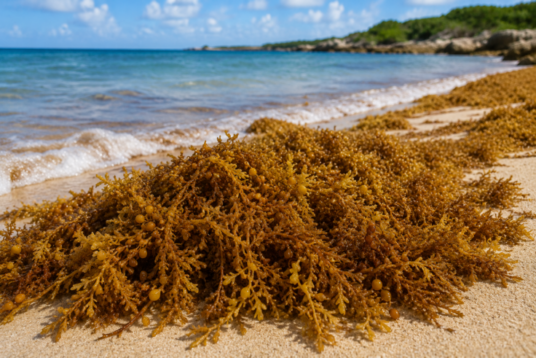
For years, the twin-island Caribbean nation of Antigua and Barbuda has grappled with a mounting environmental and economic crisis: massive, recurring blooms of sargassum seaweed that wash up on its pristine white sand beaches. These invasive accumulations not only drive away tourists, who form the backbone of the country’s economy, but also damage coastal ecosystems, contaminate local water supplies, and disrupt fishing operations that support small-scale coastal communities. Now, a new potential path forward has emerged, as Japan has publicly confirmed it is exploring the possibility of extending technical and financial support to help Antigua and Barbuda convert this problematic seaweed into marketable commercial goods.
Sargassum, a naturally occurring brown macroalgae, has seen explosive growth in the Atlantic Ocean over the past decade, fueled by rising ocean temperatures and nutrient runoff from agricultural activities along major river systems. For small island developing states like Antigua and Barbuda, which lack the infrastructure and budget to address the crisis on their own, clearing sargassum from coastlines has become an unsustainable annual expense. Clearing and disposing of the tonnes of seaweed that wash up each year eats up a significant portion of the country’s environmental budget, with no long-term solution in sight.
The proposed collaboration between Japan and Antigua and Barbuda aims to turn this liability into an asset. Experts have already identified a wide range of viable commercial uses for sargassum: it can be processed into nutrient-rich organic fertilizer for agricultural use, converted into biofuel to offset fossil fuel imports, processed into animal feed for livestock operations, or even used as a raw material for biodegradable packaging materials, cosmetics, and pharmaceutical additives. Japan, which has advanced experience in marine biotechnology and sustainable waste-to-value processing, is expected to share technology, provide training for local workers, and potentially fund the construction of small-scale processing facilities that can be run by local enterprises.
Diplomatic sources note that the talks remain in the early exploratory stage, with both sides yet to finalize the terms of the partnership, including funding amounts and technical cooperation timelines. If the project moves forward, it could not only resolve a long-standing crisis for Antigua and Barbuda but also serve as a model for other Caribbean and coastal nations that face the same sargassum bloom challenge, demonstrating how North-South cooperation can turn environmental challenges into economic opportunities for vulnerable small island states.