SANTO DOMINGO — Facing ongoing global economic volatility and mounting pressure to shore up shaky public finances, the Dominican government has unveiled a sweeping package of fiscal adjustments that includes a proposed $10 surcharge on commercial airline tickets, a change that stands to reshape the trajectory of the nation’s most critical economic engine: tourism.
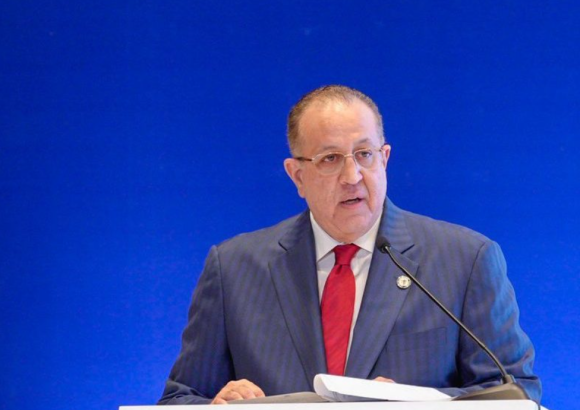
The full set of policy adjustments, branded under the official heading “Measures for Economic Growth and Mitigation of the International Crisis,” was presented to a gathering of media leaders by Magín Díaz, the country’s Minister of Economy and Finance. Before the package can take effect, it must secure a vote of approval from the Dominican National Congress, and it forms the core of the administration’s broader push for fiscal consolidation across multiple high-revenue sectors.
Beyond the proposed airline ticket fee, the package includes a series of targeted tax increases for both individuals and corporations. The existing tax on paper checks and electronic bank transfers would rise from 0.15% to 0.20%, while large domestic enterprises with annual revenues topping 1 billion Dominican pesos would face a temporary 30% corporate income tax rate for a three-year period. For high-earning individual taxpayers, the plan creates a new top 27% income tax bracket for anyone reporting monthly income over 400,000 Dominican pesos, a change that officials project will impact only a small fraction of the country’s total taxpayer base.
Of all the provisions in the package, the $10 airline ticket surcharge has emerged as the most closely scrutinized, due to tourism’s outsize role in the Dominican national economy. The country ranks among the top tourist destinations in the Caribbean, drawing millions of international visitors primarily via air travel each year. Independent industry analysts have warned that even a modest increase in ticket prices could alter potential travelers’ destination choices, eroding the country’s competitive edge against neighboring Caribbean travel hubs that have not enacted similar travel-related fees.
For the Dominican Republic, tourism is far more than a niche industry: it is the single largest source of private-sector employment, drives a substantial share of overall national economic activity, and generates the majority of the country’s annual foreign exchange earnings. As the proposal moves through the legislative process, tourism industry stakeholders across the country are tracking congressional deliberations closely, preparing to model how the surcharge could impact annual visitor arrivals and ripple through connected sectors from hospitality to local transportation.
Administration officials have defended the full package of measures, arguing that new revenue streams are critical to shoring up public finances and maintaining broad economic stability at a time of persistent global uncertainty. They emphasize that the plan is intentionally structured to place the majority of new tax burden on high-income individuals, large corporate entities, and specific high-margin sectors, rather than spreading the cost across low- and middle-income households. Along with the air ticket surcharge, the package also includes new and increased taxes on financial transactions, large corporations, electronic cigarettes, casinos, and commercial gambling operations. The full proposal will soon be formally submitted to the public and congress as part of the government’s overarching strategy to sustain domestic economic growth and counteract headwinds from the ongoing international economic downturn.