A sharp political dispute has erupted in Jamaica over national water infrastructure energy resilience, after the opposition’s water spokesperson accused the ruling government of failing to adopt solar power to protect the National Water Commission (NWC) from widespread outages caused by Jamaica Public Service Company (JPS) grid failures.
Ian Hayles, the opposition’s shadow minister for water, made his claims in a public statement released Sunday, days after a full JPS grid shutdown left much of the country without power. Hayles argued that the NWC’s heavy dependence on JPS for powering its water distribution networks creates a dangerous public vulnerability, framing the government’s inaction on a transition to solar and advanced renewables for critical NWC infrastructure as more than an oversight — it is a full-blown governance crisis that endangers public health, the critical tourism sector, and daily life for Jamaicans across densely populated communities nationwide. He called for the immediate rollout of a policy shifting critical NWC infrastructure to renewable energy, and demanded the government table a full, sector-wide energy resilience plan in the current parliamentary session.
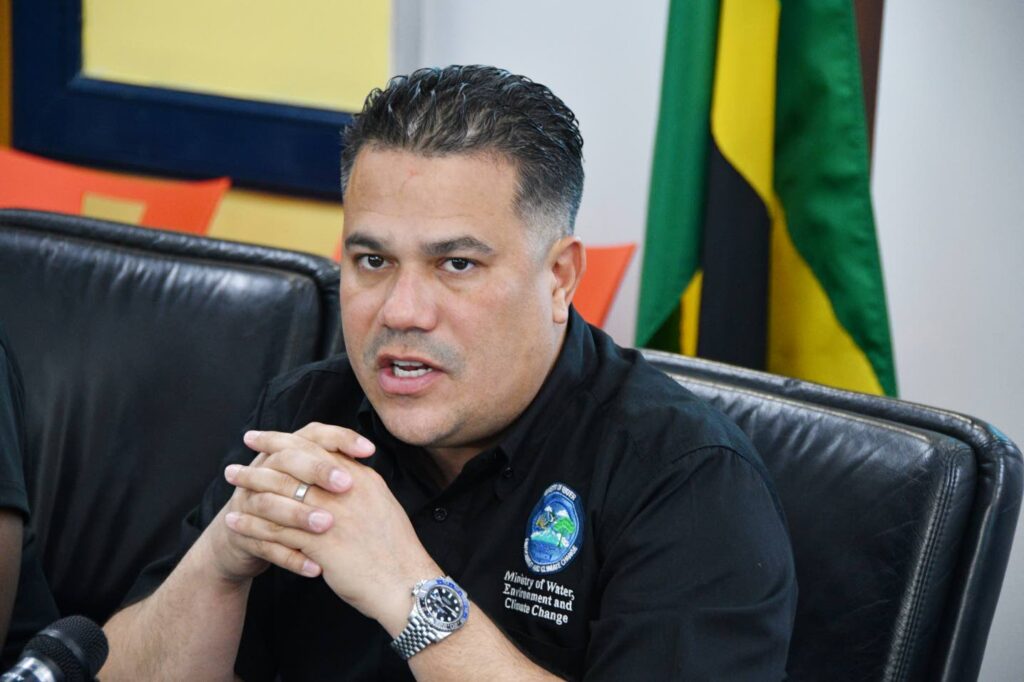
But Matthew Samuda, Jamaica’s incumbent Minister of Water, has pushed back hard against Hayles’ accusations, dismissing the claim as either deliberately misleading or born of willful ignorance. In an exclusive interview with Jamaica Observer on Monday, Samuda detailed the multiple ongoing and completed initiatives the government has already launched to boost NWC’s resilience to power disruptions, noting that the administration has already invested billions in upgrading the water network’s energy infrastructure since 2024.
Following the passage of Hurricane Beryl, which caused widespread damage across south-western Jamaica in 2024, the government installed 31 large-scale backup generators at key NWC facilities across the country, as part of a program targeting 110 critical water systems that serve more than 70 percent of the NWC’s total customer base. To date, Samuda confirmed, $1 billion Jamaican dollars have already been allocated and spent on this generator initiative.
Beyond backup generation, Samuda added, the government is already midway through an $850 million energy upgrade project for the NWC, a plan he first outlined publicly during his sectoral parliamentary address in April. He pointed out that Hayles, who represents the Westmoreland Western constituency, should already be aware of the ongoing upgrades, as work is actively taking place within his own electoral district. Samuda specifically referenced the Logwood water facility that supplies the major tourism hub of Negril, where the government installed a new backup generator after the original unit was destroyed by vandalism following Hurricane Melissa in October 2025, and has already purchased a replacement generator to restore full resilience to the site.
Addressing Hayles’ core claim that expanded solar adoption would have prevented the widespread water outages during the recent island-wide JPS blackout, Samuda pushed back on the feasibility of a full transition to renewables for the entire NWC network. He explained that strict constraints on available land and the steep upfront capital costs of large-scale solar infrastructure make a complete shift away from JPS impractical for all pumping systems. Samuda noted that the NWC’s monthly energy bill to JPS already hovers around $1 billion, depending on global fuel prices, and any full shift to off-grid renewables would only pass those massive costs onto Jamaican consumers, rather than eliminating them. That said, he acknowledged the government’s ongoing commitment to driving down energy costs for the NWC.
Samuda clarified that the government is already implementing solar solutions at multiple NWC facilities, alongside other efficiency upgrades: the agency is retrofitting its oldest, least efficient pumps to cut energy use, rewiring aging facilities to reduce on-site energy loss, and powering NWC administrative offices with solar to lower operating costs and extend operational hours during outages. He also revealed that work is already underway to convert the Mona Reservoir in St. Andrew into a utility-scale renewable energy facility, with a private investor already committed to the project and more than US$60 million allocated for development.
In addition to outlining the government’s progress, Samuda challenged Hayles, who served as State Minister for Water in the previous People’s National Party (PNP) administration between 2012 and 2016, to disclose what energy resilience investments the opposition completed during its time in office. Samuda argued that there is no public record of any significant generator purchases or solar panel installations by the PNP government during Hayles’ tenure, even as solar technology became widely adopted across Jamaica starting in 2009. He added that unrealistic calls for an immediate full transition ignore the country’s current fiscal constraints, noting that the government is committed to annual incremental investments until full energy resilience for the NWC is achieved, and there are no unexplained delays in the ongoing rollout. Samuda concluded that Hayles’ criticisms are nothing more than opportunistic political point-scoring that ignores the actual progress already being delivered.