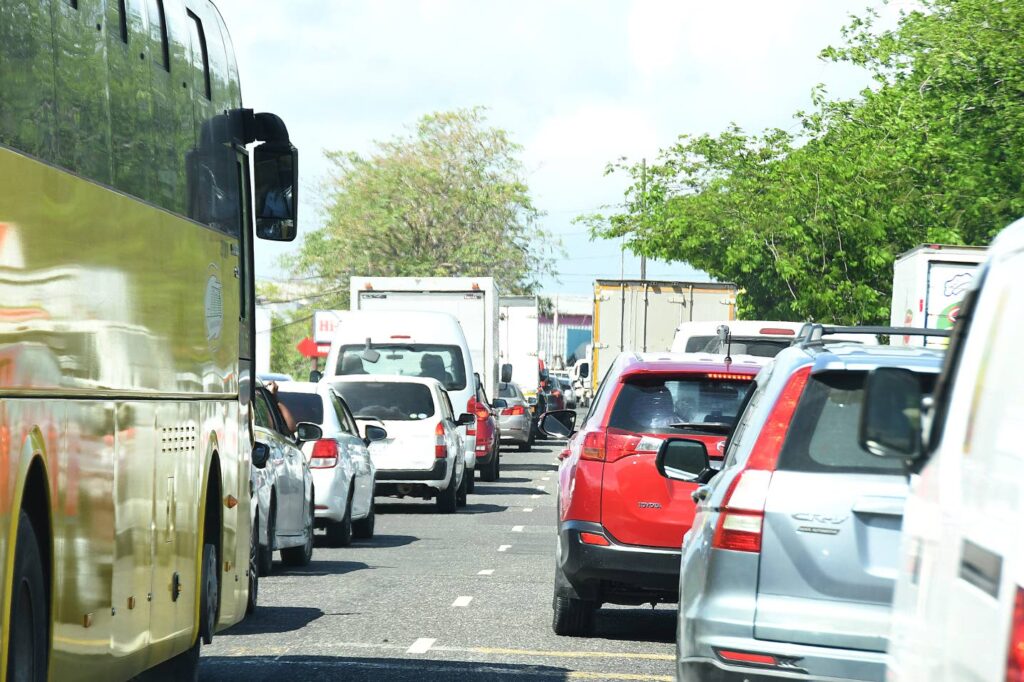
Across the idyllic small island nations of the Caribbean, a quiet but crippling crisis has been escalating: systemic traffic congestion has evolved from a daily commuter headache into one of the most pressing barriers to inclusive regional growth and development. In response, the Caribbean Development Bank (CDB) is spearheading a coordinated, multi-pronged regional strategy to redefine how governments approach gridlock, with the goal of boosting mobility, lifting productivity, and strengthening long-term economic competitiveness across member states.
Addressing attendees at CDB’s 56th annual general meeting held last week in Nassau, The Bahamas, CDB President Daniel Best framed the conversation around a paradigm shift: traffic congestion must no longer be treated as an isolated transportation issue, but as a systemic development challenge that touches every sector of the Caribbean economy and society. “Congestion is a productivity issue, a public health issue, a climate issue, a competitiveness issue,” Best emphasized. “At its core, it is a development issue because when people cannot move efficiently, economies cannot grow equitably.”
New research presented at the meeting underscores the staggering economic toll unaddressed congestion takes across the region. In Trinidad and Tobago, for example, the average commuter loses a stunning 793 hours per year to gridlock – the equivalent of 33 full work days. This lost time translates to an estimated 1.37 percent of the nation’s annual GDP drained away through forgone productivity. For the Caribbean as a whole, the average motorist spends 90 minutes stuck in traffic every single day, generating cascading costs including wasted fuel, inflated transportation overhead for businesses and households, and irreversible productivity losses. Globally, congestion drains hundreds of billions of dollars from national economies each year, a burden small island developing states are disproportionately ill-equipped to absorb.
Against a backdrop of ongoing economic and social uncertainty facing Caribbean nations, Best called for increased cross-border collaboration to build resilient, future-ready urban systems and economic structures that can accommodate growing demand for mobility. CDB’s Economic and Infrastructure Division has already begun advancing a holistic, integrated approach to congestion relief that moves far beyond the traditional go-to solution of new road construction.
Speaking at an EdgeX policy session titled *Stuck in Traffic: What Congestion Is Costing the Caribbean*, Acting Chief of the Economic Infrastructure Division William Ashby explained that while limited road expansion may play a small role in comprehensive plans, it cannot resolve the region’s congestion crisis on its own. “This is a regional problem, and therefore there is real benefit in bringing together practitioners and policymakers to share lessons and reproduce approaches that work,” he noted.
Ashby argued that the policy focus must shift to building interconnected, sustainable urban mobility systems that combine upgraded public transit, coordinated land-use planning, targeted demand management measures, and technology-enabled solutions. To support member states, CDB offers targeted technical assistance ranging from customized regional mobility plan development and granular congestion impact studies to feasibility assessments and policy guidance, enabling governments to make data-backed decisions rather than addressing transportation challenges through fragmented, project-by-project investments.
The bank is also actively encouraging public and private investment in multi-faceted transportation solutions, including expanded modern public transit networks, protected infrastructure for walking and cycling, upgraded intelligent traffic management systems, and digital mobility platforms that connect riders and transit providers in real time. Critical to the success of these efforts, Ashby noted, is strengthening institutional governance, improving coordination between disparate government agencies, and building technical capacity in specialized fields including traffic engineering, transport demand modeling, and long-term mobility planning.
Ashby also highlighted the underutilized impact of demand-management policies, which can deliver rapid relief at low cost. Measures such as staggered work and school hours, structured parking regulation, carpooling incentives, and expanded ride-sharing programs can significantly reduce peak-hour pressure on overstretched road networks across the region. Another persistent barrier to effective congestion management, he added, is the widespread lack of reliable, granular transportation data across most Caribbean countries. Leveraging real-time data from roadside sensors, GPS tracking systems, centralized traffic control centers, and digital performance dashboards would allow transportation authorities to anticipate congestion hotspots and deploy response measures far more efficiently.
CDB already has a track record of advancing sustainable transportation initiatives across the Caribbean. Recent projects include a comprehensive modernization of Saint Lucia’s public transit system and a pilot school bus program launched in Grenada to reduce private vehicle trips during peak commute hours. The bank continues to provide ongoing support for evidence-based transport planning, climate-resilient road infrastructure, integrated land-use planning, national transport policy development, and road safety initiatives across all member states. “Congestion in the Caribbean is solvable, but only if we treat it as the real development issue that it is,” Ashby concluded.
Regional transportation planner and leading traffic engineer Dr. Rae Furlonge added that even with the rapid growth in vehicle ownership across Caribbean roads and the persistent lack of robust reliable public transit in many territories, a suite of low-cost, short-term measures can deliver immediate congestion relief. These include optimized parking management, targeted upgrades to congested roundabouts and intersections, adaptive traffic metering, expanded park-and-ride facilities on urban outskirts, and stricter enforcement of existing traffic regulations.
Furlonge emphasized that arbitrary stopping by buses and other public transit vehicles is a major contributor to unnecessary gridlock in many Caribbean nations, pointing to Grenada as a successful model for how simple enforcement changes can improve flow. In Grenada, designated stopping zones are marked on roadways where road shoulders are not available, and heavy fines are levied for stopping outside these marked areas. “No stopping before an intersection and designated stopping zones about 60 metres beyond it — those are some other simple, short-term things that can make a difference,” Furlonge added.