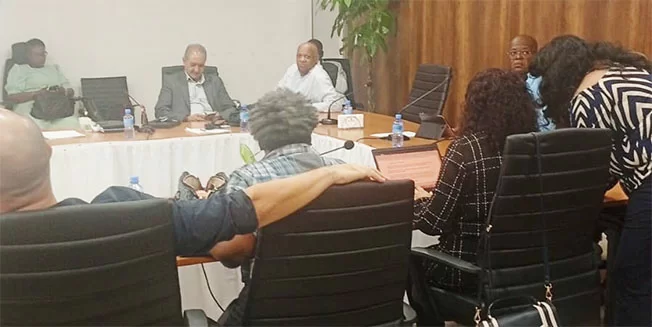
A weeks-long standoff between Suriname’s national government and combined education unions has come to a peaceful resolution, after intensive multi-party negotiations produced a comprehensive agreement to improve working conditions for educators and clear the way for an immediate resumption of regular classes across the country. The national work stoppage, which launched earlier that week, will formally end with the imminent signing of the agreement, which currently only awaits final technical edits before being formalized by all stakeholders.
Negotiations brought together representatives from the cabinet, the unified education unions, and a specially convened presidential commission to hash out concessions on core demands that triggered the industrial action. The final principle agreement addresses pressing grievances including unpaid back wages, long-overdue benefit adjustments, unpaid overtime, and the establishment of a permanent framework for future dialogue between the two sides.
Under the terms of the deal, education union leadership will immediately advise all their members to return to full regular teaching duties. Both sides have also committed to protecting the continuity of education going forward, and agreed to resolve future disputes through structured negotiation rather than industrial action wherever possible.
Among the most concrete commitments is a pledge to clear the backlog of administrative and legal status updates within the Ministry of Education, Science and Culture by a set timeline. The agreement also mandates that all unpaid overtime owed to part-time educators must be paid in full no later than the end of June. Additional concrete terms include new provisions for 20-year service gratifications, guaranteed standard payroll processing for union representatives, and the formal launch of a permanent consultation platform between union leadership and the education ministry.
A series of substantial benefit increases for active and retired educators make up the centerpiece of the agreement. The annual eyeglass allowance for educators will jump from SRD 2,000 to SRD 7,000 starting June 1, 2026, with a further increase to SRD 9,000 scheduled to take effect on January 1, 2027. Retired educators will also be eligible for this adjusted benefit. The monthly distance education allowance will rise from SRD 350 to SRD 850, while a new 14% of base salary allowance for continuing professional development has been introduced. Starting this August, educators will also receive an annual clothing allowance of SRD 5,000. For instructors teaching in the bachelor’s programs at the Teacher Training Institute (IOL), all future overtime will be compensated in line with the standardized MO-B salary scheme.
Both sides have acknowledged that this round of negotiations did not resolve every single demand raised by the unions. Remaining outstanding issues will be added to the agenda for future negotiation sessions to prevent renewed disruption to classes. The agreement marks a clear breakthrough in a conflict that had sparked widespread industrial action across the country in the days before the deal. Union leaders had previously stated they would only end the national strike once binding, concrete commitments were put in writing, a condition met by the finalized agreement.