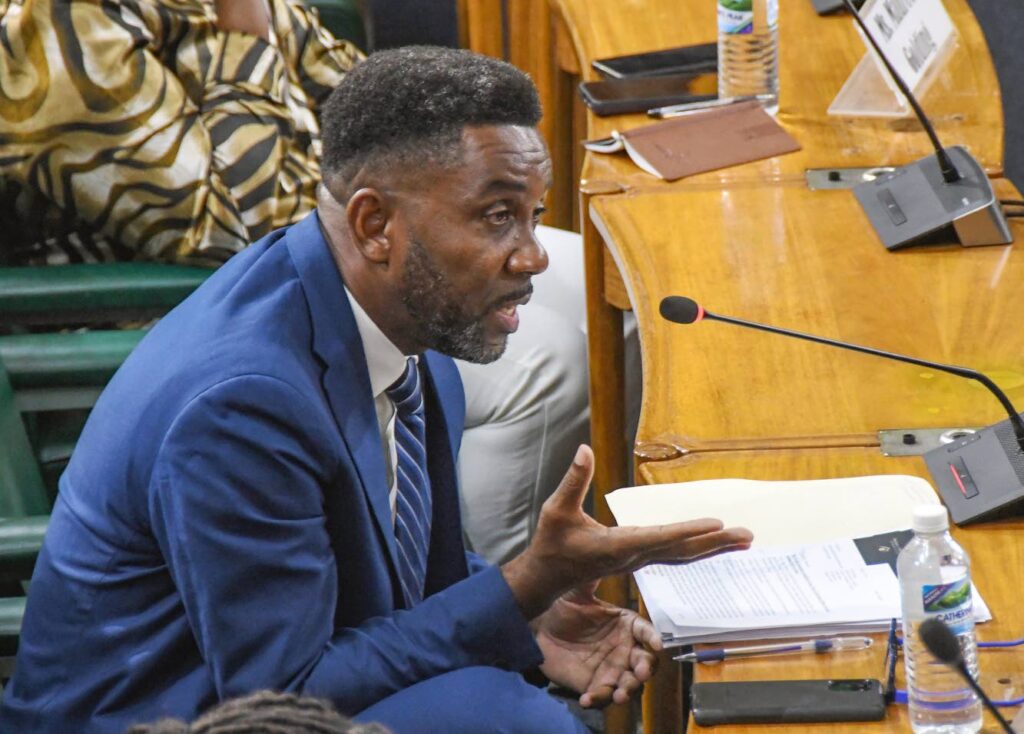
On Tuesday, a tense sitting of Jamaica’s Parliamentary Public Accounts Committee (PAC) delivered a startling new development in an ongoing audit probe of the University Hospital of the West Indies (UHWI), as former chief executive officer Kevin Hall told lawmakers he has no explanation for his signature appearing on an official customs document dated more than a year after he stepped down from his post.
Hall was summoned to appear before the committee as part of its review of a damning auditor general’s report that has already uncovered a host of questionable operational and financial practices at the prominent public hospital. A core point of contention from the audit centered on the irregularly dated C-84 customs form, which bore Hall’s signature and was filed in November 2023 – 13 months after Hall left his CEO role on October 31, 2022, wrapping up a six-year tenure and decades of service at the institution.
The questioning began with committee chair Julian Robinson raising longstanding audit concerns that pre-signed forms may have been misused after Hall’s departure. In his initial response, Hall acknowledged that a small number of blank internal administrative forms had occasionally been pre-signed during his tenure to speed up emergency customs clearances for urgent medical imports. He told the committee that shortly after submitting his resignation, he sent a formal second letter to UHWI management explicitly ordering that his name be removed from all active official documents that required his sign-off. He stressed that any remaining pre-signed forms should never have been used after he left office.
Hall explained that all customs-related forms were typically managed by the hospital’s Department of Materials and Contracts, which liaises directly with third-party customs brokers handling the hospital’s incoming shipments. Opposition MP Peter Bunting, representing Manchester Southern, pushed back on the practice of pre-signing any official documents, asking whether the policy created unnecessary vulnerability to fraud or abuse. Hall conceded in hindsight the practice carried risk, but noted that institutional trust between senior leadership teams justified the process for emergency cases, adding that current UHWI management should update internal controls to prevent future misuse.
The entire inquiry shifted dramatically when Auditor General Pamela Monroe Ellis clarified that the document in question was not one of the internal administrative forms Hall described – it was an official C-84 customs form pulled directly from Jamaica Customs’ ASYCUDA database, filed for an actual import transaction more than a year after Hall’s departure.
Robinson further distinguished the two documents, noting that the C-84 form is an official authorization for Jamaica Customs to process a shipment, relying on the signature of the hospital’s chief accountable officer to confirm legitimacy, rather than an internal administrative note. Stunned by this new information, Hall told the committee he had no connection to the transaction, never signed the document, and could not account for how his signature appeared on the form.
Government MP Juliet Cuthbert Flynn, representing St Andrew West Rural, repeatedly pressed Hall on the discrepancy, noting he had freely acknowledged pre-signing internal forms but refused to claim any connection to the customs document under investigation. Hall remained firm that he had no explanation, repeating that he had not been involved in UHWI management for more than a year and had no knowledge of the transaction. Flynn responded simply: “I’m baffled.”
The irregular signature case is just one part of a broader audit investigation into UHWI’s procurement and customs practices. The audit has already flagged multiple alleged abuses of the hospital’s tax-exempt import status, which investigators say was used to bring goods in for private entities, costing the Jamaican government an estimated $23 million in lost customs duties and fees. By the close of Tuesday’s hearing, PAC chair Robinson noted that Hall’s testimony had failed to resolve existing questions – instead, it had opened an entirely new line of inquiry into how a former CEO’s signature ended up on an official post-departure customs document.
“It raises other questions about how your signature, if it was your signature, or how a signature appearing to be one like yours, came to be on those documents,” Robinson told the committee, wrapping up the day’s testimony.