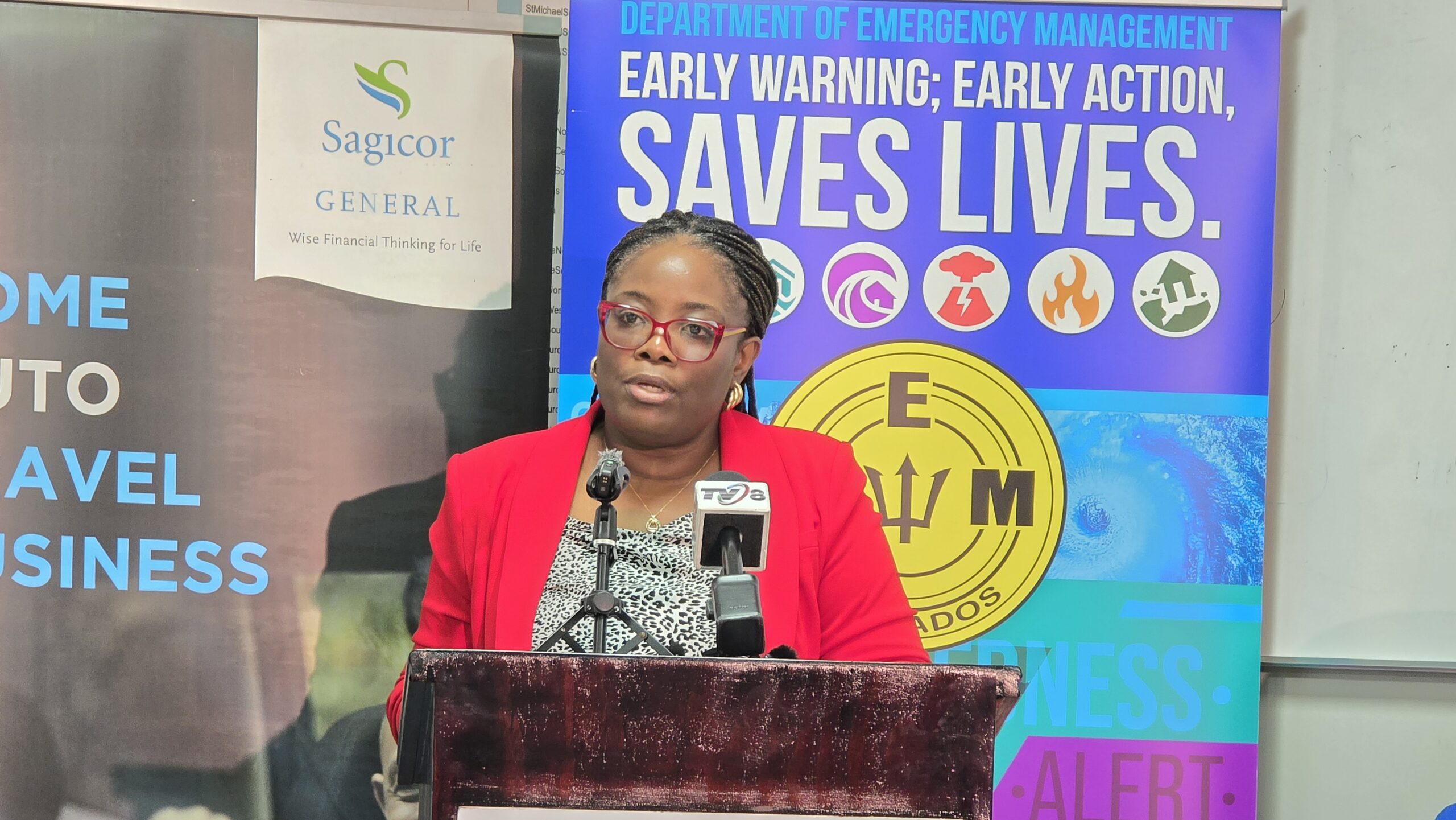
As the 2026 Atlantic Hurricane Season officially kicked off on Monday, Barbados has mobilized all levels of government, emergency response teams and key stakeholder groups to activate a comprehensive state of preparedness, positioning the small island nation to withstand and respond to any extreme weather event that may threaten its territory this year.
Speaking at the official launch ceremony hosted at the headquarters of the country’s Department of Emergency Management (DEM), Home Affairs Minister Gregory Nicholls emphasized that hurricane readiness is no longer a discretionary precaution for climate-vulnerable Caribbean nations — it is a non-negotiable foundation for national survival and long-term sustainable development.
Nicholls revealed that in the two weeks leading up to the season’s start, Prime Minister Mia Mottley personally chaired a series of national disaster risk management coordination meetings focused on aligning cross-agency systems and streamlining emergency response protocols. These high-level convenings set the tone for a whole-of-government approach to risk reduction that prioritizes proactive investment over reactive disaster response.
“We are directing significant resources toward expanding and improving early warning systems, and we are hardening our emergency communication networks to guarantee that fast, accurate public outreach can be delivered both before and after severe weather strikes,” Nicholls said. “Building climate-resilient infrastructure also remains a top national priority for this administration.”
He added that the government has continued advancing targeted infrastructure upgrades across high-risk areas, including expanded drainage improvements for flood-prone coastal and low-lying communities, reinforced sea walls and coastal defense systems, and retrofits of critical public infrastructure designed to withstand the stronger, more frequent storms driven by climate change.
To broaden preparedness beyond government agencies, Nicholls noted that ongoing public awareness campaigns are working to empower individual households and local communities to build their own emergency plans and stockpiles. The government has also reaffirmed its longstanding commitment to ongoing collaboration with regional and international climate and disaster partners, a partnership Nicholls said is critical to boosting collective resilience across the Caribbean.
“We will keep working hand-in-hand with our regional and global partners, investing in preparedness infrastructure and building more robust systems that protect both lives and livelihoods,” Nicholls said. “The annual arrival of hurricane season reminds us not only of the grave climate challenges we face, but also of the resilience, determination and unity that define Caribbean people. Through shared preparation, cross-border cooperation and constant vigilance, we can meet these challenges together.”
The Barbados Defence Force (BDF), a key backbone of the country’s national emergency response framework, has already completed its annual pre-season readiness training and verification program, and is standing by to deploy support at a moment’s notice, according to BDF Chief of Staff Brigadier Carlos Lovell.
“Over the past several months, our teams have reviewed and updated all contingency plans, conducted full inspections of all response equipment and operational facilities, and verified the readiness of all personnel and assets set aside for hurricane response,” Lovell said. “We have also completed a full cycle of targeted training and full-scale emergency response exercises, all designed to ensure we can deliver a rapid, comprehensive response if a storm hits.”
Lovell noted that a decade of repeated hurricane experiences has cemented three non-negotiable lessons that have shaped the BDF’s current preparedness framework. “First, communities that invest in early preparation consistently see less damage and loss of life. Second, agencies and stakeholder groups that train together coordinate far more effectively during a crisis. Third, communities that prioritize readiness recover far faster after a storm passes,” he explained. “These lessons have strengthened our procedures, sharpened our national planning, and boosted our readiness for whatever this hurricane season brings.”
The BDF stands ready to deploy a full suite of support services during any hurricane emergency, including engineering support for infrastructure damage, transport and logistics for evacuation and relief supplies, maritime search and rescue operations, inter-agency communication support, and on-site medical assistance, Lovell said. He echoed Nicholls’ emphasis on cross-partnership collaboration, noting that effective disaster response has never been the work of a single agency.
For its part, the Department of Emergency Management has intensified pre-season readiness efforts over recent months, rolling out comprehensive reviews of the country’s legislative, policy and operational frameworks to close any gaps in response capacity, DEM Director Kerry Hinds told the launch.
These updates include a full legislative review of the country’s core Emergency Management Act, comprehensive reviews of all existing response policies and operational procedures, and full inspections and upgrades to all DEM facilities and response equipment to ensure full functionality. The agency has also expanded training programs for frontline emergency responders, community-level disaster volunteers, and partner agency personnel, and updated all cross-agency memoranda of understanding to clarify roles and coordination protocols during a crisis.
“We know as the lead national emergency management agency that we cannot tackle this challenge alone — partnerships at every level are non-negotiable,” Hinds said. She closed the ceremony by issuing a national call to action, urging every segment of Barbadian society to make preparedness a shared priority.
“Let us make a commitment today to turn preparedness into a shared, contagious effort across every part of our nation — as households, as local businesses, as communities, and as government,” Hinds said. “When every group does its part to prepare, our whole nation becomes stronger, and we are ready to face whatever this season brings.”