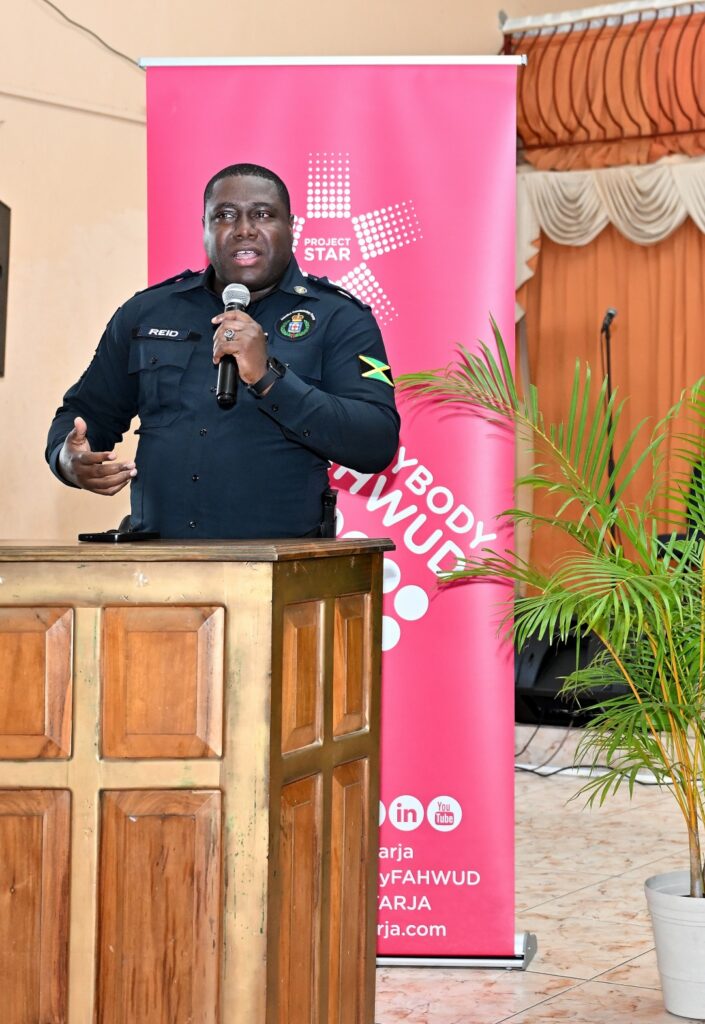
ST JAMES, Jamaica — For a neighborhood long defined by violence and fear, Salt Spring in St James is celebrating a remarkable turning point: law enforcement officials confirm no homicides or shootings have been recorded in the community since the beginning of 2026, marking the most dramatic downward trend in violent crime the area has seen in decades.
Deputy Superintendent Rodrick Reid, acting operations lead for the St James Police Division, told attendees at a recent Project STAR-hosted town hall held at the Salt Spring New Testament Church that this unprecedented progress is the product of years of consistent, intentional partnership between local residents and law enforcement. The town hall gathering was convened to share updates on Project STAR’s community transformation work and collect resident feedback to refine ongoing programming.
“What we’re seeing right now is a significant, sustained drop in criminal activity that’s already changed daily life for people who live here,” Reid said in comments included in an official release from Project STAR. “Not long ago, Salt Spring was a place most people avoided, too worried about violence to walk through the neighborhood. That reputation is finally starting to change for the better.”
To put the progress in context, Reid noted that the community recorded two murders in all of 2025. While he emphasized that any loss of life to violence remains unacceptable, the 2025 numbers already represented a massive shift from the community’s bloodier past, paving the way for the historic milestone achieved in 2026. “Zero murders and zero shootings at this point in 2026 is incredibly encouraging, but we can’t let our guard down,” Reid said, urging residents to continue their close collaboration with police to keep the community safe.
Reid singled out the five-year community transformation initiative Project STAR as a critical driver of the crime reduction gains, noting that targeted investment in social and economic development has created the stable conditions needed for safety to take root. “When all stakeholders come together with a shared goal, this is the kind of success we can deliver,” he said.
He also highlighted the transformed relationship between police and the Salt Spring Community Development Committee (CDC), a partnership that once was fractured but now forms the backbone of local crime prevention work. “There was a time when the CDC and local law enforcement didn’t see eye to eye, that’s all in the rearview now,” Reid explained. “Today, CDC members are core partners, and we work side by side to move Salt Spring forward.”
Saffrey Brown, director of Project STAR, explained that the initiative’s community-centered model is designed to address the root causes of violence by strengthening crime prevention systems and rebuilding broken trust between residents and institutions. “One of our biggest wins has been mending the divide between residents and local police,” Brown said. She added that programming ranging from youth sports leagues to peace building workshops and social support networks has given young people, who are often most vulnerable to recruitment by criminal groups, positive alternatives to a life of crime.
Launched as a five-year effort to drive social and economic change in under-resourced communities grappling with persistent high crime, Project STAR selected Salt Spring for intervention in late 2023. Full implementation kicked off in 2024, starting with community consultations and rolling out programming focused on expanding social protection, boosting local economic opportunity, and centering community leadership in public safety work.
Gregory Harris, the city councillor for the Salt Spring Division, echoed praise for the initiative, saying its impact goes far beyond lower crime numbers to reshape how residents see themselves and their neighborhood. “Project STAR hasn’t just changed the physical and social conditions in Salt Spring — it’s changed the mindset of our people,” Harris said. “By listening to residents and working with them instead of for them, the project has broken down decades-old barriers and built a level of trust and unity we’ve never experienced before. What we’re seeing now is a community that’s come together as one, and that’s the strongest possible foundation to keep violent crime down for good.”