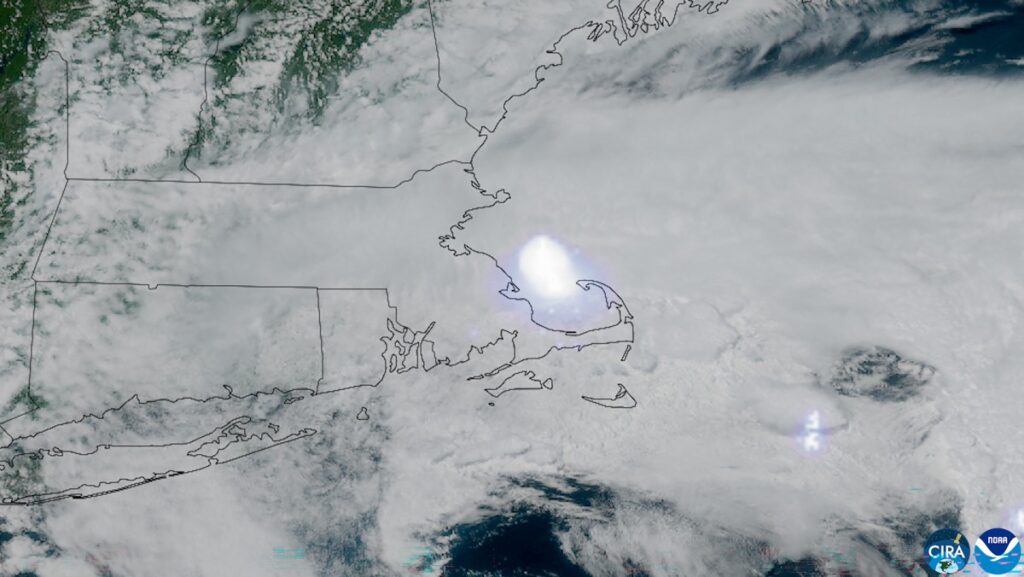
A rogue meteor barreling toward Earth broke apart in the upper atmosphere over the northeastern United States on Saturday, triggering shockwaves loud enough to rattle homes and leave local residents unsettled, NASA has confirmed. The explosive disintegration of the extraterrestrial object occurred at 2:06 p.m. local time, with the fireball fragmenting over a cross-border region spanning northeastern Massachusetts and southeastern New Hampshire, according to agency representative Jennifer Dooren, NASA’s Deputy News Chief, in an official comment to AFP.
In a key clarification, Dooren emphasized the incoming object was a fully natural cosmic body unrelated to any ongoing annual meteor showers. It was not, she confirmed, leftover debris from an out-of-date satellite or discarded human-made space hardware re-entering Earth’s atmosphere. Scientists calculated the total energy released during the meteor’s breakup to match the detonation of roughly 300 tonnes of TNT — the force behind the deep, resonant booms reported across a wide swath of the region.
At the moment it shattered, the meteor was moving at a blistering speed of more than 75,000 miles per hour (over 120,000 kilometers per hour), and was cruising at an altitude of approximately 40 miles above Earth’s surface. The unexpected loud blasts triggered widespread alarm among local communities, with hundreds of social media users sharing accounts of the noise strong enough to shake the foundations and windows of residential buildings.
The Saturday event draws a sharp contrast to one of the most damaging meteor events in recent history. Back in 2013, a far larger house-sized fireball exploded over Chelyabinsk, Russia, at an altitude of just 14 miles. That blast packed a force equivalent to 440,000 tonnes of TNT, shattered windows across a 200-square-mile area, and left more than 1,600 people injured, most hurt by flying broken glass. Unlike the 2013 incident, the US event caused no reported injuries or structural damage due to its higher altitude and far smaller size.