Authorities in Trinidad and Tobago’s capital are ramping up enforcement of long-standing public nuisance laws, with the Port of Spain City Corporation issuing a stark public warning that public urination carries serious criminal consequences — including up to two months of prison time for convicted offenders.
In an official announcement shared via the city corporation’s Facebook page, leadership emphasized that the capital city deserves public respect, and that public urination is explicitly categorized as a criminal act under local legislation. The offense falls under Section 46(h) of the country’s Summary Offences Act, which labels the act as willful obscene exposure.
Beyond the basic criminal classification, the corporation clarified that individuals caught violating the law can even be formally charged as a “rogue and vagabond” under the statute. For those found guilty, mandatory fines start at 500 Trinidad and Tobago dollars, and convictions can lead to a custodial sentence of up to two months. The statement also added that offenders who fail to pay court-ordered fines may face extended prison time that includes hard labor.
Municipal police have already increased their presence across high-traffic public areas, with regular patrols rolled out across all downtown public squares and busy city districts. The corporation also pushed back on a common excuse for the offense, noting that claims of no nearby accessible restroom do not qualify as a legal defense under the law. All residents and visitors are required to use approved commercial or municipal public restroom facilities when needed.
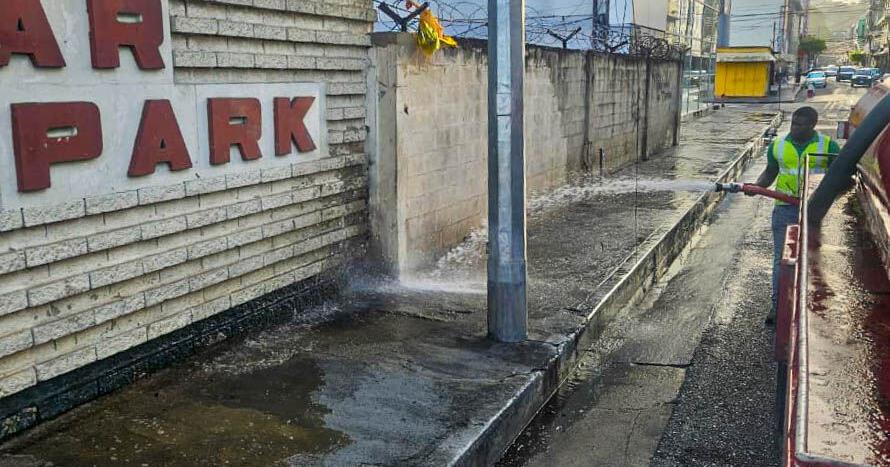
To complement the new enforcement push, the city’s Street Washing Sanitation Unit already conducts daily deep-cleaning operations across Port of Spain every morning, focused on preserving public health and hygiene across the capital. In closing, the city corporation called on the public to join in keeping the capital clean, noting that collective civic pride starts with individual responsibility and respect for shared public spaces.