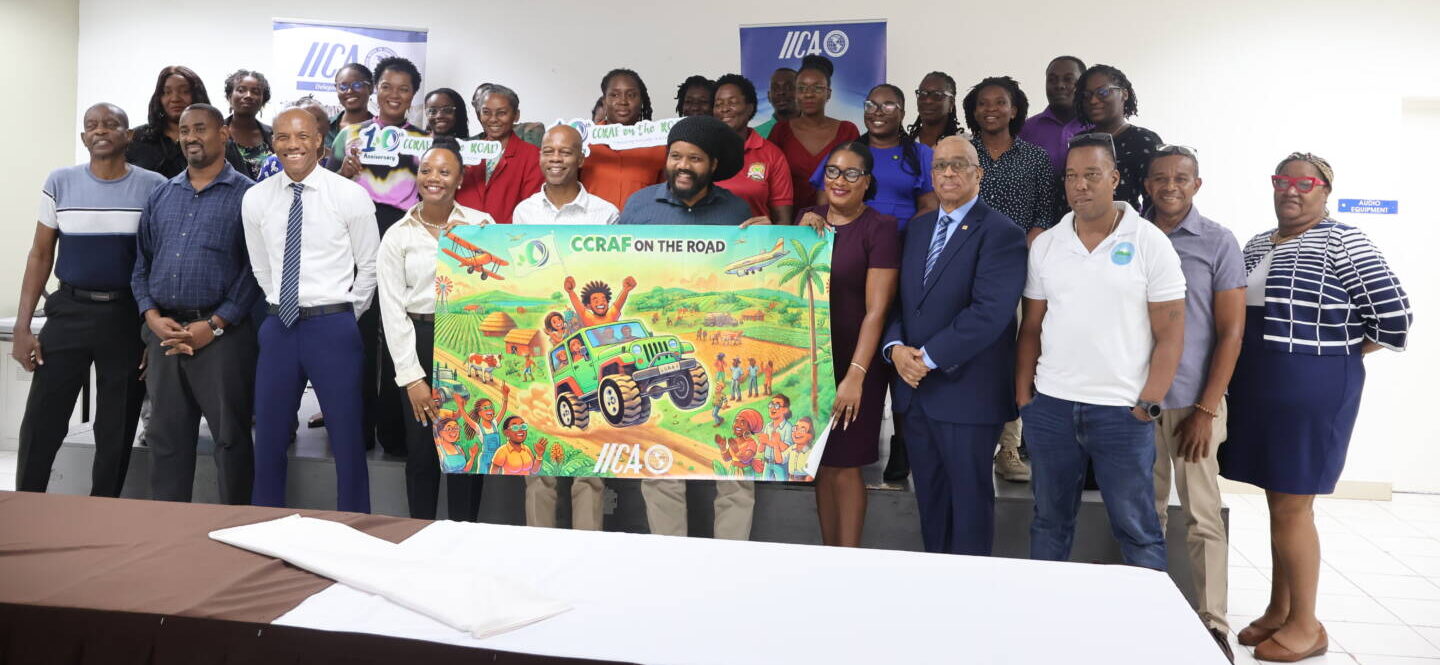
On May 20, the Grenada Cricket Stadium played host to the 2026 IICA Grenada Accountability Seminar, a landmark gathering centered on the critical theme of advancing youth development in agriculture. Bringing together young aspiring producers, government leaders, agricultural industry stakeholders, and global and regional development partners, the event carved out dedicated space to unpack actionable strategies for expanding and deepening youth engagement across Grenada’s agricultural sector, while also giving the Inter-American Institute for Cooperation on Agriculture (IICA) a platform to share its progress on ongoing support for the island’s national agricultural development goals.
Opening the proceedings, Gregg Rawlins, IICA’s representative for the Organization of Eastern Caribbean States (OECS), laid out the institution’s comprehensive eight-pillar regional strategy designed to empower and engage young people in agriculture across the Eastern Caribbean. The framework prioritizes four core priorities: strengthening interconnected youth agricultural networks, expanding equitable access to cutting-edge training and digital agricultural technology, backing youth-led agri-entrepreneurship, and shaping enabling policy environments that remove barriers to youth participation. Looking ahead to next steps in Grenada, Rawlins confirmed IICA’s commitment to partnering with the national government and other local stakeholders to launch a dedicated national youth in agriculture network, building on recent OECS regional youth-focused initiatives to drive the strategy’s implementation on the ground.
Hon. Lennox Andrews, Grenada’s Minister for Agriculture, Lands and Forestry, reinforced the national government’s unwavering commitment to positioning young people as the central driving force of the country’s agricultural transformation. This transformation, Andrews emphasized, will be rooted in agricultural modernization, climate-smart production practices, youth entrepreneurship, and value-added processing that boosts profit margins for young producers. To deliver on this commitment, the minister outlined a suite of targeted interventions aimed at removing the most common barriers young people face: expanded access to affordable land, tailored financing options, hands-on skills development, and support for innovative production practices. He detailed ongoing skills training offerings already available through the government’s extension services and dedicated youth desk, including short courses covering crop and livestock production, protected agriculture, and industry-standard good agricultural practices. The Fisheries Division, he added, offers specialized training for young fishers in safe product handling and value-added processing, while partnerships with regional institutions including IICA and the Caribbean Agricultural Research and Development Institute (CARDI) have already delivered training in climate-smart agriculture, sustainable water management, drought and pest-resilient crop varieties, and effective use of climate data for farm planning. In a major policy announcement, Andrews revealed the government’s plan to acquire 102 acres of agricultural land, which will be subdivided into plots and made exclusively available to young people seeking to enter or expand their operations in the sector.
Senator Seville Francis, Parliamentary Secretary in the Ministry of Youth and Sport, further outlined the range of government-backed support programs designed to help young people access critical agricultural resources, skills training, and business development support. Francis noted that young farmers registered with national extension services or included on the official national farmers registry are eligible for a range of in-kind support, including free seeds, planting materials, fertilizer, irrigation equipment, one-on-one technical advice, and connections to formal regional and international markets. For young entrepreneurs with viable business plans, she added, financing and tailored entrepreneurial support for agricultural ventures is available through the Grenada Development Bank and broader national micro, small, and medium enterprise (MSME) support initiatives.
A core highlight of the seminar was its open, interactive format, which gave young farmers and agri-entrepreneurs direct access to policymakers and development partners to raise the specific challenges they face and collaborate on solutions. A youth-led dialogue facilitated by young farmer Bevon Charles centered on the most pressing barriers to entry and growth — particularly limited access to affordable land and affordable financing — while also highlighting untapped opportunities in technology-driven innovation and value-added processing. Attendees explored a range of emerging high-growth sub-sectors that hold particular appeal for young producers, including digital agriculture, hydroponics, climate-smart production technologies, drone applications for farm management, protected agriculture, and local value-added processing, all of which can boost profitability and make agriculture a more attractive career path for young Grenadians.
Additional program contributions included a presentation from Cindy Lewis, project manager for the Grenada Young Entrepreneurs in Agriculture and Agribusiness Project, who outlined ongoing efforts to boost national agricultural output through targeted financial grants for small-scale producers and professional certification opportunities for young agricultural workers. One of the most significant outcomes of the seminar was renewed collective momentum to establish the long-discussed national Youth in Agriculture Network, a dedicated platform for advocacy, knowledge sharing, and collaboration among young people working across the agricultural sector. Work on the network is already underway under the CDF Young Entrepreneurs in Agriculture Project, with ongoing technical and strategic support from IICA.
Gregory Delsol, IICA Grenada’s technical specialist, also updated attendees on the progress of two key ongoing IICA initiatives on the island: the construction of a climate-friendly solar-powered sea moss drying facility, and the Global Water Partnership-Caribbean (GWP-C) Alliance Water Conservation and Improved Irrigation Project, which aims to boost water security for Grenadian farmers amid growing climate volatility. Coordinators from the Caribbean Climate Responsive Agriculture Forum (CCRAF), who were on island for the forum’s “CCRAF on the ROAD” outreach series, also used the occasion to recognize participants who successfully completed the Beginner to Business (B2B) three-part entrepreneurship webinar series for young producers.
By the close of the seminar, all participating stakeholders reached a shared conclusion: sustained cross-sector collaboration between the national government, regional institutions, youth-led groups, development partners, and the private sector is essential to building a more inclusive, resilient, and innovative agricultural sector that can attract and retain the next generation of agricultural leaders in Grenada. Attendees unanimously emphasized that investing in youth empowerment in agriculture is not just a priority for young people — it is a critical foundation for long-term food security, ongoing innovation, and climate resilience across Grenada’s entire agri-food system.