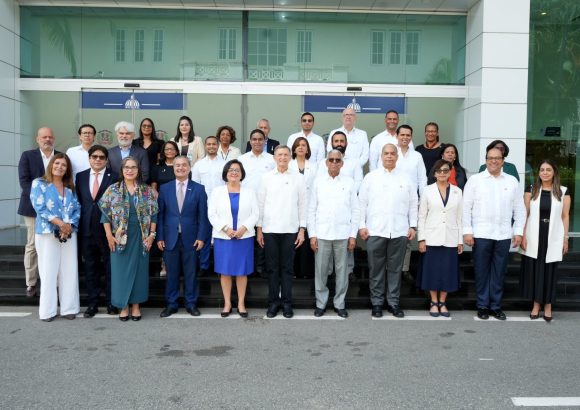
In a high-level diplomatic gathering hosted in Santo Domingo, officials from the Dominican Government and the United Nations System convened their Fourth Political Dialogue this week, centering discussions on the far-reaching political, economic, social and security ramifications of Haiti’s prolonged ongoing crisis, and its disproportionate cross-border effects on the Dominican Republic.
Leading the closed-door talks were Dominican Republic Foreign Minister Roberto Álvarez and Julia del Carmen Sánchez, United Nations Resident Coordinator for the country. Throughout the meeting, the two top representatives delved into how Haiti’s multifaceted breakdown of order continues to strain core pillars of Dominican national life, including domestic stability, societal cohesion, long-term sustainable development progress, and the country’s standing within the broader Caribbean region.
Attendees used the dialogue as an opportunity to conduct a full review of policy measures the Dominican state has already rolled out to mitigate the cascading consequences of the neighboring crisis. Particular focus was placed on key priority areas: cross-border administration and control, the strain on local public services, the protection of national security, upholding human rights standards for both migrants and local populations, and preserving domestic social stability along the shared border.
Beyond assessing existing response efforts, the two sides also mapped out new avenues to deepen collaborative work between the Dominican government and the United Nations. These potential next steps include designing flexible adaptive mechanisms for UN support to the Dominican response, and maintaining continuous, up-to-date analysis of the fast-shifting situation on the ground in Haiti to inform evidence-based policy adjustments.
By the close of the gathering, both the Dominican Government and the United Nations System issued a joint reaffirmation of their shared commitment to sustaining strategic dialogue and coordinated cooperation. The long-term partnership remains focused on addressing regional instability, tackling growing humanitarian needs stemming from the Haitian crisis, and advancing inclusive sustainable development across the island of Hispaniola.