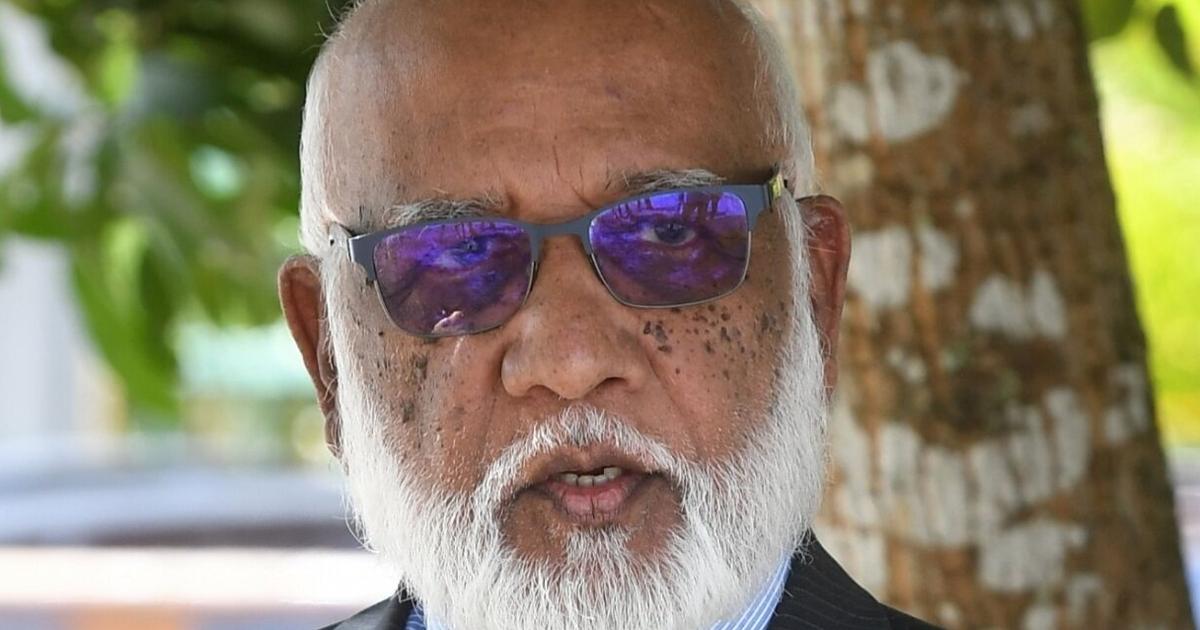
A former top law enforcement oversight leader in Trinidad and Tobago is sounding the alarm over growing rifts between citizens and the national police force, as public outrage mounts over recent legal action against a paralyzed woman linked to a controversial 2026 police shooting. Nizam Mohammed, who previously chaired the Police Service Commission (PolSC), is calling for immediate intervention from state authorities to head off deepening tensions that he says have already pushed public confidence in the justice system to a breaking point.
The controversy centers on the January 20, 2026 shooting of Kaia Sealy and her common-law husband Joshua Samaroo, following a police chase in St Augustine. The encounter left Samaroo dead and Sealy paralyzed from her injuries. Last week, nearly a year after the incident, police announced multiple arrest warrants for Sealy – who is currently receiving medical treatment abroad – including a charge of manslaughter for Samaroo’s death. Law enforcement alleges Sealy opened fire on responding officers during the chase.
The unexpected charges have sparked widespread public demonstrations in support of Sealy, with the most recent rally held Sunday drawing roughly 200 attendees. At that protest, organizer Allyssa Phillip accused authorities of making Sealy a scapegoat for the incident and repeated calls for the resignation of Police Commissioner Allister Guevarro.
Speaking during an interview with TV6’s Morning Edition on Monday, Mohammed argued that the mishandling of the high-profile case has widened an already dangerous gap between the Trinidad and Tobago public and state institutions, including the Trinidad and Tobago Police Service (TTPS). He noted that grassroots citizen groups across the country have now mobilized around the case, demanding transparent answers from law enforcement that have yet to be provided.
One of the core public grievances Mohammed highlighted is the mixed messaging around Sealy’s status in the months immediately after the shooting. When Sealy was hospitalized under police guard following the incident, authorities framed the presence of officers as a protective measure, not as surveillance of a suspect. Only recently has the state moved to formalize charges, leaving many members of the public confused and distrustful of the investigation’s timeline.
Mohammed criticized the investigation into the shooting for taking what he called an “inordinately long time” to reach the current stage, saying authorities failed to act with the urgency and diligence required to prevent public anger from escalating. From the earliest days of the incident, members of the public have had access to video footage of the encounter, allowing them to form their own conclusions about what unfolded. Mohammed said widespread public opinion already views the manslaughter charge against Sealy as shocking, and he remains unconvinced that senior law enforcement and administrative leaders understand the depth of public concern.
Sunday’s spontaneous, well-attended demonstration, he argued, is proof that the public is demanding answers – and that authorities have a non-negotiable duty to respond. He pointed out that Sealy is not just a suspect: she is a mother, permanently disabled by the shooting, now facing a life-altering criminal trial that could end in a conviction for manslaughter. Mohammed questioned whether any jury in Trinidad and Tobago, having seen the widely circulated footage of the shooting that shaped public perception, could ultimately find Sealy guilty. He warned that failure to address public concerns will only lead to more civil unrest and deeper polarization in the coming months.
Mohammed acknowledged that the Director of Public Prosecutions is legally required to make charging decisions based on the evidence submitted by investigators, but stressed that state leaders have a responsibility to eliminate widespread public doubt around the case. The administration of justice impacts every segment of society, he said, and this issue requires a coordinated, collective response from all relevant state institutions. He warned that governance cannot simply ignore the widespread frustration of the public, noting that the disconnect between citizens and leaders is growing at an accelerating pace.
Both the PolSC and the Police Complaints Authority have so far had no formal role in reviewing the case, Mohammed confirmed, adding that the unexplained delays in the investigation have left the general public increasingly restless. To repair the fractured relationship between the TTPS and the community, Mohammed said, meaningful institutional change is needed. He recalled that under former Police Commissioner Dwayne Gibbs, who led the force from 2010 to 2012, the service launched a successful initiative to build community-focused “model police stations” designed to improve access and relations between officers and residents. Today, those facilities are shuttered and unused, and many existing police stations still lack the basic infrastructure needed to serve the public effectively.
Beyond infrastructure, Mohammed called for cultural reform within law enforcement, saying all ranks of the service – from junior officers to senior leadership – need to be trained to engage respectfully with the public. He criticized the detached, “high and mighty” approach adopted by too many current law enforcement leaders, which he says has directly contributed to the erosion of public trust that the Sealy case has now brought to a head.
“Time has run out,” Mohammed said, reiterating his urgent call for authorities to intervene immediately to address the crisis. He stressed that for Trinidad and Tobago to remain a free, functional society, all state institutions must adhere to the rule of law, ethical governance and accountability to the public. Failure to do so, he warned, will leave the divide between citizens and the state unbridgeable.