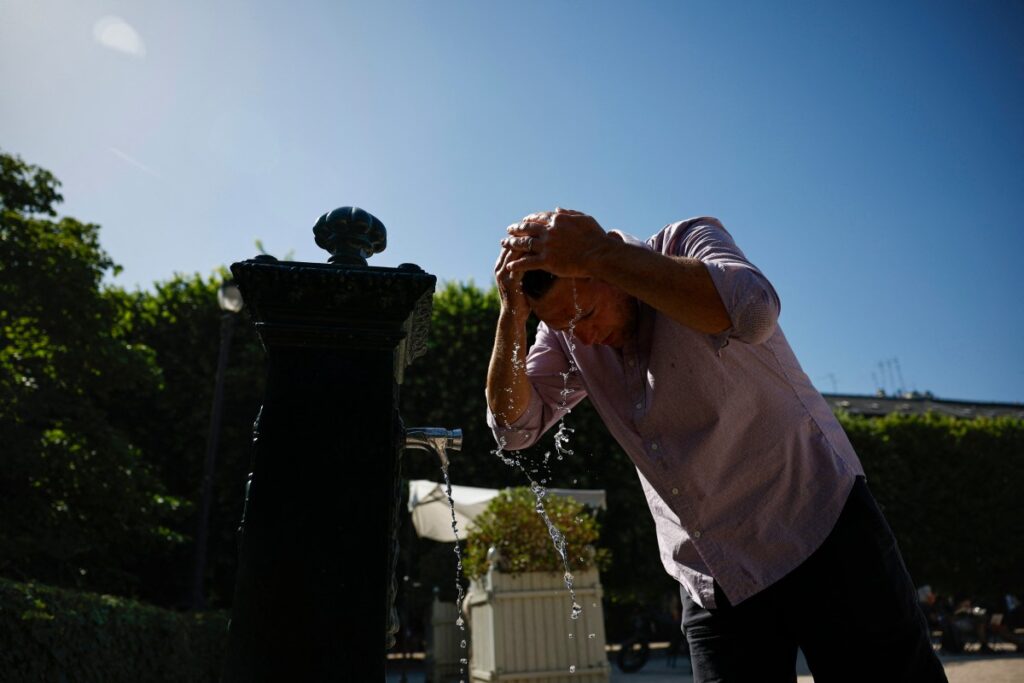
A historic early-season heatwave is pushing temperatures to unprecedented heights across Western Europe this week, forcing millions of residents to scramble for cooling solutions and leaving at least 11 people dead in weather-related incidents. The extreme heat is driven by a high-pressure “heat dome” carrying warm air north from Northern Africa, trapping unseasonably hot conditions over much of the continent and shattering decades-old May temperature records.
On Tuesday, the United Kingdom logged its hottest May day ever recorded, with a reading of 35°C near London — an increase of 1.5°C over the previous record set just 24 hours earlier. France has similarly broken its national May temperature record two days in a row, with national weather forecasters predicting the swelter will persist through the week, with peaks as high as 39°C in some inland regions. Ireland recorded a new May high of 28.8°C, while Spain is forecasting widespread highs of 36–38°C through Friday and tropical nights with little overnight cooling in southwestern areas of the country.
For many Northern European residents, who have long resisted widespread adoption of home air conditioning, the unrelenting heat has forced a shift in thinking. Gurjit Gill, a 47-year-old banking worker in London, told reporters he was grateful to head to his air-conditioned office each day, and is now considering purchasing a unit for his home. “The bedrooms at nighttime are quite unbearable,” he explained.
Across the continent, people have turned to public spaces to find relief. Crowds have flocked to coastal beaches, gathered at public fountains to splash cool water on themselves, including Rome’s iconic Barcaccia Fountain and public misting stations set up by city officials in Vienna. At the French Open tennis tournament in Paris, fans sweltered through 33°C on court, while players described competing in the conditions as draining — Norway’s Casper Ruud said the heat left him feeling “like a zombie” mid-match. To protect outdoor workers, Italy’s Lazio region implemented an emergency ban on outdoor construction and labor between 12:30 p.m. and 4 p.m. daily.
The extreme heat has already turned deadly. French authorities confirmed seven heat-related deaths by Tuesday, five of which were drownings as people ventured into unguarded bodies of water to cool off — most lifeguard services do not begin seasonal patrols at European beaches until July. In England, four teenagers have drowned in separate incidents since Sunday, amid a surge in people seeking relief in rivers and lakes.
Climate scientists warn this type of extreme early heatwave is directly linked to human-caused climate change, which is making extreme heat events hotter, longer, and more frequent across the globe. Friederike Otto, a climate science professor at Imperial College London, noted that temperatures of this scale were once extremely rare even in the middle of summer. “This record-breaking heat has the fingerprints of climate change all over it,” Otto said. “The science is very clear — climate change makes these heatwaves hotter, longer and far more frequent.” According to U.S. National Oceanic and Atmospheric Administration data, Europe has warmed faster than any other continent since 1990.
Even visitors to the region are struck by the visible impact of rising global temperatures. Philippe Bignens, a 56-year-old Swiss tourist visiting London with his father, said the pair had to scrap their sightseeing plans and retreat to their air-conditioned hotel during the hottest hours of the day. “If you’re not concerned about global warming, you must be deaf, blind altogether, right?” Bignens said. “We have to be concerned and try to do something about it.”
The heat has also sparked social tension, with France’s BFMTV news channel reporting that its weather team has received threats and insults from climate-skeptic online users over its standard heatmaps coloring extreme high temperatures red, which are based on widely accepted climate science. For agricultural producers, the early heat is already causing significant disruption to harvests. Benjamin Boisson, a fruit grower in southern France, said an early warm spell forced him to harvest his apricot crop five days earlier than planned, catching major retail buyers off guard who were still selling imported Spanish apricots. He added that extreme temperature swings this spring threaten to cut overall production and complicate cold storage for ripe fruit.
Forecasters across the region warn the unseasonable heat will continue for at least several more days, with no significant cooling expected before the weekend.