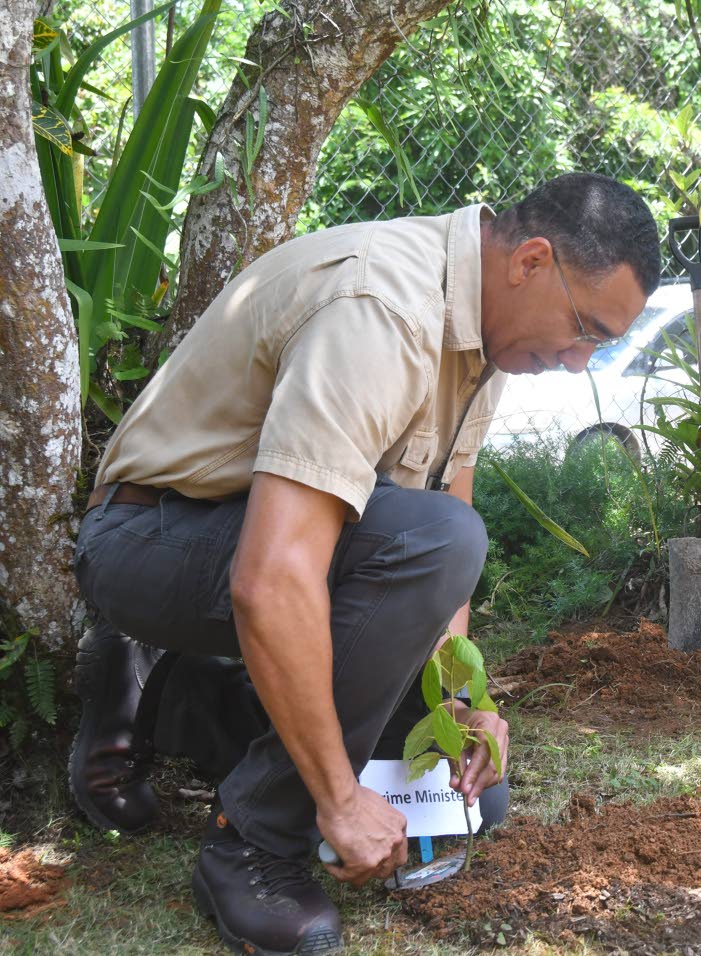
As Jamaica prepares to mark its annual Labour Day, the nation’s leader has delivered a stirring address tying the holiday’s core ethos of service to the ongoing work of recovering from Hurricane Melissa, while laying out a bold vision for long-term national renewal. Unlike common framing that frames nation-building as the exclusive responsibility of official leadership, the address opens with a core reminder: every Jamaican carries a stake in shaping the future of their country, through collective effort, intentional discipline, and generous community spirit. This year, the call to service carries uncommon urgency, coming months after Hurricane Melissa carved a path of destruction across the island, leaving thousands of families and communities grappling with lasting damage. While many areas have made incremental progress in recovery, hundreds of households still lack adequate shelter, access to critical public services, and stable pathways to rebuild their livelihoods. For those still facing hardship, the leader offered a clear reassurance: no Jamaican left affected by the storm will be forgotten. Outlining the government’s ongoing recovery commitments, the address confirms that more than JMD 67 billion has already been earmarked for relief and reconstruction work. A substantial portion of that funding, JMD 10 billion, has been allocated to the ROOFS Programme, which provides direct grants to eligible households to fix storm-damaged roofs and complete essential home repairs. Critical public infrastructure is also being restored: damaged schools and residential properties are undergoing repairs, a strategic loan to the Jamaica Public Service (JPS) is accelerating the full restoration of power across the island, and one of the largest debris clearance operations in the nation’s history has been completed across all affected parishes. In partnership with the National Housing Trust, the Ministry of Housing, and the Government of China, the Jamaican government has secured more than 2,700 semi-permanent modular housing units for families whose homes were completely destroyed and who lack the resources to rebuild immediately. The units are awaiting the completion of reinforced concrete foundations before they can be installed, the address confirmed. Reaffirming a commitment made last December, the leader emphasized that all public and donated funds for hurricane recovery would be directed toward tangible, long-lasting, and verifiable projects. Of the JMD 1.4 billion donated to recovery efforts, JMD 600 million will fund the construction of foundations for the first 900 prefabricated units, which have already arrived on the island. The remaining donated funds will be used to restock roofing material supplies to support the ongoing government-led roof repair programme. “Our commitment is simple: to use donated funds in ways that are tangible, resilient, accountable, and traceable,” the address stated. “We will not spend recklessly. We will not be profligate. We will spend responsibly and strategically.” Repaired roofs, poured foundations, and restored homes serve as visible, undeniable proof that recovery resources are being managed honestly and effectively, the leader noted, adding that the government stands ready to allocate additional funding for affected communities as more accurate damage assessments are completed. Beyond public investment, the address highlighted the immeasurable value of volunteer effort, collective sacrifice, and international goodwill that has emerged in the wake of the storm. Images of neighbours sharing resources, communities lifting up vulnerable households, and strangers offering help to those they had never met embody the very spirit of service, sacrifice, and solidarity that Labour Day was created to honour. With that in mind, every Jamaican is encouraged to see themselves as an active participant in national reconstruction this Labour Day. The effort underway is not merely about replacing what was lost, the leader stressed: it is about rebuilding Jamaica to be better, safer, stronger, and more resilient than before. This is a chance to address longstanding vulnerabilities, reduce future climate risk, and create communities that can withstand the storms and other shocks that lie ahead. While full national recovery cannot be achieved in a single day, every small action adds up to transformative change. Jamaicans are invited to contribute in tangible ways: repairing a leaking classroom at the local basic school, replacing a broken window at the community clinic, clearing overgrown grounds at the community centre, or simply cleaning residential yards, gateways, drains and sidewalks. Just weeks ahead of the 2026 Atlantic Hurricane Season, the address also used Labour Day as an opportunity to jumpstart national preparedness efforts. By now, Jamaicans have seen firsthand how critical advance preparation is to reducing storm damage, the leader noted, and called on every household to use the holiday to inspect their property and surroundings, identify potential hazards to homes, community infrastructure and personal safety, check emergency supplies, service generators, complete affordable roof repairs, trim hazardous trees, and clear blocked drains and culverts. “Let this Labour Day be the beginning of your hurricane preparedness,” the address urged. Beyond physical reconstruction, the address turned to a deeper national duty: transforming Jamaica into a more productive, disciplined, and efficient nation. Productivity determines how quickly the nation can grow its output, while efficiency determines how wisely it uses its existing resources, and the leader argued that this critical conversation demands honest, serious engagement from all Jamaicans. For too long, the address noted, outdated mindsets have held the nation back: some have embraced the false idea that prosperity can be achieved without collective work, or that effort equals exploitation, while others have hidden behind bureaucracy and obstruction, quick to criticize but slow to create, and unwilling to take responsibility for building national value. That outdated mindset cannot build a modern, competitive Jamaica. Instead, the nation needs a new generation of doers: Jamaicans who understand risk, are willing to innovate, are prepared to work both harder and smarter, and who step forward to build, produce, solve problems, and lead. The leader emphasized a core economic truth that the next generation must embrace: rising wages without corresponding growth in productivity only fuels inflation, and sustained improvements in wages, prosperity, and living standards can only come from increased output, stronger efficiency, and better national performance. Jamaicans must embrace a new national ethos, where performance matters and performance is rewarded. This principle is particularly critical for the public sector, where accountability, efficiency, and performance-based management must become standard practice. Jamaica is globally renowned for the speed, agility, and resilience of its people, the leader noted; now, the nation must also earn a reputation for getting things done efficiently and effectively. To advance that goal, the government has established the National Reconstruction and Resilience Authority (NaRRA), with a clear mission: to drive the nation’s reconstruction forward with urgency, coordinated action, transparency, and speed. “We will prove that Jamaica can build quickly. We will prove that Jamaica can build well. And we will prove that Jamaica can recover stronger than before,” the address stated. Closing, the leader reminded Jamaicans that Labour Day is ultimately about more than work: it is about purpose, service, discipline, and national pride. If every Jamaican does their part, no storm, no setback, and no challenge can defeat the nation. “Together, let us build. Together, let us prepare. Together, let us recover. Together, let us strengthen Jamaica.”