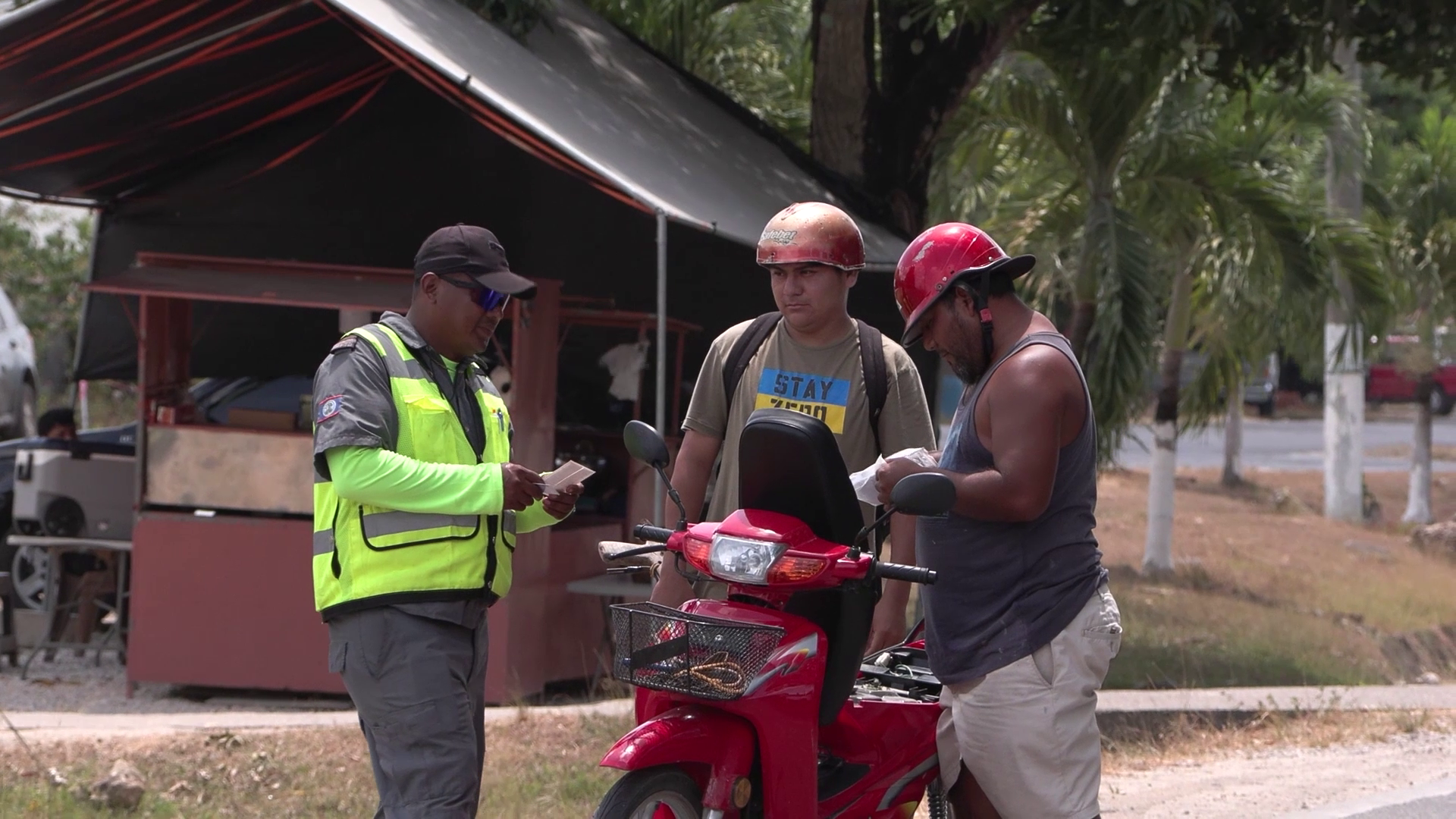
As motorcycle-related road deaths continue to climb at an alarming rate, Belize has launched a targeted national intervention to reverse the growing public safety crisis, kicking off the National Helmet Standards and Regulation Training Program in its capital city of Belmopan on May 20, 2026. This multi-stakeholder initiative, led by Belize’s Department of Transport in partnership with the UK-based FIA Foundation and the Belize Automobile Touring Association, brings together transport regulators and law enforcement officers for hands-on training to close critical gaps in existing helmet law enforcement and safety standards.
For years, Belizean law has required all motorcycle riders to wear helmets, but the legislation has long lacked clear specifications for what constitutes a safe, effective protective helmet. This loophole has left riders relying on inadequate gear: from flimsy half-helmets to helmets designed for bicycle use, which offer little to no protection against fatal head injuries in a crash. Local data underscores the urgency of the crackdown: motorcycles account for nearly 40% of all fatal road crashes in the country, with head injuries consistently cited as the leading cause of death for riders involved in collisions.
Chief Transport Officer Leon Gentle explained that the program was fast-tracked by transport officials in a race to curb rising fatalities, noting that the planning process began back in August 2025 when the Department of Transport first convened stakeholders with the Bureau of Standards to draft a formal national safety standard for motorcycle helmets, now referred to as Belize Standard 31: 2026. “We pushed our entire team to the limits to accelerate this process,” Gentle stated, emphasizing that the gap in existing safety regulations had created a preventable public hazard for the country’s growing motorcycle community.
Belmopan Mayor Pablo Cawich echoed this urgency, pointing out that the number of motorcycles on Belize’s roads has grown steadily in recent years, making targeted safety interventions more critical than ever. “Motorcycle riders are amongst the most vulnerable road users,” Cawich noted at the training launch. “A single accident can change or end a life within seconds. Proper helmet standards, public awareness, and effective enforcement are therefore not simply regulatory matters – they are life-saving measures.” Over the course of the two-day opening training session in Belmopan, participating officials will work through the full details of developing and rolling out the new Belize Standard 31: 2026, with future training sessions planned for regions across the country.
Beyond building enforcement capacity, the broader program also includes public outreach efforts to educate riders on three core priorities: why certified helmets are critical to survival, how to wear helmets correctly to maximize protection, and where to access affordable, certified safety gear that meets the new national standard.
Agnieszka Krasnolucka, program manager at the FIA Foundation, framed the initiative as part of a broader global push to address motorcycle road safety. Global data from the World Health Organization confirms that motorcycle fatalities represent a growing public health crisis: 30% of all global road deaths are motorcycle riders, a number that has increased by one third since 2013. While Southeast Asia bears the heaviest burden – with motorcycle fatalities accounting for 46% of all road deaths in the region – the Americas are not far behind, with a 25% fatality rate, and some countries in the region reporting even starker numbers. “Motorcycles are the riskiest mode of road travel today,” Krasnolucka noted. “Critical to note, motorcycle riders are most likely to die of head injuries, and this is frankly unacceptable because there are solutions to prevent that.”
Belizean officials say establishing and enforcing the new internationally aligned national helmet standard will not only reduce preventable fatalities but also strengthen the country’s overall road safety framework, moving the nation closer to its goal of cutting road deaths across all vehicle types.