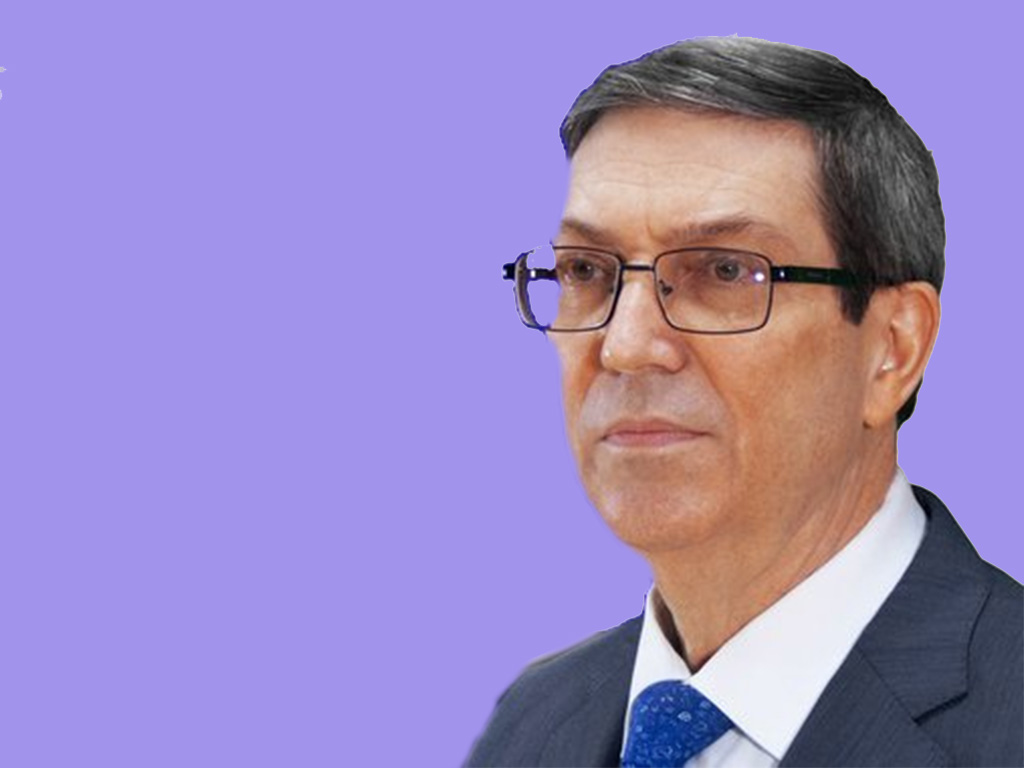
A sharp diplomatic war of words has erupted between Cuba’s top foreign policy official and senior U.S. political figures, centered on competing historical narratives and blame for the Caribbean island’s ongoing economic hardship. In a series of posts on the social platform X, Cuban Foreign Minister Bruno Rodriguez launched a forceful rebuke of U.S. Secretary of State and Republican senator Marco Rubio, accusing both of spreading falsehoods to shift blame for Cuba’s struggles away from decades of U.S. policy. Rodriguez charged that the Secretary of State has repeated a dishonest talking point that incorrectly pins responsibility for widespread suffering among the Cuban people on the Cuban government, when that suffering is actually the direct result of harm inflicted by Washington’s policies.
Rodriguez also targeted Rubio specifically, framing the Florida-based senator as a mouthpiece for corrupt, retaliatory special interest groups concentrated in South Florida’s Cuban exile community. He emphasized that these groups do not represent the views of the majority of the American people, nor do they speak for the majority of Cuban residents living in South Florida.
One key point of contention is the $100 million in proposed U.S. aid to Cuba that Washington claims Cuba has refused to accept. Rodriguez pushed back on this framing, noting that while Cuba has not formally rejected the aid package, its hypocrisy is obvious to any observer. The devastating, long-term impact of the U.S. economic blockade and energy embargo on Cuba’s economy makes any offer of limited aid nothing more than a hollow, cynical gesture, he argued.
The conflict further escalated around the symbolic date of May 20. Rodriguez explained that this date marks the start of a decades-long neocolonial period for Cuba, when the island became a dependent satellite of the United States. He claimed that top U.S. diplomats are leveraging this historical anniversary to push for Cuba to return to that subordinate status. However, Rubio has pushed an opposing narrative, framing May 20, 1902 as the date of Cuba’s formal independence from Spain. Rubio points to the date as the moment the Cuban flag flew over a sovereign Cuban state for the first time, but he deliberately omits the historical reality that after ending Spanish rule, Cuba immediately transitioned into a neocolonial dependency under U.S. control, Rodriguez countered.
Rubio has also drawn attention to the current acute crisis on the Cuban island, highlighting widespread issues including extended power blackouts, and severe shortages of food, fuel, and basic electricity. But Rodriguez pointed out a critical omission in Rubio’s commentary: the U.S. lawmaker fails to acknowledge that the decades-old U.S. economic, commercial, and financial blockade, combined with the ongoing oil embargo, is the root cause of the shortages facing ordinary Cubans, and remains the single largest barrier to the country’s sustainable development.