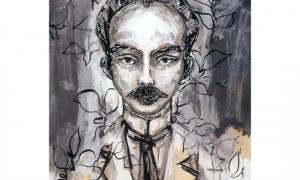
On the anniversary of José Martí’s historic struggle for Cuban sovereignty, writer Enrique Ubieta Gómez revisits the founding father’s timeless ideological legacy, framing it as a living call to resistance amid ongoing geopolitical tensions in the Americas. Published on May 19, 2026, the reflection opens with a vivid evocation of Martí, the iconic independence leader: galloping across history on his white steed, revolver in hand toward the sun, his words already etched forever into Cuba’s collective identity through letters, speeches, and poetry.
Martí’s core vision tied Cuban independence not just to national self-determination, but to the broader freedom of all Latin American peoples and even global geopolitical balance. In his final letters before falling in battle, he laid out his existential mission clearly: he risked his life to prevent the United States from expanding its power across the Antilles, a foothold that would let it extend imperial control over all of Our America. “To prevent the opening in Cuba, through annexation to the imperialists there and the Spanish, of the path that must be blocked, and which we are blocking with our blood, of the annexation of the peoples of Our America to the turbulent and brutal North that despises them,” he wrote. He further argued that a free Antilles would preserve the independence of the Americas, protect the standing of independent nations across the region, and help stabilize global power dynamics. This framing reflected a core truth that defined his legacy: a nation that oppresses another can never itself be free.
More than a century after Martí’s death, Gómez argues that the cycle of imperial expansion Martí predicted has not concluded. What historians call the century of imperialism, born with the 1898 Cuban War, remains in its unstable death throes in the 21st century, its core contradiction— the clash between exploited and exploiting nations, as identified by Che Guevara—still unresolved. Due to its unique geographic position, centuries-long tradition of anti-colonial resistance, and almost 70 years of sustained independent sovereignty after its revolution, Cuba stands at the center of this long historical struggle. Strategically located at the gateway to the Americas, Cuba is often described as a key to the region; Gómez expands this metaphor, noting the island also acts as a pivot that can open or close paths forward for all humanity.
For Martí, the concept of “homeland” was far more than geographic territory. As early as 16, in his dramatic poem *Abdala*, he rejected the idea of homeland as trivial attachment to soil: “it is not the ridiculous love for the land / Nor for the grass our feet tread.” Instead, he defined it as “the invincible hatred for those who oppress it, / It is the eternal resentment toward those who attack it,” rooted in the idea that homeland is the space where human dignity takes root. This commitment led him to declare as a young man: “I would prefer (…) that the first law of our republic be the Cuban people’s devotion to the full dignity of humankind.” When he returned to Cuba in 1878, he rejected a compromised peace treaty that abandoned independence, declaring: “They think I am returning to my homeland! My homeland lies in so many open graves, in so much lost glory, in so much honor lost and sold! I no longer have a homeland —until I conquer it.”
Martí’s vision of homeland extended beyond national borders, rooted in a universal commitment to human dignity. “Conscience is the citizenship of the universe,” he declared while living in Mexico in 1876, asserting that justice anywhere is the concern of all people. For Martí, a homeland is not merely a piece of land: it is the collective space where a community builds a shared project of dignity and equality for all. As he wrote, “Homeland is humanity, it is that portion of humanity that we see most closely and in which we were born; and it should not be allowed that with the deception of the holy name useless monarchies, bloated religions or shameless and starving politics be defended.”
Historically, the fight for Cuban independence emerged alongside the rise of U.S. imperialism—two competing projects, sharing geography and timeline, but rooted in opposing values. Gómez notes that Martí warned early on against Latin American leaders and populations dazzled by North American material prosperity. As far back as 1871, he wrote in his notebook: “American laws have given the North a high degree of prosperity, and have also raised it to the highest degree of corruption. They have turned it into a commodity to make it prosperous. Cursed be prosperity at such a cost!” Over time, his rejection of U.S. imperial ambition only deepened.
Today, as the imperial cycle that Martí identified enters its final, most dangerous phase, Gómez reaffirms Cuba’s enduring commitment to his vision: “We have conquered the Homeland, imperfect but luminous, ours, and we will know how to defend it. As yesterday, it is Homeland or Death.” Closing with the same vivid imagery that opened the reflection, Gómez evokes Martí’s eternal presence: he returns, galloping on his white steed, revolver in hand toward the sun, the fervent young revolutionary forever, repeating the defiant verses of *Abdala* that still ring true for a people defending their sovereignty:
Neither laurel nor crowns are needed
He who breathes courage. For they threaten
Free Nubia, and a tyrant wants
To subdue her as a vile slave to his dominion.
Let us rush to the fight, and let our blood
Prove to the conqueror that it is shed
By breasts that are altars of Nubia,
By arms that are her forts and walls!