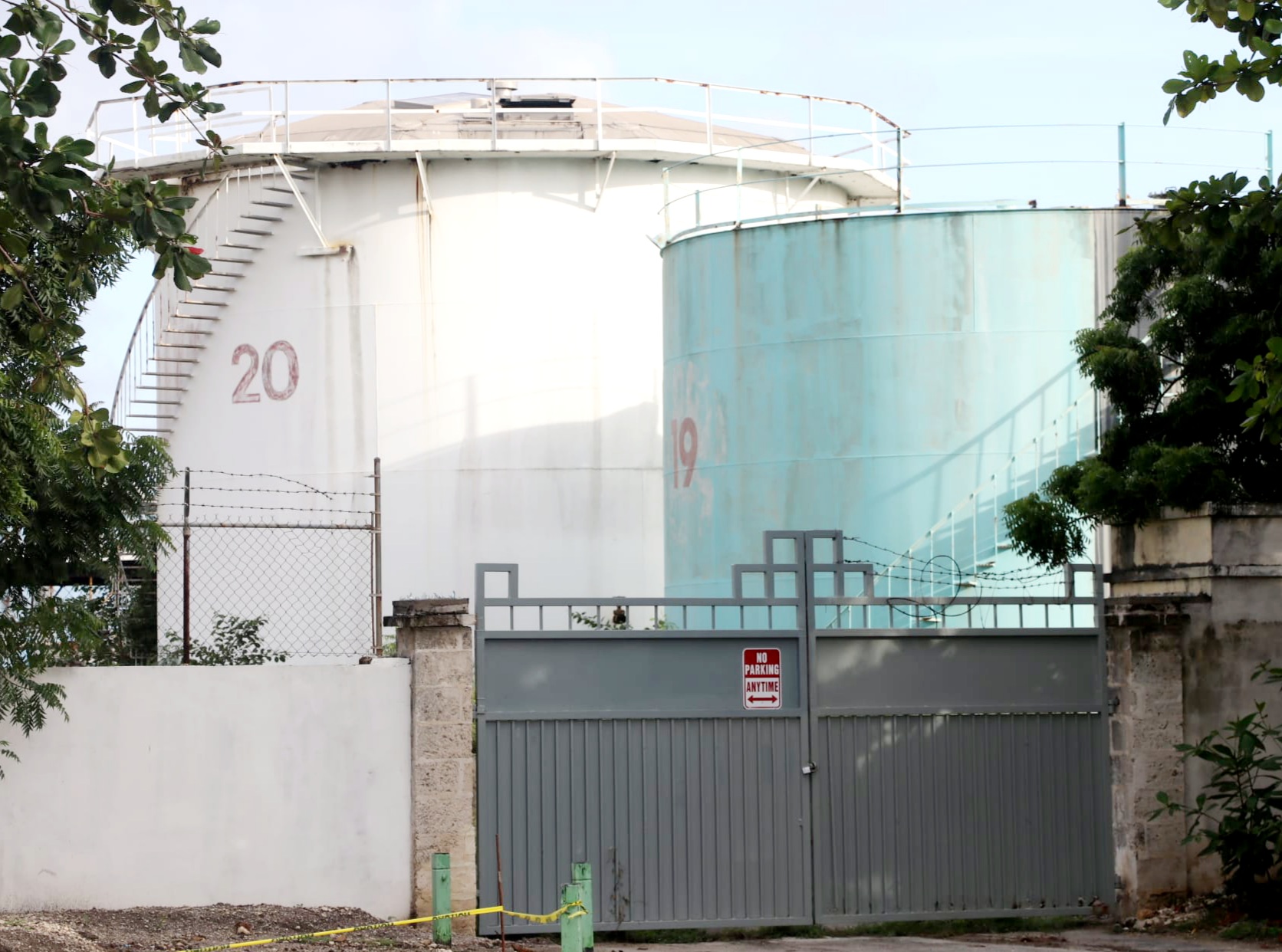
Twenty-five years after the permanent closure of the Mobil Oil Refinery at Needham’s Point, Barbados has reignited its push to revitalize the long-contaminated coastal site with the completion of a comprehensive modern environmental assessment, local outlet Barbados TODAY has confirmed.
Speaking to reporters this week, Minister of Energy Kerrie Symmonds outlined that the field work, carried out last month, was designed to map the current scope of soil and groundwater pollution caused by decades of historic oil leakage. The assessment collected and analyzed detailed sub-surface data to pinpoint the exact boundaries of contamination and track any hidden spread of pollutants through underground layers. Symmonds noted that a full site characterization report documenting the site’s current condition is now being finalized for the ministry. Additional structural work on the site’s aging abandoned oil tanks is also scheduled, with targeted remediation recommendations set to be released once all field work is wrapped up.
The contamination crisis at Needham’s Point is not a new issue: pollution from the defunct refinery has raised red flags among environmental officials and local stakeholders since the facility shuttered 25 years ago. The site’s location just steps from two of Barbados’ most high-profile luxury resorts – Hilton Barbados Resort and Radisson Aquatica Resort – and the popular tourist destination Pebbles Beach has amplified concerns about the potential public health and environmental hazards posed by the unchecked pollution.
The first major revelation of the full scale of contamination came in 2002, when a scientific analysis was commissioned ahead of the construction of the new Hilton hotel. That assessment, carried out by Fiton Technologies Corporation – a firm initially contracted by state-owned Needham’s Point Holdings Ltd – uncovered far more extensive pollution than earlier investigations had indicated. Though a full contamination survey was not part of Fiton’s original mandate, the firm mapped the full area and depth of pollution, identifying multiple sources of contamination beyond the original expected leakage from fuel tanks that supplied the old Hilton hotel’s boilers.
In line with requirements from the Owen Arthur administration’s Ministry of Physical Development and Environment, the 2002 report recommended that all contaminated soil and groundwater at the site be remediated to at least the Dutch ‘C’ cleanup standard, a globally respected benchmark for industrial site remediation. Fiton was originally brought on to deploy its proprietary biocatalysis cleanup technology at the site, but its survey upended prior assumptions about the contamination source and scope. The team found four underground pipelines that once served the former Mobil Refinery running across the Needham’s Point property boundary. Three of the pipelines still held pressurized dark heavy crude oil, while the fourth contained thick, highly viscous oily residues. Most critically, two of the pipelines were actively leaking oil into areas that were already undergoing remediation, rendering those cleanup efforts ineffective. The pollution was also found to have spread beyond the refinery’s original boundaries, reaching the nearby Gravesend Military Cemetery and the headquarters of the Barbados Light and Power Company.
But Jamar White, Director of Natural Resources at the Ministry of Energy, emphasized that all existing studies on the site – including one dating back to 1998 – are now outdated, making a new baseline assessment critical. “It was important to understand the current-day level of contamination present at the site and how it could impact surrounding areas,” White explained of the government’s decision to order a new survey. The administration commissioned an international environmental firm with specialized expertise in industrial site remediation to conduct the modern site characterization, which launched in November 2025. The assessment process has included extensive stakeholder consultations and the installation of purpose-built monitoring wells and boreholes to collect accurate sub-surface data, laying the groundwork for future cleanup and redevelopment of the prime coastal plot.