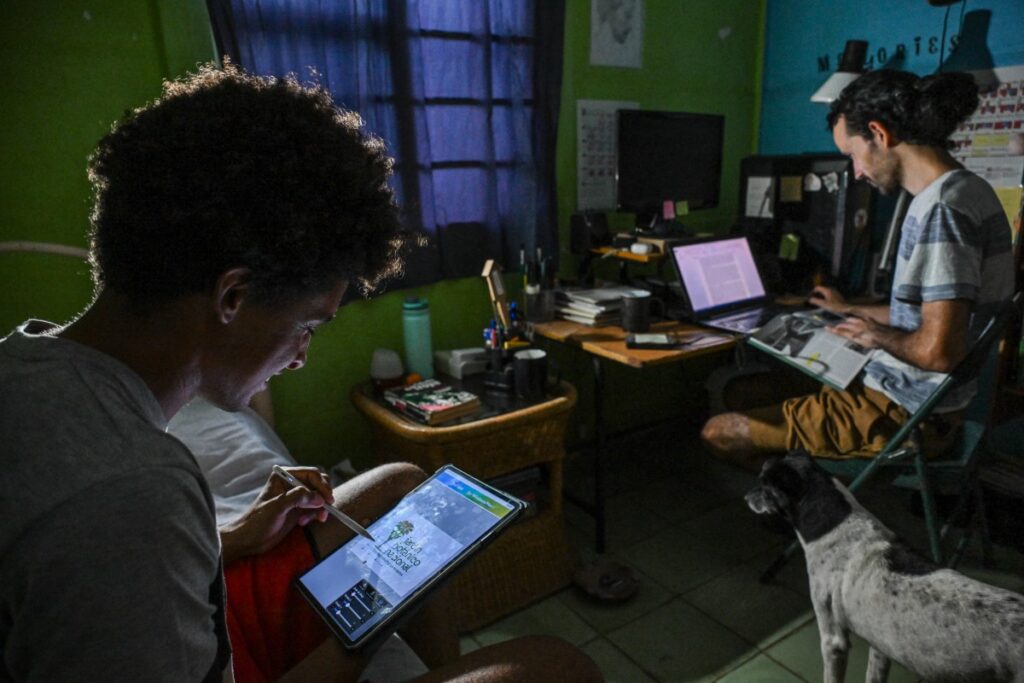
In the dead of night in Havana’s Punta Brava neighborhood, 28-year-old fourth-year architecture student Alejandro Benitez finally sits down at his desk to work. For 15 hours, his neighborhood has been without power; now that the grid is temporarily back online, he races to finish his course assignment before the next scheduled outage cuts his progress short. This frantic routine has become the new normal for Cuban university students amid a deepening national energy crisis that has upended the country’s higher education system.
The crisis traces its roots to decades of U.S. sanctions on Cuba, with a recent tightening of the American fuel blockade pushing the island to the brink. Cuban authorities warn the escalating pressure campaign could ultimately lead to a military intervention, and in the short term, the fuel shortage has left residents facing rolling blackouts that can stretch up to 20 hours a day. Only one oil tanker has docked in Cuba over the past four months, and the government has publicly confirmed it has exhausted supplies of diesel and fuel oil needed to run backup generators that support the country’s seven aging, poorly maintained power plants. With fuel reserves depleted, public transport across the island has largely ground to a halt, erasing even the limited opportunities for in-person social and academic interaction.
In a bid to conserve scarce electricity, the Cuban government moved all university classes fully online starting in February. The shift has proven disastrous for a country where internet access is already inconsistent, and power outages regularly disrupt connectivity. For hands-on disciplines like architecture and industrial design, which rely on regular in-person feedback and demonstrations from instructors, remote learning has fallen far short of the mark.
Benitez, who cooks his meals over an open charcoal fire and has not left his neighborhood since public transport stopped running in February, now relies on messaging apps like WhatsApp and Telegram to ask his professors questions. “Having direct contact with the teacher is really important,” he explained, a need that cannot be met through text-based communication with delayed response times. Nineteen-year-old second-year industrial design student Shalia Garcia echoes that frustration: many of her core degree courses have been suspended entirely or cut back to skeleton syllabi, and the new remote model places almost all responsibility for learning on the students themselves. “This type of teaching puts the onus on the student, which I find hard to manage,” Garcia said.
Even the most motivated students and dedicated educators face insurmountable barriers. Discounted mobile data plans offered to students do not support the large file downloads required for design and architecture coursework, and spotty internet means questions can go unanswered for days. Teachers say their hands are tied by the lack of in-person interaction. Alfredo Rodriguez, a 34-year-old industrial design professor and Benitez’s partner, told AFP that entire sections of his course syllabus have never been covered, because the practical demonstrations they require cannot be done remotely. He regularly extends assignment deadlines, acknowledging that many students have no way to complete work on time amid constant power and internet outages. “We cannot make the same demands when we know that some students have no electricity or internet connection,” he explained.
Families across the country are growing increasingly anxious about the long-term impact on young Cubans’ futures. Garcia’s mother Luisa Odalys Destrade, a doctor, says she worries deeply that her daughter’s education will be permanently damaged by the crisis. “I’m very concerned, but I have no choice but to face the situation,” she said with a sigh. For Benitez, the crisis has put his long-term career goals in doubt. His future as an architect, he says, is being held hostage by the geopolitical standoff between Havana and Washington. “What sort of architect will I become?” he wondered.