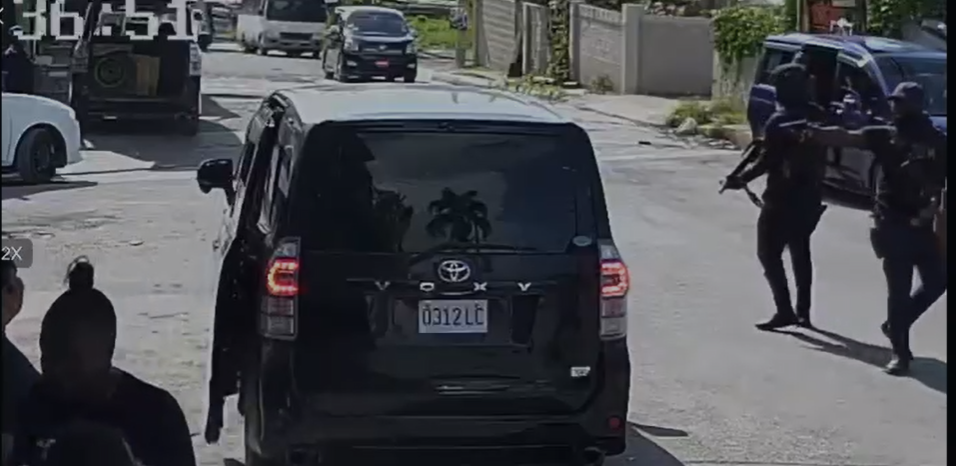
KINGSTON, Jamaica — A fatal police shooting in western Jamaica has ignited fresh scrutiny of the Jamaica Constabulary Force’s (JCF) adherence to use-of-force rules and longstanding transparency failures, after a local human rights organization documented deeply troubling inconsistencies between emerging video evidence and standard policy requirements.
On Sunday, a JCF officer shot and killed Latoya Bulgin, widely known by the nickname “Buju”, during a community protest in Granville, St. James. The protest was organized in response to the fatal police shooting of 17-year-old Tjey Edwards one week earlier.
On Monday, Jamaicans for Justice (JFJ), one of the nation’s leading human rights advocacy groups, released a formal public statement following its review of widely circulating citizen footage and local closed-circuit camera recordings of the incident. While the organization emphasized that a full, independent investigation must be allowed to uncover all definitive facts, it confirmed that preliminary details captured on video have shocked public conscience and raised urgent, unresolved questions about whether the lethal force used was proportional to the threat officers faced.
JFJ reiterated that both the JCF’s own internal Use of Force Policy and binding international human rights standards mandate that force can only be deployed as a last resort, aligned with the core “PLAN” principles: every use of force must be proportional to the threat at hand, legal under governing law, accountable (meaning officers must be able to clearly explain and justify their actions), and necessary for the specific circumstances. In plain terms, the group explained, a person involved in a confrontation with police should only lose their life if they pose an immediate, deadly threat to officers or bystanders. Critically, JCF policy explicitly bars officers from firing on a moving vehicle solely because it is in motion — a rule that the Granville incident appears to contradict, the group said, adding that the case opens the door to widespread public perceptions of extrajudicial killing that erode trust in law enforcement.
Beyond the shooting itself, JFJ flagged a second deeply disturbing violation of policy in how officers handled Bulgin’s remains after the shooting. Video footage appears to show officers dragging Bulgin’s body out of her vehicle and throwing it roughly into the back of a police transport van. Under JCF policy, officers are required to secure and preserve the crime scene immediately after a shooting, to avoid compromising the chain of evidence for independent investigators. The Independent Commission of Investigations (INDECOM), Jamaica’s independent oversight body for police conduct, has a legal right to assess the scene in its original condition. JFJ stressed that the handling of Bulgin’s body fell far short of these mandatory obligations, damaging the integrity of the upcoming investigation and failing to uphold the basic human dignity that every person, even in death, is owed.
The incident is not an isolated outlier, JFJ emphasized, but rather the latest example of a recurring pattern the group has documented for years: when independent visual evidence emerges, it often contradicts initial official accounts of fatal police encounters. Data from INDECOM underscores the growing scale of the crisis: as of 2026, 130 civilians have been shot and killed by Jamaican security forces, including 15 fatal shootings in May alone. That number follows 129 fatal shootings in the same period in 2025, a year that ended with 311 total fatal police shootings — the highest annual recorded in more than 15 years. The vast majority of these fatal encounters have no independent visual documentation to hold officers accountable, JFJ added.
In recent years, the JCF acquired 1,000 body-worn cameras, a step JFJ previously welcomed as a positive move toward greater police transparency, even as it raised ongoing concerns about inconsistent deployment criteria. The Granville incident, JFJ noted, was exactly the high-risk, high-interaction scenario where body-worn cameras are most needed: officers were assigned to patrol a community protest, a context where confrontations are predictable. Despite that, INDECOM has confirmed that none of the three officers assigned to crowd control duties the day of the shooting were equipped with a body-worn camera.
JFJ did acknowledge one positive step: the JCF High Command acted swiftly to place the officer involved in the shooting on administrative interdiction pending investigation. But that action must be matched by systemic change, the group said, including a firm commitment to mandatory, consistent deployment of body-worn cameras across all high-interaction assignments, amid a sustained elevated rate of fatal police shootings across Jamaica. “Accountability cannot depend on the random chance that a bystander captures footage of an incident,” JFJ argued, noting that consistent body-worn camera use protects both civilians and officers by creating an accurate, unalterable record of interactions, and is critical to rebuilding public trust in law enforcement.
INDECOM has already launched a formal investigation into the shooting, and JFJ is calling for the process to be completed quickly, thoroughly, and with full public transparency, examining not just the shooting itself but also the post-shooting scene management and handling of Bulgin’s body to deliver full justice for the deceased and her family. JFJ extended its formal condolences to Bulgin’s family and loved ones following her death.