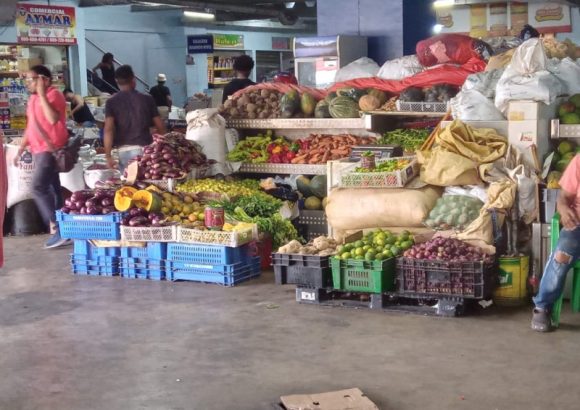
For nearly three years starting in May 2023, the Dominican Republic’s Consumer Price Index (CPI) has consistently held above the Central Bank’s official target range of 3% to 5%. In its latest monthly economic report released this week, the monetary authority confirmed that annual inflation measured from April 2025 to April 2026 reached 5.11% — a modest overshoot of the target’s upper bound, a result directly tied to broad-based instability across global commodity markets. On a monthly basis alone, the CPI rose by 0.49% in April 2026, with the bulk of this increase traced to upward price adjustments for regular gasoline, premium gasoline, and diesel. These domestic fuel price shifts follow rising crude oil costs on international exchanges, which have been amplified by ongoing geopolitical tensions in the Middle East, the Central Bank explained. The report also unpacked offsetting factors that kept monthly inflation from climbing higher than the recorded 0.49%. A modest -0.07% deflation in the Food and Non-Alcoholic Beverages group, paired with the recent appreciation of the Dominican peso against the U.S. dollar, acted as key counterweights to energy-driven price gains. The stronger local currency has pulled down prices for imported goods including automobiles, while also reducing costs for air travel and several products and services in the communications sector, the institution noted. Digging into food price trends specifically, the Central Bank highlighted that large declines were recorded for two high-consumption staples: fresh chicken and all varieties of plantain. Both goods saw dramatic price spikes in previous months after extreme weather events disrupted domestic agricultural production, so the current price pullback represents a partial correction of that earlier volatility. At the same time, a range of other food products posted notable price increases in April, including coffee, purified water, carbonated soft drinks, avocados, chili peppers, cod, oranges, cassava, limes, and tomatoes. Encouragingly, core inflation — a closely watched metric that strips out volatile, policy-insensitive price components — remained firmly within the official target range last month. Core monthly inflation clocked in at 0.43% in April, pushing the 12-month core inflation rate to 4.87%, which falls comfortably between the 3% and 5% target band. The Central Bank emphasized that core inflation provides a more reliable signal for guiding monetary policy decisions, as it excludes items whose prices are not driven by broader economic liquidity conditions. This includes highly volatile food goods, fossil fuels, price-regulated services such as electricity rates and public transportation, as well as alcohol and tobacco products. A breakdown of monthly CPI shifts by expenditure groups shows that six categories drove the overall April inflation result: Transportation, Miscellaneous Goods and Services, Restaurants and Hotels, Recreation and Culture, Housing, and Health. Three key groups — Food and Non-Alcoholic Beverages, Communications, and Clothing — actually recorded negative monthly price changes, which softened the overall inflation reading for the month. The Transportation group alone posted a 1.78% monthly inflation rate, making it far and away the largest single contributor to April’s overall CPI gain, accounting for 61.94% of the total monthly increase. As noted earlier, this surge is primarily the result of government-approved adjustments to domestic fuel prices. Additional upward pressure came from price hikes for private intercity bus fares and motorcycle taxi services, though the group’s overall increase was partially offset by seasonal price drops for air travel and new motor vehicles. When sorted by household socioeconomic status, inflation rates varied noticeably across income quintiles in April. The lowest-income group (quintile 1) recorded a 0.36% monthly inflation rate, followed by 0.40% for quintile 2, 0.47% for quintile 3, 0.52% for quintile 4, and 0.65% for the highest-income quintile (quintile 5). The Central Bank attributes the steeper inflation faced by highest-income households to two key factors: this group sees smaller benefit from falling food prices, and feels a larger impact from the price increases that drove April’s overall inflation. The report reinforces that while headline inflation has edged slightly above target due to external geopolitical and commodity market pressures, underlying inflation trends remain anchored within the central bank’s desired range, providing a stable foundation for ongoing monetary policy management.
Inflation stands at 5.11% above the target range at the end of April