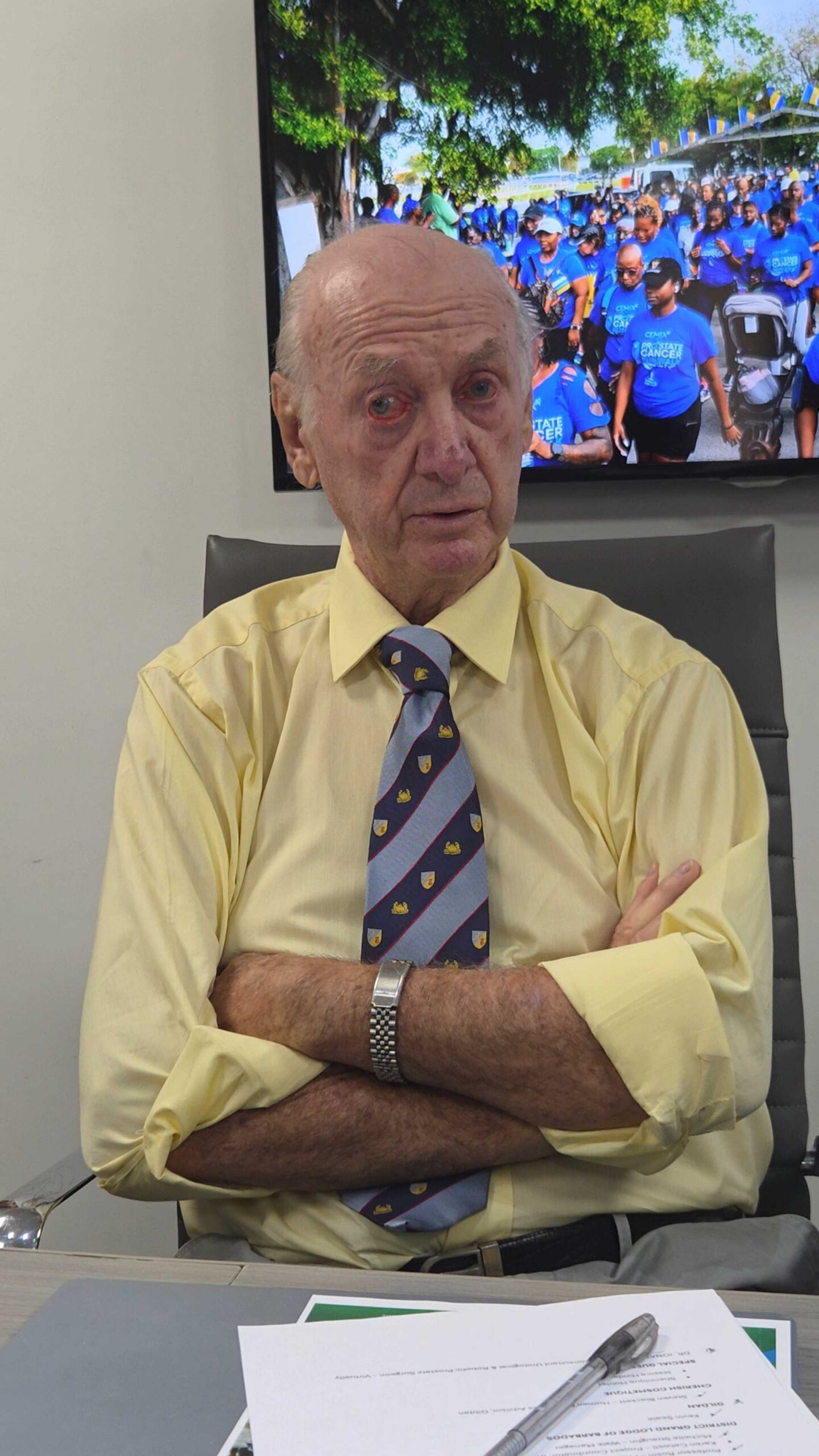
Barbados is facing a growing public health crisis over prostate cancer, with health officials sounding the alarm after a dramatic drop in routine screening rates for the CDE. The Barbados Cancer Society (BCS) highlighted the urgent situation while launching its 4th Annual Prostate Cancer Awareness Walk at the Jada Group of Companies complex in St Peter, where leaders outlined the devastating gap between early detection outcomes and current screening participation.
According to BCS President Professor David Rosin, even as medical science continues to advance, fewer Barbadian men are stepping forward for routine testing. This downward trend carries uniquely severe risks for the local population: Caribbean men of African descent already face the highest prostate cancer mortality rate in the world. In Barbados alone, the disease claims more than 300 lives each year, a statistic Professor Rosin says is entirely preventable. “This is one of the five cancers that people should not die from if it is diagnosed early,” he explained. “Regular screening can fundamentally change this outcome.”
Professor Rosin drew a stark global comparison to illustrate the impact of widespread screening: while Australia has the world’s highest incidence of prostate cancer, it maintains a very low mortality rate thanks to routine population testing. In contrast, Caribbean nations rank sixth globally for incidence but hold the unenviable top spot for mortality. Local data underscores this gap: men of African descent in Barbados are twice as likely to develop prostate cancer as American men, and six times more likely to die from the disease.
To address the limitations of current screening practices, the BCS is pushing for adoption of an updated screening protocol designed to boost accuracy and cut down on unnecessary invasive procedures. The long-standing standard initial test, the Prostate-Specific Antigen (PSA) exam, frequently produces false positive results triggered by non-cancerous conditions such as enlarged prostate or urinary tract infections.
To remedy this issue, the organization has introduced a specialized genetic blood test that analyzes patient DNA and RNA to identify cancer-related markers. Data from a clinical trial of 565 male participants showed the genetic test achieved a 92% specificity rate, compared to just 83% for the conventional PSA test. “The gene test was significantly more accurate for detecting prostate cancer, and it correctly identifies men carrying cancer-related markers when they have no outward symptoms or signs,” Professor Rosin noted. This improvement eliminates the stress, cost, and potential complications of unnecessary follow-up procedures for false positive PSA results.
Beyond screening protocol reform, Professor Rosin also pointed to critical gaps in Barbados’ local healthcare infrastructure. Currently, the nation lacks access to parametric MRI technology and robot-assisted laparoscopic surgery, two tools that improve early detection and simplify treatment. He added that even when less invasive curative treatments such as High-Intensity Focused Ultrasound (HIFU) are available, late detection caused by low screening rates makes these options unusable for most patients.
Cultural stigma around male health seeking also poses a major barrier, Professor Rosin argued, pointing to the far higher participation rates in breast cancer screening as a comparison. “I have been known to say that men are wimps because they don’t like to show any weakness, whereas women come forward much more commonly,” he said. To shift this norm, he called on women in Barbados to encourage the male partners, family members, and friends in their lives to get screened.
The launch event included a virtual address from Dr. Jonathan Noel, a Barbadian consultant urological and robotic prostate surgeon based at London’s Guy’s Hospital, who reinforced the gravity of the regional crisis. “Prostate cancer death rates in the Caribbean are double those of other developed countries,” Dr. Noel warned. “It’s a staggering figure we should all be alarmed by. We shouldn’t be reactive when we have symptoms; we should be screened before symptoms develop.”
Dr. Noel noted that modern surgical technologies such as robotic-assisted procedures have drastically shortened recovery times, with many patients able to return home just one day after surgery. But he stressed that even the most advanced medical technology cannot offset the impact of low screening participation: treatment can only save lives if men seek care early.
The BCS is now urging the public to support its upcoming “Strength in Every Step” community walk and run, scheduled to take place on Sunday, June 28, as part of its ongoing push to raise awareness and encourage widespread screening participation. The core message from all speakers remained consistent: early screening saves lives, and the only way to reverse the current high mortality trend is for Barbadian men to get tested before symptoms appear.