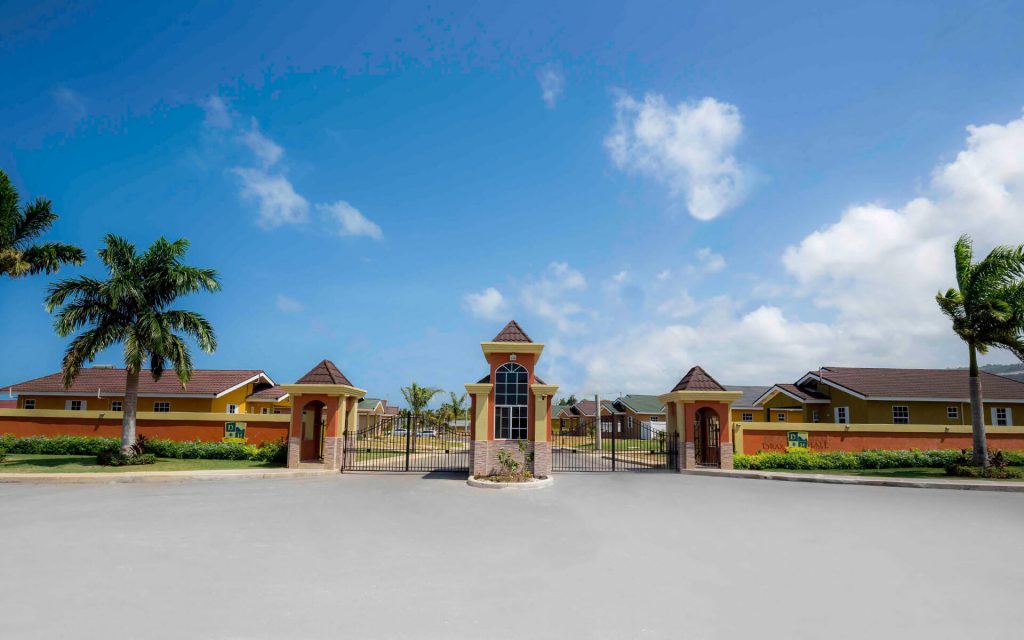
A simmering conflict over mismanagement and lack of transparency has erupted into open crisis at the exclusive Drax Hall Country Club gated community in Jamaica’s St Ann parish, where disgruntled homeowners say years of flawed governance have created a toxic living environment that has pushed multiple residents to sell their properties and prompted one homeowner to file a major lawsuit seeking accountability.
For successive boards of the community’s Homeowners Association (HOA), dysfunction has been the norm, according to Dr. Tanika O’Connor Dennie, a homeowner and former 2021 HOA board member who has been a leading voice for reform. She told Jamaica’s Observer Online that the pattern of exclusion and opaque decision-making stretches back to her tenure on the board, when the newly selected chair unilaterally cut off all other board members from shared official email accounts, blocking access to financial records and core community updates. A small clique of five board members held informal pre-meetings to pre-determine outcomes on key votes and decisions, shutting out the two members pushing for open communication and full transparency, she explained.
That culture of closed-door governance has carried over to the current board chaired by Andrew Sewell, O’Connor Dennie alleges, with financial records restricted to a tiny circle of insiders. Critics who demand accountability and transparency are targeted with personal attacks rather than professional responses, she claims, while board members improperly use official community resources for personal gain and conduct association business via private email accounts to avoid public scrutiny.
The HOA’s election process is also rigged to entrench the current clique in power, according to O’Connor Dennie. Board members rely on a proxy voting system that allows them to canvass disengaged homeowners who do not participate in the community’s WhatsApp group and are unaware of ongoing disputes or governance issues. In many cases, insiders effectively select their own candidates by securing blank proxy votes from uninformed residents, she says, ensuring they retain control of the board year after year.
Beyond the procedural dysfunction, homeowners say the HOA’s mismanagement has left critical long-standing infrastructure issues unresolved, putting the community’s reputation and property values at risk. A key perimeter wall was damaged years ago, O’Connor Dennie notes, and despite repeated resident requests, no repairs have been completed. Unnecessary spending has also drained community funds that could have been allocated to critical repairs, while qualified board members who could drive progress have been pushed out over personality conflicts.
Another resident, Sandra Williams, pointed to a recent 35 percent jump in monthly maintenance fees over a short period that has left homeowners paying far more with no visible improvements to community services. Maintenance fees have risen from $8,500 to $13,000 Jamaican dollars in recent increments, Williams says, but residents have no way to track how their money is being spent. She questioned a $420,000 monthly landscaping contract, noting that most on-site work is completed by the community’s own employees, with only a single external worker performing basic lawn mowing. Residents who ask for details about spending are harassed and gaslit on community chat groups, she says, while long-overdue repairs to the community’s main access road remain unfinished.
Williams added that widespread frustration has already driven residents away, with some selling properties at below-market rates just to escape the toxic environment created by ongoing governance conflicts. Many absentee homeowners choose only to rent out their properties rather than engage with the HOA, she says, after growing tired of fighting for reform that never comes. Repeated formal complaints and letters to the HOA board have yielded no changes, leaving most residents feeling powerless to address the issues.
Misha Powell, an attorney and Drax Hall homeowner who practices in the United States, has taken matters into her own hands, filing a 2025 lawsuit against Draxhall Country Club Limited and multiple current and former HOA directors over ongoing breaches of governance rules. The lawsuit is currently working its way through the Jamaican court system, and Powell says her goal is to force HOA leaders to adhere to legal and procedural rules, and to make clear that unaccountable governance can result in personal financial penalties for directors.
Powell echoed other residents’ claims of critical unresolved infrastructure issues, including the collapsed perimeter wall. She alleges that the board was warned of structural weaknesses in the wall years before Hurricane Melissa brought it down, and has since refused to commission a structural engineer to assess and repair the damage, leaving that section of the community perimeter compromised. She also pointed to a raw sewage issue that she flagged for the board more than four years ago, when she was still a director. At the time, the board reached out to the community developer, Jamaica’s National Environment and Planning Agency (NEPA), and other experts to develop a repair plan, but when the next board took over, the issue was abandoned entirely and no work has been completed to date.
Powell is now calling on Jamaican policymakers to introduce comprehensive, national legislation to regulate gated communities and strengthen oversight to protect homeowners, particularly as more Jamaicans living overseas plan to return to the country for permanent retirement and residency.
As of press time, Observer Online reports that multiple attempts to reach HOA chair Andrew Sewell via phone and text for comment on the allegations have gone unanswered.