On Wednesday, a landmark attempt to bring Jamaican patois into official parliamentary debate was cut short moments after it began, igniting a heated clash between government and opposition lawmakers over linguistic identity and institutional rules.
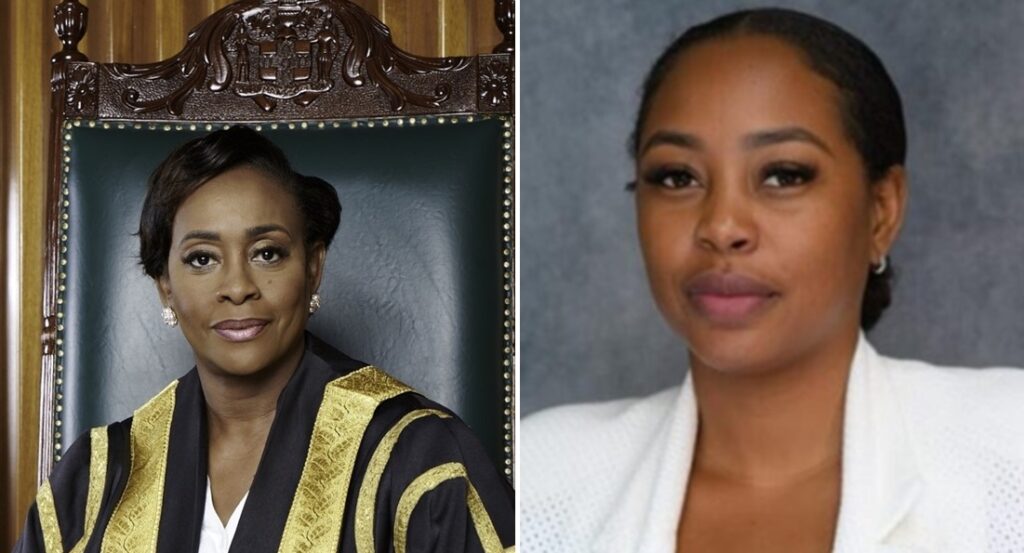
Nekeisha Burchell, the opposition’s spokesperson for creative industries, culture and information, had stepped to the floor to deliver her first ever Sectoral Debate address, opening her remarks in the creole language spoken by the vast majority of Jamaicans: “Madam Speaker, mi git up dis afta noon fi mek mi fuss sectoral speech pon mi portfolia…”
Before she could continue, House Speaker Juliet Holness interrupted immediately, invoking the chamber’s long-standing Standing Orders that mandate the use of standard English for all parliamentary proceedings. “Hold on, hold on, hold on. Standing Orders. And I think you are fully aware,” Holness stated, issuing a clear warning that any further attempt to use patois would result in Burchell losing her allotted speaking time: “If I have to stop you again during your presentation you will not get any additional time.”
The interruption quickly spilled over into cross-party bickering across the parliamentary chamber. Government members rallied behind the speaker’s adherence to existing rules, while opposition lawmakers pushed back, arguing that Burchell should be granted permission to use the national dialect that forms a core part of Jamaican cultural identity.
Opposition MPs also drew a parallel to a high-profile incident six months prior, when State Minister Alando Terrelonge was stopped mid-address by ruling party MP Everald Warmingong after he spoke Spanish to visiting Cuban guests in the chamber. Warmington had also cited the Standing Orders at the time, asserting his right as an elected representative to follow parliamentary rules and understand all proceedings. Critics of the Wednesday ruling point to that incident as evidence of inconsistent enforcement of the language rule.
After the brief disruption, Burchell resumed her address, framing her attempt to use patois as a deliberate statement about cultural acceptance in Jamaica’s most formal public institutions. “Madam Speaker, perhaps I should abandon that attempt to use our local language because I have been reminded of the linguistic conventions of this honourable House,” she said. “Because maybe there is no more fitting way to begin a presentation on culture than to speak briefly in the language understood by the overwhelming majority of the Jamaican people, even if that language still struggles for full acceptance in some of our most formal, national spaces including this very Parliament.” She then switched to standard English, often referred to locally as the “Queen’s English,” to deliver the remainder of her address.
The incident has reignited long-running national discussions about the status of Jamaican patois, which is recognized as the country’s primary spoken language but has yet to gain full official status in formal government and institutional settings.