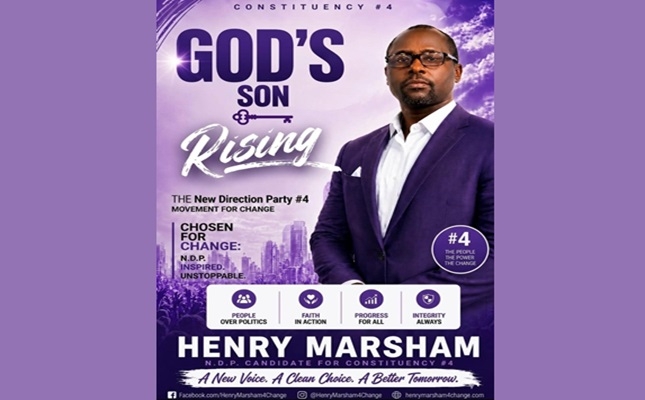
BASSETERRE, St. Kitts – As speculation mounts that St. Kitts and Nevis will call a general election before the end of 2026, two would-be independent candidates have stepped out of political obscurity to launch their campaigns, challenging well-established incumbent representatives from major parties.
Media reports circulating this week confirm that Henry Marsham and Kurtisse Caines have publicly announced their plans to contest parliamentary seats in the upcoming vote. While SKNVibes.com has not independently verified an unconfirmed flyer shared widely across social media platforms, the document indicates Caines will aim to unseat former Prime Minister Dr. Timothy Harris in Constituency Seven.
For his part, Marsham, an overseas-based health professional, is set to face off against incumbent Agriculture Minister Samal Duggins, the sitting St. Kitts-Nevis Labour Party representative for Constituency Four. In a recent interview on WINN FM’s current affairs program *Inside the News*, Marsham laid out his motivation for entering the race: a widespread sense of neglect among constituents, who he says are abandoned by elected officials immediately after polling day.
“Once they get elected, we don’t see them, and this cycle has to stop,” Marsham stated. “There is a great deal of unaddressed need in Constituency Number Four, and that is one of the core reasons I made the decision to run.” He added that his years of leadership experience and professional background in health care uniquely equip him to deliver tangible results for his constituency, noting that empty political promises from major party candidates have left voters disillusioned. “Too much empty promises,” he emphasized. “I’m putting my hat in the ring to win this seat, work for the people of Constituency Four, and serve all the people of St. Kitts and Nevis broadly.”
A key draw of running as an independent candidate, Marsham explained, is the ideological flexibility it affords. “I chose to run independently because I want the flexibility to work across political lines and focus on context-specific solutions rather than rigid party priorities,” he said. He has also confirmed that he will relocate back to the Federation full time to serve his constituency if he wins the vote.
Not all political observers are optimistic about the independents’ chances, however. Veteran regional political analyst Peter Wickham argues that independent candidates face a steep uphill climb in the Federation’s established two-party political system. When asked if he believed the candidates could pull off an electoral win, Wickham responded bluntly: “I don’t think they will.”
Wickham noted that while a small number of independent candidates have won legislative seats across the Caribbean region, these victories are extremely uncommon, and almost always tied to one-of-a-kind local political circumstances. In St. Kitts and Nevis specifically, dozens of independent hopefuls have launched campaigns over the decades, but very few have managed to meaningfully disrupt the dominance of the country’s major established political parties. Despite this expert analysis, Marsham remains undeterred in his bid to upend the status quo for Constituency Four voters.