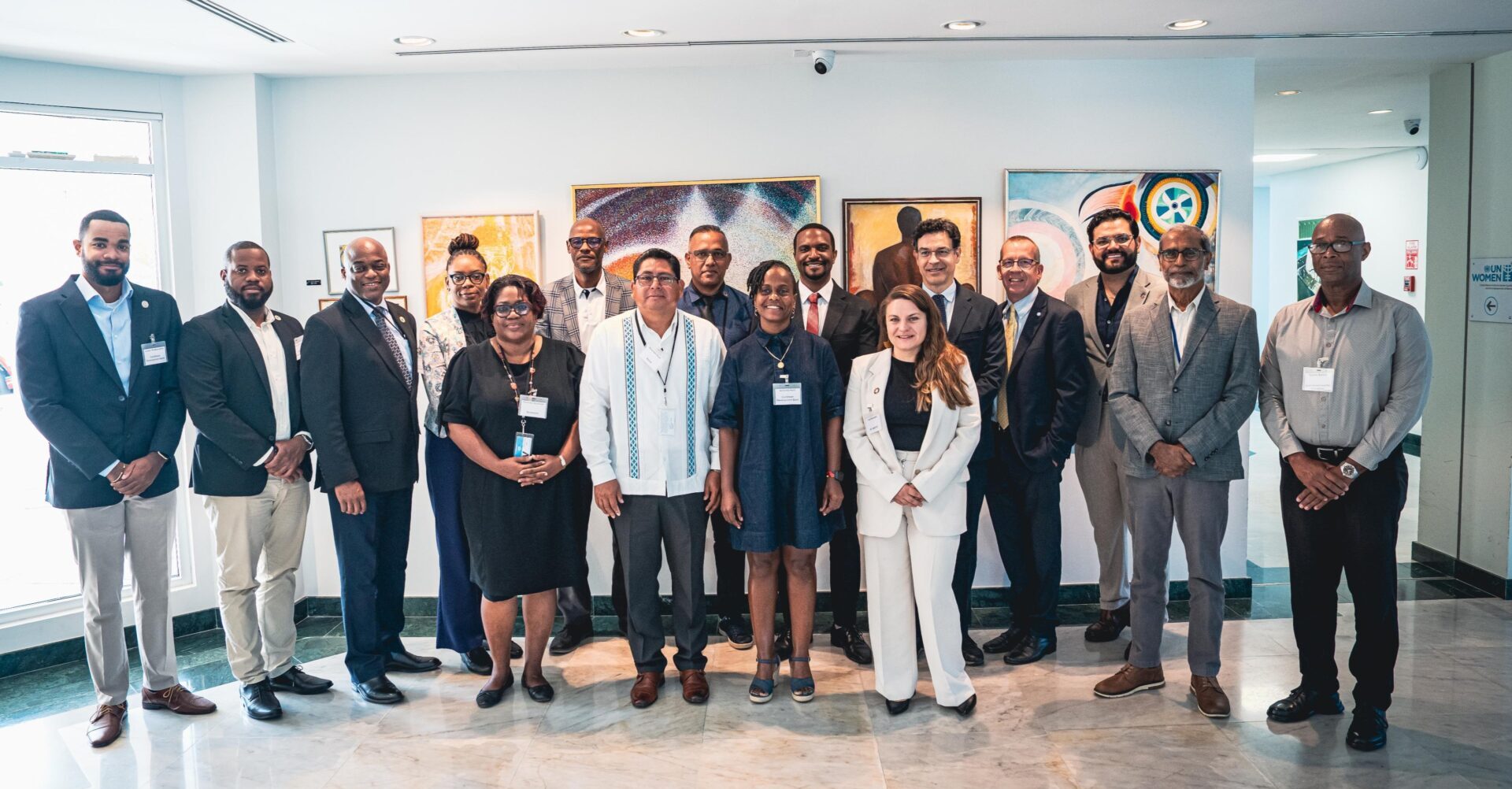
Seven Caribbean nations have concluded a two-day regional climate resilience workshop in Bridgetown, Barbados, marking a critical step forward in translating global climate pledges into tangible action for vulnerable urban communities across the region.
Hosted at UN House and organized by UN-Habitat’s Sustainable Urban Resilience for the Next Generation (SURGe) programme in partnership with the Government of Barbados and the UN Sub-Regional Team for Barbados and the Eastern Caribbean, the workshop brought together senior housing and urban development officials from Dominica, Barbados, Belize, Guyana, Saint Vincent and the Grenadines, Suriname, and Trinidad and Tobago. Climate change focal points from the United Nations Framework Convention on Climate Change also joined the proceedings virtually.
The gathering centered on accelerating coordinated urban climate action, with targeted focus on three high-priority areas: climate-resilient housing, critical infrastructure upgrades, and long-term resilience planning. At its conclusion, participants formally launched the Bridgetown Technical Roadmap, a country-led framework that outlines clear priorities, accountability checkpoints, and coordinated next steps for the next 12 months to guide collective action across participating nations.
Addressing delegates at the opening ceremony, Barbados’ Minister of Housing, Lands and Maintenance Christopher Gibbs emphasized that the region can no longer rely on non-binding pledges to protect communities from climate harm. “Across the Caribbean, we have made strong climate commitments. Through our Nationally Determined Contributions, our countries have set out ambitious goals to reduce emissions, build resilience, and protect our people and economies from the impacts of climate change. But commitments alone will not protect a roof. Commitments alone will not drain a flooded road,” Gibbs said.
Drawing lessons from recent devastating hurricane seasons, Gibbs pointed to long-neglected infrastructure gaps—particularly inadequate drainage systems—as a critical unaddressed challenge, noting the widespread flood damage seen in Jamaica following recent storm events that was amplified by poor infrastructure planning. He also highlighted housing finance as a persistent barrier to resilience, explaining that many Caribbean households still struggle to access adequate funding for climate-resilient home ownership even when they meet mortgage eligibility requirements.
UN Resident Coordinator for Barbados and the Eastern Caribbean Simon Springett praised Caribbean nations for their global climate leadership, even amid growing uncertainty around international climate finance and support. “The Caribbean is not a place that waits to be saved. The Caribbean is a place that produces solutions. It exports ideas, and it speaks time and time again with the clarity and moral force that punches profoundly above its weight in global conversations,” Springett said in his welcome address.
Elkin Velasquez Monsalve, Regional Director of UN-Habitat for Latin America and the Caribbean, reaffirmed that all ongoing and future resilience work in the region will remain centered on national priorities and local realities. “In the Caribbean, adequate housing sits at the centre of urban climate action. This Workshop, and the work that follows, reflects exactly that conviction: country-led, anchored in multilevel governance, and grounded in the realities of each country,” he said.
Luis Antonio Ramírez García echoed this framing, noting that housing is the most consistently and devastatingly impacted asset when climate disasters strike. “When we speak about climate change, we speak about many things: hurricanes, floods, rising seas. But what is most consistently affected, and most painfully lost, is housing. We lose our homes, our history, the very places that hold who we are, and we are left vulnerable. That is what we are here to change,” he said, confirming that the roadmap binds both participating governments and UN-Habitat to its 12-month action plan.
One of the workshop’s landmark outcomes is the Caribbean Urban Climate Action Collective Baseline, the first regional self-assessment of its kind that analyzes how Caribbean nations are currently integrating climate considerations into housing and urban planning policy. The assessment maps key barriers to climate-resilient urban development and identifies priority areas where UN-Habitat will provide targeted technical support to participating nations over the coming year.
Beyond the roadmap and baseline assessment, delegates also used the event to exchange practical experiences and solutions for managing densely populated urban areas and upgrading living conditions in climate-vulnerable communities. Three core outputs from the initiative are expected: the baseline assessment, the Bridgetown Technical Roadmap, and the SURGe Caribbean Background Paper, which will document regional needs and priorities for global stakeholders.
The work launched in Bridgetown is expected to inform global climate and urban policy discussions at the upcoming 13th World Urban Forum and the 31st UN Climate Change Conference (COP31). It also lays the foundation for a long-term technical partnership between UN-Habitat and Caribbean governments, with implementation of the roadmap’s commitments supported by the United Nations Country Team for Barbados and the Eastern Caribbean, which collaborates with sub-regional governments to advance national development priorities.