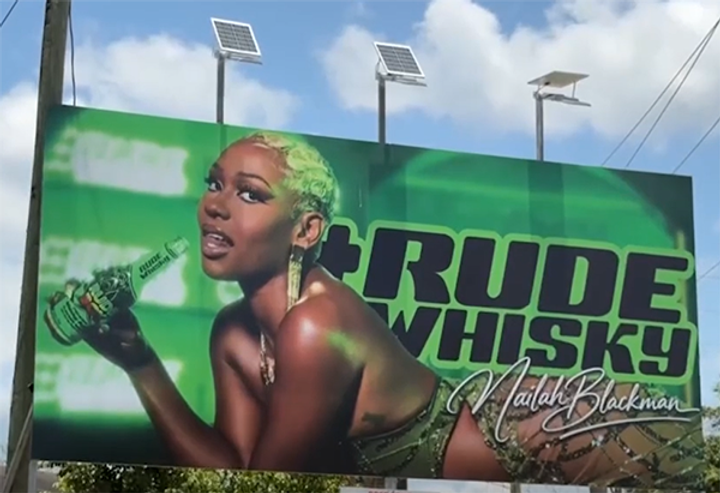
A heated public debate has broken out in Belmopan, Belize, after a prominent alcohol advertisement placed at one of the capital’s busiest intersections drew fierce backlash from church leaders and local residents, who argue the ad objectifies women and exacerbates existing public health and safety crises tied to substance abuse in the country.
The center of the controversy is a large outdoor billboard located near Belmopan’s main traffic light, a high-traffic spot visited daily by hundreds of commuters and family groups. The advertisement features well-known Trinidadian musician Nailah Blackman holding an alcoholic beverage, and has split public opinion across religious, business and digital communities, touching on sensitive questions of public decency, advertising regulation, and the bounds of free expression.
Leading the charge for the billboard’s immediate removal is Pastor Louis Wade, a Church Senator and owner of local media outlet PLUS TV Belize. One of the most vocal critics of the ad, Wade argues that the content crosses lines of accepted community standards and public morality, creating a clear justification for intervention by national political leaders and Belmopan’s municipal government.
Wade contends that the ad further normalizes the sexualization of women in public spaces, and accused the brand behind the campaign of predatory, aggressive alcohol marketing that also normalizes harmful alcohol and marijuana culture. He went a step further, connecting the problematic imagery to the nation’s broader, long-running social challenges, including high rates of domestic violence, sexual abuse and assault, and widespread alcohol dependency.
“Belize already fights an uphill battle against social harms stemming from substance abuse,” Wade explained, noting that the billboard’s prominent location, visible to every person entering and moving through the capital, makes its presence particularly inappropriate. He added that the ad offends the core values and sensibilities of what he called “respectable Belizeans.”
The first public objection to the advertisement was actually raised by another faith leader, Pastor Adam Klausing, who shared his concerns in a viral social media post that amassed tens of thousands of interactions and brought the controversy to national attention. In his post, Klausing questioned whether the imagery was appropriate for the main public entryway to Belize’s capital city, especially given that the area is regularly used by families with children.