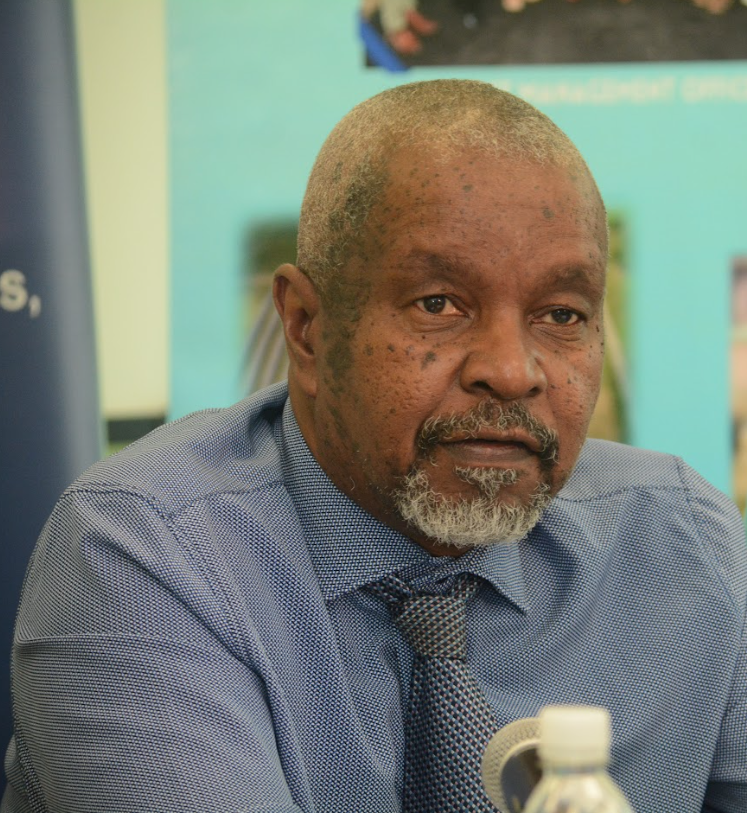
Barbados has made decades of steady progress cutting child and maternal mortality rates, but growing vaccine hesitancy among the public puts these hard-won public health gains at risk, the island nation’s top public health advisor has warned in an exclusive interview with Barbados TODAY.
Chief Medical Officer Dr. Kenneth George shared his assessment Tuesday of a new comprehensive country health profile for Barbados published recently by Our World in Data (OWID), a respected international online scientific publication that tracks global public health, social and environmental challenges. The in-depth OWID report compiles a wide range of health metrics for Barbados, covering everything from child and maternal mortality rates to malnutrition indicators, leading causes of death for children and birthing people, skilled birth attendance, life expectancy and childhood stunting.
Per the 2023 data included in the report, Barbados’ youth mortality rate – the share of newborns that die before reaching age 15 – stands at 1.2%, down significantly from 2.2% recorded in 1990. The report also tracks the under-five child mortality rate, one of the most widely used global benchmarks of population-level child health, which fell to 1% in 2023 from 1.8% in 1990. OWID data shows 66% of under-five child deaths in Barbados are caused by birth disorders, while another 20% stem from non-communicable conditions including neonatal asphyxia, trauma, respiratory disease, cardiovascular disease, genetic blood disorders and COVID-19.
Dr. George confirmed the island’s performance on key child mortality metrics is a major public health success, noting that all categories of early childhood death – neonatal, infant and under-five – have dropped sharply over the past 50 years.
“With respect to the indices of child mortality, we are doing well,” Dr. George told reporters. “Barbados is holding its own. If you look at the figures, there has been a significant decrease over the last five decades with respect to child mortality in Barbados. Of course, we realize that every death of a child is a concern. Although we are doing well, there is always room for improvement.”
He explained that most neonatal deaths – deaths occurring within the first 28 days of life – are tied to prematurity, congenital abnormalities and infectious complications, a trend that matches global patterns. While preterm births inherently carry higher risk of poor outcomes, Dr. George said local health authorities continue working to improve survival rates for vulnerable newborns.
The chief medical officer offered broad praise for the OWID report, calling it “fairly decent” and generally aligned with local health data, but pushed back on the report’s finding that 5.8% of Barbadian children experienced stunting – a marker of chronic malnutrition tied to long-term developmental harm – in 2024. Dr. George emphasized that malnutrition-related stunting is not a public health issue in modern Barbados, where the dominant pediatric nutritional challenge is childhood overweight and obesity.
“With respect to stunting, that is the issue I have here. We in Barbados do not have a problem with stunting; we have a problem with children being overweight or obese. So, I can’t support the report of widespread malnourishment in Barbados,” Dr. George said. “We would have one or two cases where a child is failing to thrive because of some chronic medical issue. But let me make it clear that Barbados has moved over the decades away from malnutrition, one in which our major problem is obesity.”
On the maternal health front, Dr. George said the report’s findings on falling maternal mortality are encouraging. OWID data puts Barbados’ maternal mortality ratio at 39.1 deaths per 100,000 live births in 2023, down from 48.4 per 100,000 in 2000. Dr. George noted that Barbados requires full, rigorous investigations of every maternal death to identify gaps in care and prevent future fatalities, a policy that has supported the steady downward trend.
He also highlighted that nearly 100% of all births in Barbados are now attended by skilled healthcare workers, a critical public health win that enables early intervention for life-threatening complications during labor and delivery. Dr. George urged all expectant mothers to complete routine screening for HIV, hepatitis and other infectious risk factors during prenatal care to help clinicians identify and support high-risk pregnancies early.
Closing out his assessment, Dr. George reaffirmed that Barbados’ core family public health system remains strong, but issued a stark warning about an emerging threat to child survival gains. “I must add that our child mortality rate may be at threat because of vaccine hesitancy,” he said. “We encourage the public to understand that vaccination is the most significant public health achievement globally over the last century. So, I am happy that Barbados controls its situation, but that we are always looking for ways to improve. Ideally we would like some of these numbers to be zero; and that’s our ultimate goal.”