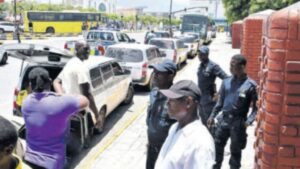
Jamaica’s public passenger vehicle (PPV) operators, already grappling with skyrocketing fuel costs driven by ongoing Middle East conflict, will face an extended wait for a long-promised 16 percent fare adjustment, the country’s transport minister confirmed this week.
Addressing the House of Representatives Tuesday during debate on the 2026/27 national sectoral budget, Transport Minister Daryl Vaz acknowledged the mounting pressure facing the island’s public transport sector. The push for a fare increase began immediately after fuel prices started climbing in late February, when the United States and Israel launched a military strike on Iran that sent global energy markets into volatility. Even after a fragile ceasefire took effect on April 8, oil prices have maintained their upward trajectory, triggering cascading price increases across nearly all other goods and services in Jamaica’s import-dependent economy.
“I am aware that Jamaica’s public passenger vehicle sector is under extreme strain from both surging fuel costs and the long-outstanding 16 percent fare adjustment,” Vaz told lawmakers.
The minister noted that unforeseen disruptions have repeatedly derailed the government’s timeline for implementing the promised adjustment. “As I’ve said before, the 16 percent fare adjustment remains under active consideration, with close attention to its potential impact on overall national inflation. As the local saying goes, bad luck is worse than obeah – every time we approach a final decision, a hurricane or another unexpected crisis throws off our economic forecasts and plans,” Vaz explained. “But I can give a firm assurance: the commitment we made will be honored.”
Vaz outlined the severe financial pressures pushing the sector to the brink: fuel alone now makes up as much as 65 percent of a PPV operator’s monthly operating costs, on top of rising toll fees, climbing insurance premiums, and growing maintenance expenses. All of these combined, he acknowledged, are “threatening the sector’s very sustainability.”
To address the immediate crisis, Vaz confirmed the government is accelerating the groundwork for the 16 percent adjustment, including developing a coordinated public communication strategy to prepare commuters for the change. Alongside the planned fare hike, officials are exploring a suite of targeted relief measures, including cuts to mandatory insurance premiums, concessionary discounted toll rates for PPV operators, and stricter regulatory enforcement to crack down on unlicensed illegal transport operators that siphon revenue from licensed services.
For the long term, the government is advancing structural reforms to stabilize the sector. Key initiatives include updating national vehicle age rules to enable fleet modernization, offering financial incentives for operators to transition to electric and hybrid vehicles, expanding access to technical and business training for sector workers, and investing in upgraded public parking infrastructure across the island.
“These targeted interventions are designed to strike a careful balance between the pressing financial needs of operators and the affordability concerns of commuters,” Vaz said. “Our goal is to protect the long-term viability of a sector that is absolutely critical to Jamaica’s national mobility, domestic commerce, and overall economic resilience.”