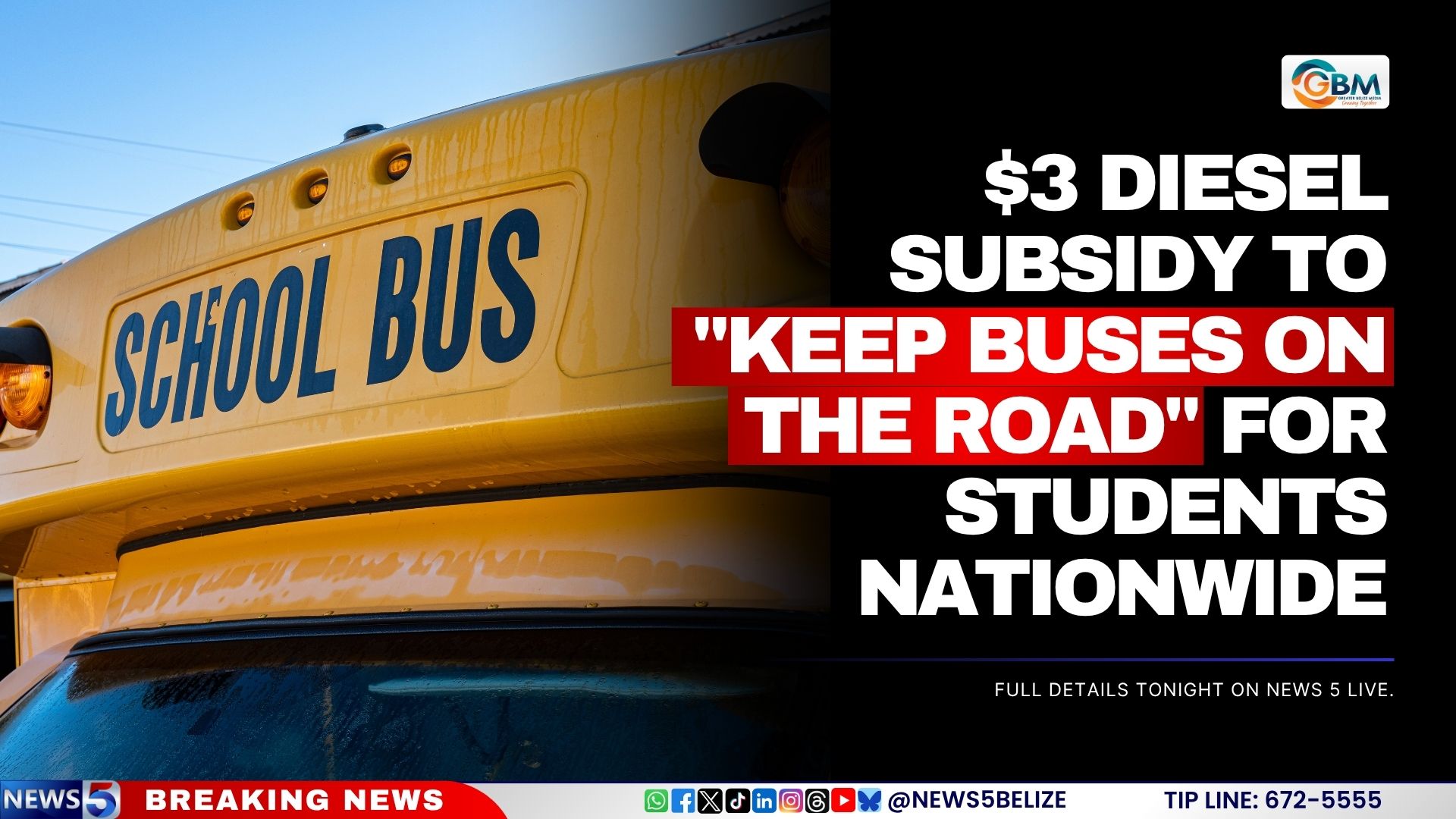
In a policy response to widespread financial pressure on student transportation that culminated in a industry-wide protest, the Belizean Ministry of Education (MOE) has announced a new BZ$3.00 per gallon diesel subsidy for all domestic school bus operators. The emergency financial relief program is designed to address crippling fuel costs that have threatened consistent transit access for more than 14,000 students and education staff across the country.
The subsidy program will be retroactively applied to operations starting April 13, 2026, and will provide support for 278 active daily school bus routes. Officials from the MOE emphasized that the targeted intervention is critical to maintaining consistent student access to education: “By easing fuel costs, this subsidy keeps buses on the road, students in school, and families confident in a reliable education system.”
Over the 11-week run of the program, total government spending is projected to reach approximately BZ$233,755.55, with all costs drawn from the MOE’s existing annual recurrent budget. Administrators calculated the subsidy framework using a standard efficiency average of seven miles per gallon, applied uniformly across the total distance of all registered school routes.
Alongside the school transportation subsidy, revised maximum fare rates for all public bus services officially went into effect on May 4, 2026, after formal approval from the Belizean Ministry of Transport. The updated rates adjust fares by 50 cents for short-distance trips, with the largest increase capped at BZ$1.00 for longer intercity routes.
Both policy changes come directly in response to a bus operator blockade held the previous Monday, when transportation providers shut down access to the Tower Hill Bridge in the Orange Walk District to protest unsustainable fuel costs. The demonstration prompted emergency negotiations between operator representatives, Transport Minister Dr. Louis Zabaneh, and the Office of the Prime Minister, which resulted in the finalized agreement that produced both the subsidy and adjusted fare structure.
Phillip Jones, president of the Belize Bus Association, noted that the negotiated fare increase was structured to prioritize the needs of everyday commuters and the general public while addressing operators’ rising operating costs.