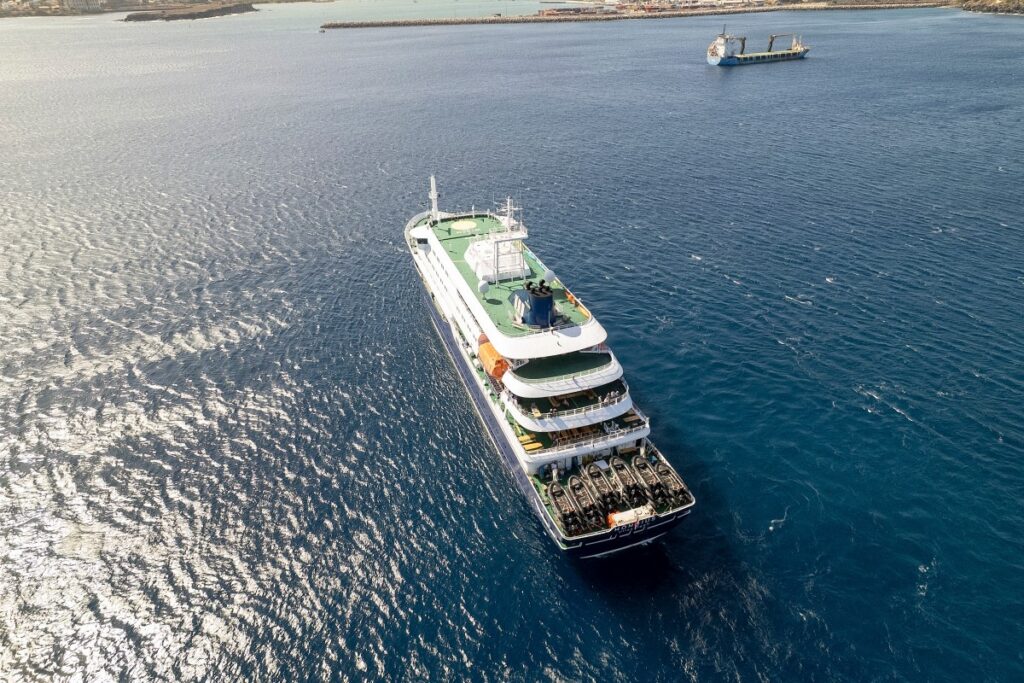
Off the coast of the West African archipelago nation of Cape Verde, a cruise ship anchored near the capital Praia remains in limbo after local authorities rejected requests for passengers to disembark, following a suspected hantavirus outbreak that has claimed three lives. The decision, framed as a critical protective measure for local communities, comes even as global health officials have stressed that overall public risk from the incident remains low.
The MV Hondius, operated by Netherlands-based adventure cruise company Oceanwide Expeditions, was en route from Ushuaia, Argentina when the outbreak unfolded. In its first official public statement on the incident, the operator confirmed the three fatalities: two people died while aboard the vessel, and a third passed away shortly after disembarking earlier in the journey. Currently, one passenger with a confirmed hantavirus infection is receiving intensive care in Johannesburg, South Africa, while two additional people on the ship remain in need of urgent medical attention. No official confirmation of hantavirus has yet been released for these two symptomatic individuals.
Cape Verdean public health authorities made the ban on disembarkation clear in comments Sunday to local public broadcaster RTC. Maria da Luz Lima, president of the country’s National Institute of Public Health, confirmed that the vessel has not been granted permission to dock at Praia’s port, and no passengers or crew will be allowed to leave the ship while it is anchored off the coast. “There would be no contact between the passengers and the country,” Lima stated, emphasizing that the policy is designed solely to protect Cape Verde’s resident population. Local medics have been allowed to board the vessel to assess the condition of the two sick crew members, but no approval has been granted to move these individuals to onshore medical facilities.
Dutch authorities have stepped forward to lead an international coordination effort to repatriate the two symptomatic people on board to the Netherlands for treatment. A spokesperson for the Dutch foreign ministry confirmed to AFP that officials are actively exploring all options for a medical evacuation, and the ministry will take charge of coordination if the operation moves forward. Oceanwide Expeditions noted that the evacuation is contingent on multiple variables, chief among them receiving formal authorization from Cape Verdean local officials.
The World Health Organization has moved quickly to support the response effort, even as it works to calm public anxiety. Hans Kluge, WHO Regional Director for Europe, reiterated in an official statement that the risk to the general global public from this event remains low, and there is no need for widespread panic or new travel restrictions. Kluge explained that hantavirus infections are rare in humans, and most cases are tied to exposure to virus-carrying rodents. While rare, the agency notes that the virus can occasionally spread between people, and may cause severe respiratory illness that requires close, ongoing medical monitoring.
As of Sunday, the WHO confirmed that one case of hantavirus has been definitively confirmed, with five additional suspected cases linked to the ship. The organization says it is working urgently with all affected countries to provide support for medical care, evacuation coordination, epidemiological investigation, and public health risk assessment. A key outstanding question remains at the center of the ongoing investigation: while one passenger has tested positive for hantavirus, authorities have not yet formally confirmed that the virus was the cause of the three deaths. Oceanwide Expeditions says the exact origin of the fatalities and any potential link to hantavirus remain under active investigation.