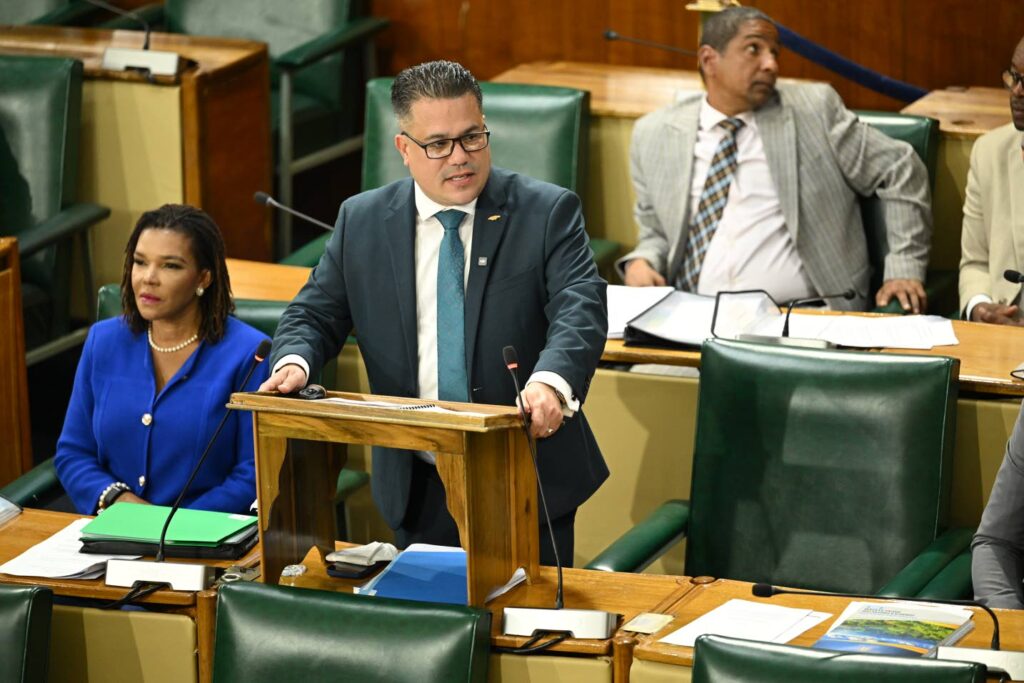
KINGSTON, Jamaica — During an address to the country’s House of Representatives as part of the annual Sectoral Debate on April 28, Jamaica’s Minister of Water, Environment and Climate Change Matthew Samuda has sounded a urgent alarm over what he calls an existential structural crisis plaguing the nation’s water infrastructure: non-revenue water (NRW).
NRW refers to treated, processed potable water that is pumped through the national network but never reaches a paying customer, typically lost to widespread leaks, aging pipe infrastructure, illegal connections, and inaccurate metering across the system. Samuda emphasized that the scale of this issue poses a serious long-term threat to Jamaica’s entire water management ecosystem if left unaddressed.
“I want to be direct about one of the most serious structural problems in Jamaica’s water system: non-revenue water,” Samuda told lawmakers, adding that the ongoing leakage drives up avoidable energy consumption for pumping uncollected water, tightens existing water supply constraints for Jamaican households, and pushes the state-run National Water Commission toward long-term financial instability.
“NRW is acknowledged as a crisis that we must fix with alacrity,” Samuda declared.
To counter this decades-old challenge, the Jamaican government has rolled out an 11-year, island-wide NRW Reduction Programme with a total investment of more than US$340 million. The initiative’s core target is cutting the national NRW rate from its current 71% to a manageable 30% by 2035. According to Samuda, the multi-phase project is already in the international competitive bidding phase for procurement, with pre-implementation preparations well underway.
The minister outlined clear projected annual financial gains once the program is fully implemented: a total of J$10.7 billion in net returns each year, broken down into J$7.7 billion in additional revenue from improved metering, billing and collection systems, J$2.8 billion in annual electricity cost savings from cutting unnecessary pumping, and J$167 million in savings on water treatment chemicals.
Notably, early gains from pilot initiatives in Jamaica’s most populated urban centers — Kingston, St Andrew, and Portmore — have already demonstrated the program’s viability, Samuda confirmed. Those early projects have already begun delivering the projected revenue and cost savings, building a clear case for national expansion. “The case for taking this programme island-wide is not complicated. It pays for itself,” Samuda added.