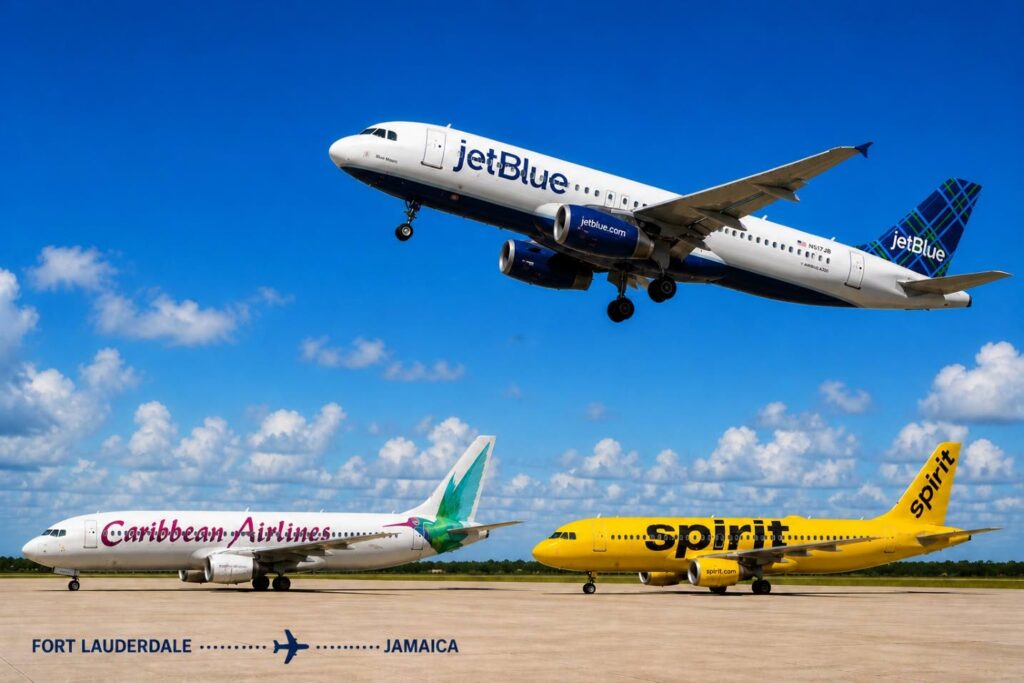
The U.S. low-cost aviation sector faced a seismic shift Saturday when Spirit Airlines announced an immediate shutdown of all global operations, erasing more than 17,000 jobs and leaving just one major carrier connecting Fort Lauderdale, Florida and Kingston, Jamaica. In a public statement released early Saturday, the airline confirmed all flights had been canceled and all customer service operations would cease immediately, calling the development a source of profound disappointment.
The abrupt collapse comes after a last-ditch $500 million White House-backed rescue package fell through, capping a period of mounting financial instability for the carrier. As of December 31, Spirit’s parent company Spirit Aviation Holdings Inc. carried $8.08 billion in total liabilities and recorded a $2.09 billion deficit, marking the carrier’s second bankruptcy restructuring in less than two years. The final blow to the struggling airline came from a dramatic surge in global jet fuel prices, driven by ongoing geopolitical tensions disrupting global oil supplies.
Industry data underscores the scale of the gap Spirit leaves in the Southeastern U.S. aviation market. U.S. Bureau of Transportation Statistics figures show Spirit held a 26.6% market share at Fort Lauderdale-Hollywood International Airport (FLL), handling 3.38 million passengers between February 2025 and January 2026. It also commanded an 11.48% share of the Orlando market, moving 2.75 million passengers in the same period. On the high-demand FLL to Kingston’s Norman Manley International Airport (KIN) route alone, Spirit carried 23.09% of all passengers in December 2025, filling 78% of its available seats to serve unmet demand on the corridor. Caribbean Airlines had already exited this route and the FLL-Montego Bay Sangster International Airport (MBJ) corridor in November, just 12 months after re-launching service, leaving JetBlue Airways as the sole active operator on the FLL-KIN route. While Delta and Frontier list limited service to MBJ on booking platforms, JetBlue controls the vast majority of available flights between the two countries.
In response to the crisis, major U.S. carriers including JetBlue, United, Delta and Southwest moved quickly to assist stranded passengers and displaced Spirit workers. The four airlines introduced capped, affordable rescue fares for passengers holding canceled Spirit tickets, and extended free travel benefits and standby seats to Spirit crew members seeking to return home. All four carriers also announced open interview processes for Spirit employees affected by the shutdown.
JetBlue, which already dominated the FLL-Jamaica corridor prior to Spirit’s collapse, has moved to expand its footprint at FLL to fill the service gap. Joanna Geraghty, JetBlue’s CEO, noted in a press statement that South Florida is a core strategic market for the carrier, and that the company was stepping in to maintain connectivity for travelers amid the upheaval. “Our focus is on stepping up in the near term by adding service, maintaining connectivity, and keeping fares competitive so customers can continue to travel with confidence,” Geraghty said.
JetBlue’s expansion plan includes adding 11 new destination routes from FLL, boosting domestic capacity on existing U.S. routes and adding extra flights to the Dominican Republic cities of Santo Domingo and Santiago de los Caballeros in the coming weeks. This summer, the airline expects to operate nearly 130 daily departures from FLL, the largest operation in the airline’s history at the airport and a 75% increase in daily flights compared to 2025. The carrier has also reworked its connection structure at FLL, expanding from two to four connecting banks daily to open up more travel options for passengers from the U.S. Northeast connecting to Caribbean and Latin American destinations.
Despite the planned expansion, JetBlue faces significant headwinds from the same skyrocketing fuel prices that pushed Spirit into collapse. Global jet fuel prices have nearly doubled in just two months, jumping from an average of $2.24 per gallon to $4.32, driven by supply chain disruptions around the Strait of Hormuz, which carries 20% of the world’s daily oil supply. The disruption stems from the ongoing unresolved conflict between the U.S.-Israel coalition and Iran that began February 28.
During JetBlue’s April 28 earnings call, Geraghty outlined the carrier’s strategy to navigate the crisis, noting that the company would need to trim overall capacity even as it expands at FLL. “With demand continuing to remain strong, it’s important we take a flexible approach, trimming capacity as we head into the peak summer season. We plan to closely monitor market conditions and expect to reduce additional capacity after the summer peak, assuming fuel prices remain elevated,” she said. The carrier is relying on three core adjustments to offset fuel costs: incremental fare adjustments, cutting unprofitable, low-productivity routes, and rolling out additional company-wide cost-saving measures. Because 90% of the carrier’s first-quarter capacity was already booked before the latest fuel price surge, JetBlue was unable to recoup the added costs, but expects to recover 30% to 40% of the extra fuel expenses in the second quarter and 100% by 2027.
JetBlue reported it paid an extra $62 million in fuel costs during the first quarter, even after cutting fuel consumption by 2.7% (5 million gallons), leading to a total first-quarter fuel bill of $573 million. To strengthen its cash position amid the volatility, the carrier recently secured a $500 million loan, using 22 Airbus aircraft as collateral.
The collapse of Spirit and broader fuel price surge has created new uncertainty for Jamaica’s recovering tourism sector, which has been slowly rebuilding since Hurricane Melissa struck in October 2025. Jamaica has seen steady gains in passenger traffic in recent months, with Sangster International Airport, which handles 70% of the country’s tourist arrivals, welcoming more than 358,000 passengers in March and 917,400 in the first quarter.
However, industry leaders warn that rising fuel costs and reduced airline capacity are already starting to impact forward bookings to Jamaica, with multiple carriers quietly cutting unprofitable routes to the Caribbean. Richard Pandohie, CEO of Jamaican manufacturing and hospitality conglomerate Seprod Limited, recently noted on social media that airline route cuts driven by fuel costs are already affecting the region, including Jamaica, with changes happening quietly without major public announcements. Major global carriers have already announced deep capacity cuts: Lufthansa will cancel 20,000 short-haul flights through October, while Air Canada has suspended service between Montreal and New York City.
The turbulence comes as Jamaican hospitality continues to reset after Hurricane Melissa, with multiple major resort groups pushing back reopening timelines for damaged properties. Hyatt Hotels has delayed the reopening of its eight Jamaican all-inclusive resorts from November 2026 to the first quarter of 2027, saying the adjusted timeline allows the company to continue supporting employees through continued pay, benefits and training while maintaining a core on-site team ahead of a full restart. Sandals Resorts International has also pushed back the reopening of three damaged properties from May 2026 to November and December 2026, using the extra time to complete full-scale renovations of the resorts ahead of reopening. Four Royalton properties are on track to reopen between August and September 2026, while Bahia Principe Grand Jamaica is scheduled to resume operations in December 2026, per Jamaica’s official tourism board website.
Beyond fuel price volatility and airline consolidation, Jamaica’s hospitality sector faces an additional upcoming headwind: a planned increase in the general consumption tax on tourism services, which will rise from 10% to 15% in April 2027.