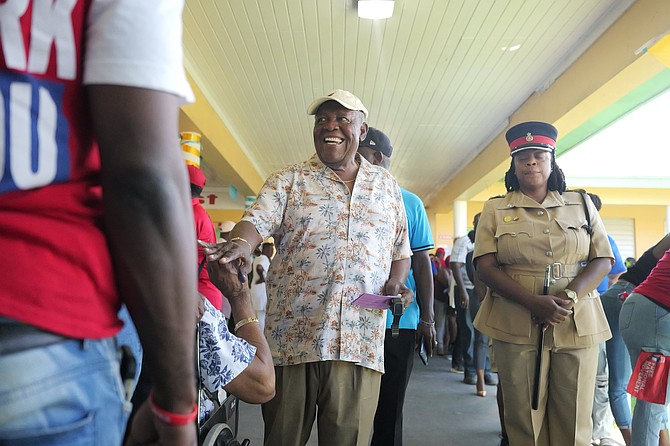
As the Bahamas approaches its upcoming general election, a growing wave of high-profile fraudulent document cases has thrown electoral integrity into the national spotlight, drawing divergent and cautiously worded reactions from the country’s most senior political figures. Former Prime Minister Hubert Ingraham, a stalwart of the opposition Free National Movement (FNM), emerged as one of the most prominent voices sounding the alarm after casting his ballot in the early advance polling. Speaking to reporters immediately after voting, Ingraham described the rising frequency of cases where individuals have been caught with counterfeit passports and voter registration cards as deeply alarming.
While Ingraham echoed widespread concerns within the FNM that the national voter registry contains serious irregularities—including duplicate entries and incomplete records lacking valid birth dates—he stopped short of endorsing the opposition party’s more extreme claims that the election could be stolen through systematic manipulation. The former prime minister stressed that he does not believe the country’s electoral framework is vulnerable enough to be altered to flip a final election result, and urged all eligible Bahamian voters to turn out to cast their ballots regardless of the ongoing controversy. Still, he emphasized that the scale of fraudulent document access remained a pressing worry. “But I am concerned about how large numbers of people it appears have got access to Bahamian passports and other such documents, and that is a very concerning matter,” Ingraham told reporters. He added that he hopes the irregularities are rooted in bureaucratic incompetence rather than coordinated, intentional wrongdoing meant to skew the election.
Another former Bahamian prime minister, Perry Christie of the ruling Progressive Liberal Party (PLP), pushed back on the opposition’s framing of the issue yesterday, arguing that existing safeguards built into the country’s electoral system make widespread election fraud effectively unachievable. Christie noted that organized large-scale fraud of the type being discussed by FNM figures has never occurred in the Bahamas’ electoral history, and rejected suggestions that it could take place this cycle. “It’s very difficult, if not next to impossible, to have the kind of fraud that they’re talking about in our voting system here and it hasn’t happened before, it’s not going to happen now,” Christie said. He characterized the focus on fraud as political posturing, noting that parties often elevate issues they believe will resonate with voters to gain an edge ahead of polling day. Christie also pointed to the Bahamas’ longstanding electoral trend—where single parties rarely win consecutive terms in office—as evidence that election results consistently reflect the unmanipulated will of the electorate, rather than tampering.
The debate over document fraud has intensified in recent months following a string of high-profile arrests linked to counterfeit and improperly obtained identification. The most recent high-profile case came on April 27, when a Dominican national was charged with fraudulently acquiring a Bahamian voter card and multiple Bahamian passports, marking the latest in a series of similar incidents. Less than two weeks prior, on April 15, an employee of the country’s Parliamentary Registration Department was arrested for allegedly assisting a Haitian woman in obtaining an illegal voter identification card, and was found in possession of five blank official voter cards.
In comments made earlier in April, National Security Minister Wayne Munroe, a member of the ruling PLP, stated that any public official convicted of involvement in passport fraud would face a maximum sentence of up to ten years in prison if the PLP wins a second consecutive term in office. For his part, FNM Leader and opposition chief Michael Pintard has repeatedly raised alarms about the scope of document fraud occurring under the current PLP administration, though he has yet to release a detailed plan outlining what specific policy or regulatory changes his party would implement to address the problem if elected.