MONTEGO BAY, St James — One of Jamaica’s most high-profile tourist destinations, the Hip Strip — formally named Jimmy Cliff Boulevard — in Montego Bay may soon see its long-delayed revitalization accelerated through the country’s newly established post-disaster development body, the National Reconstruction and Resilience Authority (NaRRA), according to Dr Carey Wallace, executive director of the Tourism Enhancement Fund (TEF).
Wallace shared the latest project update in an interview with Jamaica Observer on Tuesday, just hours before legislation formally creating NaRRA was approved by Jamaica’s House of Representatives. The executive director explained that the long-awaited infrastructure upgrade is eligible for inclusion in NaRRA’s project portfolio because the Hip Strip sits at the core of a larger coastal corridor marked for large-scale regional redevelopment.
“The entire corridor stretching from Montego Bay’s port, along Bottom Road through the Hip Strip, and extending all the way to Trelawny is earmarked for major transformation under the NaRRA programme,” Wallace noted. He added that TEF has already completed critical preliminary work, including detailed designs and comprehensive underground infrastructure mapping, which will be shared to support seamless coordinated development between the two entities.
Plans for the Hip Strip upgrade were first unveiled back in 2021 by TEF chairman Godfrey Dyer, with an initial projected budget of roughly $1 billion Jamaican dollars. The proposed upgrades are designed to dramatically improve the popular tourist corridor’s look and functionality: key planned works include burying unsightly overhead utility lines underground and constructing new purpose-built parking garages to ease chronic congestion in the area. To date, the project has advanced to the detailed design phase, with TEF holding ongoing consultations with local businesses and stakeholders along the boulevard to incorporate community input.
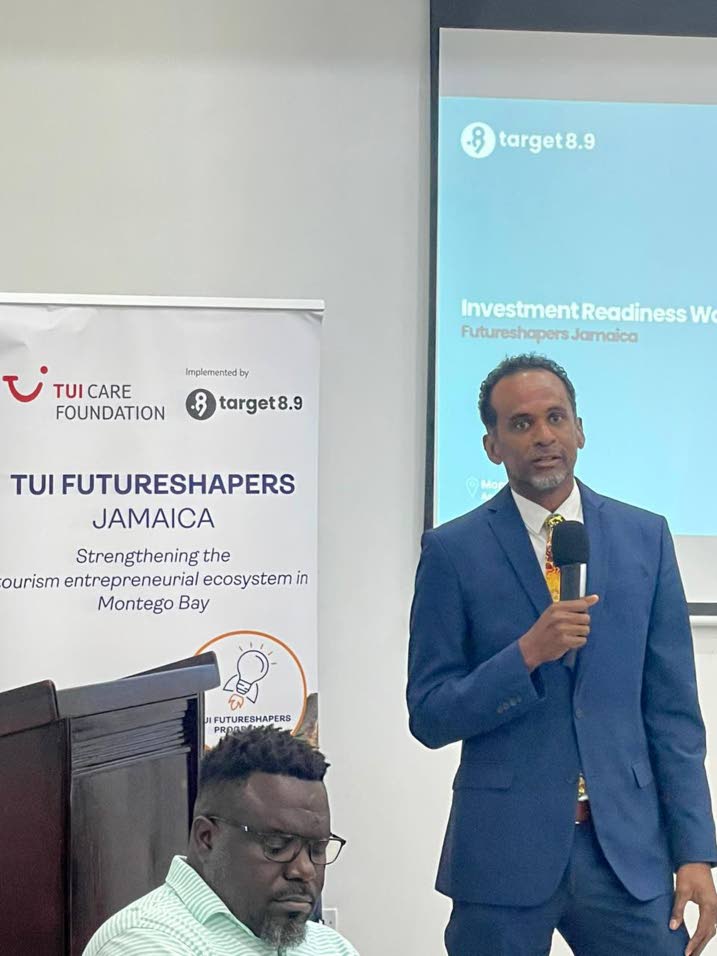
The update came during an on-the-side conversation at a pep rally hosted by the TUI Care Foundation for small and medium-sized tourism enterprises across Jamaica. Wallace said that the project was among many across the country that faced minor delays after Hurricane Melissa hit, as the government shifted priority to immediate disaster relief and sector recovery, efforts that are still ongoing today.
But he remains optimistic that NaRRA’s involvement will not only get the project back on track but deliver a more ambitious, impactful outcome than originally planned. “I know the government is moving quickly to get NaRRA operational, and this new body is designed to advance large-scale infrastructure projects like this much faster than existing frameworks. In the end, I’m expecting an even better result for Montego Bay and for Jamaica as a whole,” Wallace said.
While he could not share a revised final budget for the revitalization, Wallace emphasized that the project will gain major benefits from NaRRA’s dedicated funding pool for post-disaster recovery and long-term climate resilience. “NaRRA has its own dedicated budget focused on recovery and building resilience. From where I stand, that means this project will end up being far more impactful than it would have been otherwise,” he explained. “With NaRRA on board, a whole host of delayed projects will not only be restarted but likely expanded. I’m confident we will deliver massive progress across the corridor within just a few years.”