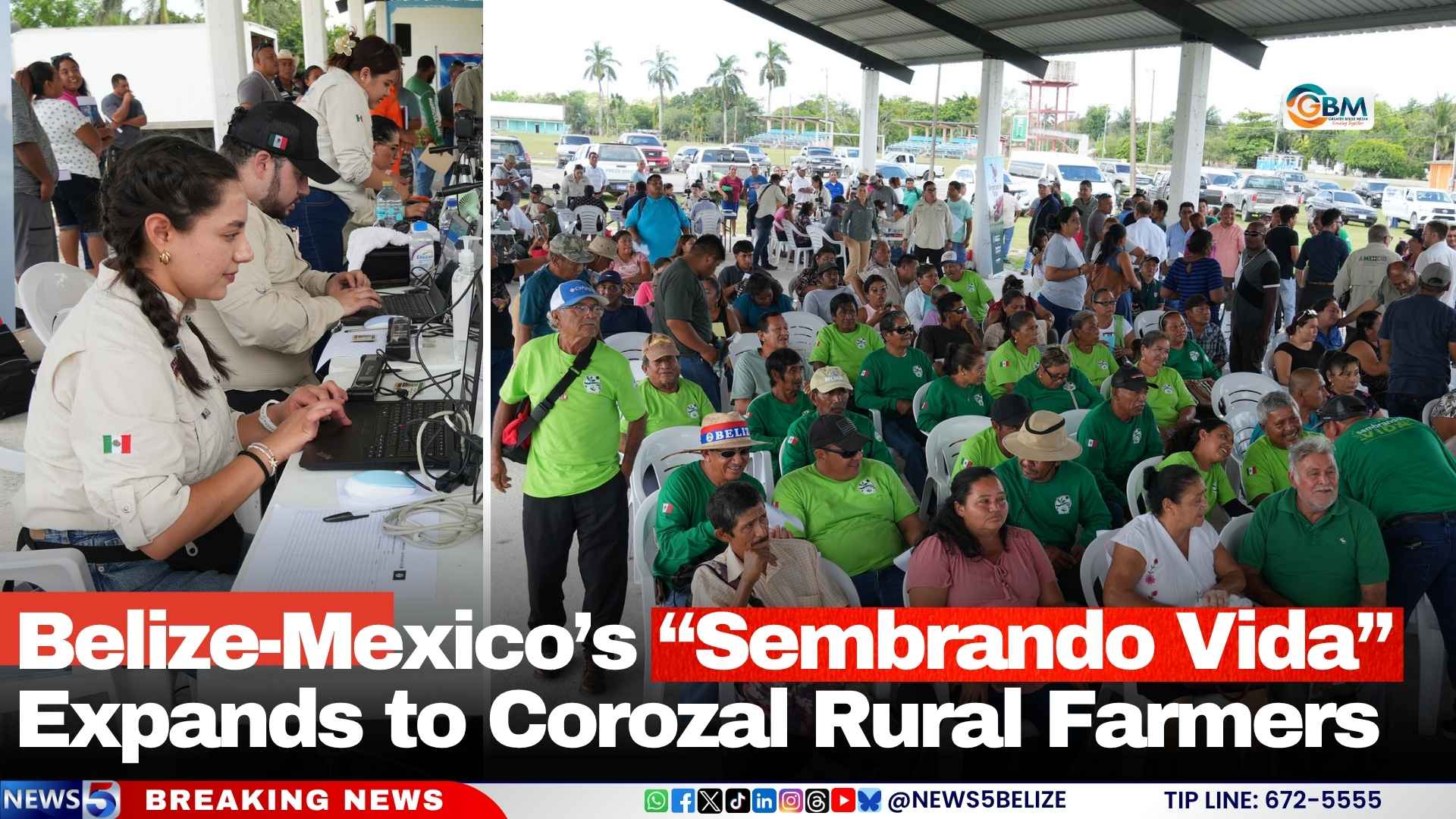
On April 24, 2026, a landmark cross-border rural development initiative took a major step forward in northern Belize, as Belize and Mexico officially inaugurated the second phase of the collaborative Sembrando Vida programme in San Narciso village, Corozal District. The expansion brings tailored agricultural support directly to small-scale rural producers in the region, building on the success of the project’s initial rollout that already transformed livelihoods for thousands of farmers across the country.
Managed by Mexico’s international development agency AMEXCID – an institution that has delivered impactful development projects across dozens of nations including Belize – the Sembrando Vida programme is designed to address longstanding challenges facing small-scale agricultural producers. The initiative traces its roots back to a 2022 bilateral agreement signed during an official visit by then Mexican President Andrés Manuel López Obrador, with the first phase of the project launching in June 2023. In that initial round, the programme reached approximately 2,000 small farmers across Belize, delivering tangible resources and guidance to boost their operations.
Unlike many traditional aid projects, Sembrando Vida combines practical on-the-ground support with long-term community and environmental goals. Participating farmers gain access to hands-on agricultural training, specialized technical assistance, and critical production inputs ranging from high-quality seeds and essential farming tools to organic and conventional fertiliser. Beyond boosting individual farm productivity, the programme also prioritizes large-scale environmental restoration, working to reverse land degradation in rural Belize and regenerate natural ecosystems that support agricultural resilience.
Programme officials emphasize that the core mission of Sembrando Vida extends beyond individual farm support: the initiative aims to rebuild foundational social and economic stability across rural farming communities, with a sharp focus on strengthening national food security and creating sustainable, reliable income streams for small producer households. By expanding into Corozal District in this second phase, the project will extend these life-changing benefits to hundreds more small farmers who have long lacked access to the resources and training needed to grow their operations and improve their quality of life.