Basseterre, St. Kitts – In a tangible win for households and businesses across St. Kitts and Nevis, targeted government interventions to ease cost-of-living pressures have already delivered visible reductions in retail fuel prices, just weeks after Prime Minister Dr. Terrance Drew outlined the relief package in a national address.
As of April 22, 2026, the maximum retail price for unleaded gasoline across both Delta and SOL Service Stations in St. Kitts has dropped to EC$18.19 per gallon. This marks a clear downward shift from prices recorded only eight days earlier, on April 14, when Delta stations charged a maximum of EC$18.42 per gallon and SOL stations set a cap of EC$19.30 per gallon.
The immediate price reduction stems from one core policy rolled out by the Drew administration: a temporary 50% cut to the excise tax on gasoline, which lowered the levy from EC$1.95 per gallon to EC$0.98 per gallon. This measure is set to remain in effect through July 31, 2026, and represents a direct fiscal commitment of roughly EC$1.2 million from the government, designed to buffer local consumers and enterprises from ongoing volatility in global fuel markets.
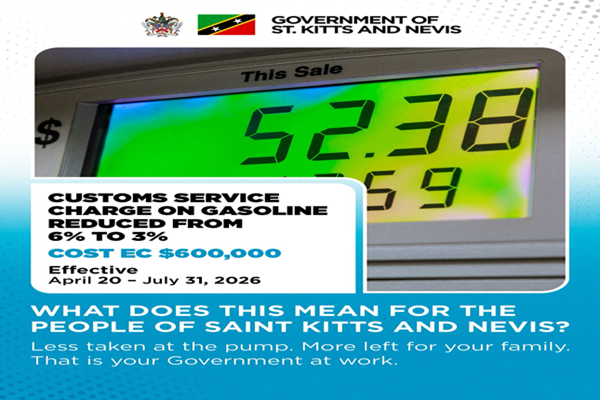
A second key relief measure is set to appear at fuel pumps in the near future: a temporary cut to the Customs Service Charge on gasoline, which will drop from 6% to 3% also through the end of July. The full impact of this adjustment will be reflected in retail prices as new fuel shipments arrive in the federation over the coming weeks.
Officials and economic analysts project that lower fuel prices will generate broad, positive ripple effects across the St. Kitts and Nevis economy. By cutting transportation costs for both commercial operators and private motorists, the measures are expected to stabilize overall prices for everyday goods and services, ease strain on stretched household budgets, and provide critical support to key productive sectors including agriculture, manufacturing, and logistics – industries where energy and transport costs make up a large share of operating expenses.
The St. Kitts-Nevis Labour Party Administration has reaffirmed its commitment to advancing people-centered, strategic fiscal policies that deliver measurable, on-the-ground benefits to all citizens. Amid ongoing global economic instability that continues to put upward pressure on essential goods prices worldwide, the administration says it will maintain a proactive approach to protecting public welfare, ensuring that the gains of responsible fiscal management are shared across every segment of society.