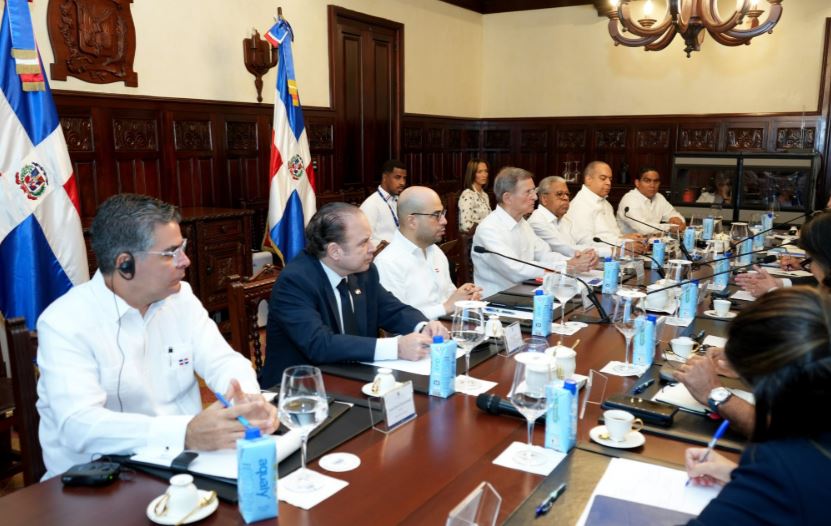
In a significant step toward addressing the spiraling security crisis engulfing neighboring Haiti, the governments of the Dominican Republic and Haiti have launched joint working committees focused on curbing the expanding power of criminal gangs and resolving shared cross-border security concerns. The collaborative initiative emerged from a high-level working meeting held in Santo Domingo, where Dominican Republic Foreign Minister Roberto Álvarez held in-depth discussions with Jack Christofides, covering the full scope of cooperative goals and on-the-ground operational details for the multinational Gang Suppression Force mission. A delegation of senior Dominican government officials and top security sector representatives also took part in the strategic talks, laying the groundwork for coordinated action against organized criminal violence.
The current emergency in Haiti did not develop overnight. As global human rights organization Amnesty International points out, decades of deep-rooted political and economic fragility, rooted in historical systemic inequality, have created the conditions for criminal groups to flourish. This preexisting instability has been severely exacerbated by a cascade of recent overlapping crises: acute fuel shortages that have paralyzed basic public services, devastating natural disasters that destroyed critical infrastructure and displaced thousands of people, and the lingering socioeconomic fallout of the COVID-19 pandemic. Together, these shocks have allowed gang-related violence to spread rapidly across most of Haiti’s populated areas.
The security situation deteriorated dramatically following the 2021 assassination of sitting Haitian President Jovenel Moïse, an event that shattered already fragile governance and pushed political instability to new heights. Moïse’s successor, interim Prime Minister Ariel Henry, struggled to gain control over expanding armed groups that quickly consolidated their control over large swathes of the capital, Port-au-Prince. By 2024, international pressure and domestic outcry led to the formation of a new transitional presidential council, mandated to lead the country back to constitutional order and institutional stability.
Today, Haitian national authorities remain under intense international and domestic pressure to advance security sector reforms, rein in violent criminal groups, and uphold fundamental human rights, as the country continues to grapple with persistent widespread violence and deep-seated institutional challenges that have left millions of ordinary Haitians facing daily insecurity.